News du 3 juin 2026 : Quartus
News : Dans les trois épisodes précédents — que l’on peut relire ci‑dessous — nous avons semé des indices et quelques chausse‑trapes en nous appuyant sur les recherches bien connues de l’affaire de Rennes‑le‑Château. De l’église de l’abbé Bérenger Saunière, décor fondateur du mystère, aux souterrains qui en constituaient la périphérie supposée, en passant par des pistes qui s’effilochent du côté de Narbonne ou de Castelnègre… Après ces premières entrées en matière, nous avons reçu le communiqué de presse suivant :
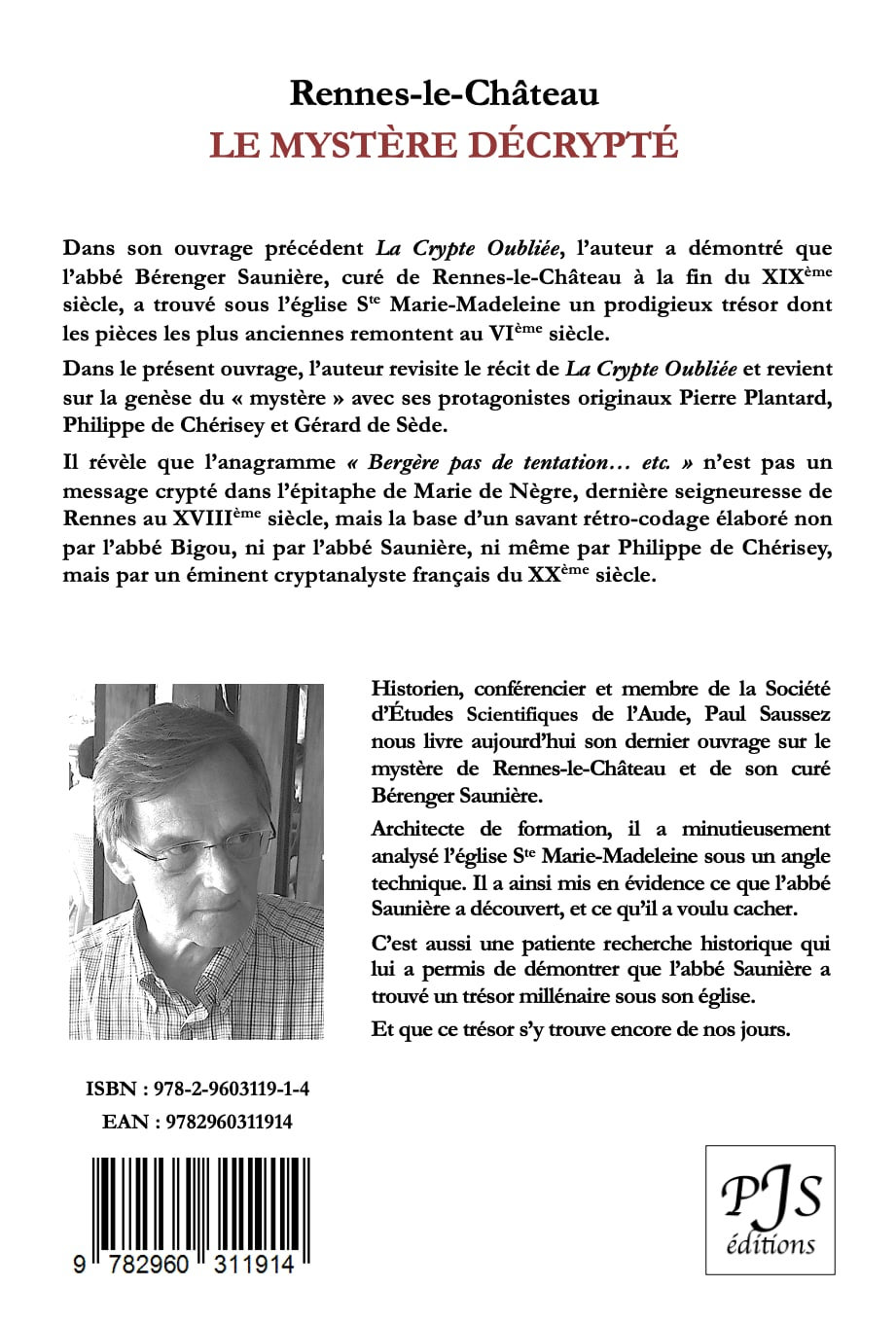
« ATTENTION : Ce que vous allez lire va secouer le milieu…et de nombreuses sociétés secrètes ! Je viens de signer le contrat d’édition de mon prochain ouvrage. Et je vous le dis sans détour : ce livre va faire l’effet d’une bombe.
Après des années de recherches approfondies, je m’apprête à révéler des vérités explosives sur le Prieuré de Sion, Pierre Plantard, Gino Sandri, Rennes-le-Château et les secrets les mieux gardés de l’Église catholique.
Ce n’est pas un livre de plus sur le sujet. C’est une véritable bombe documentaire qui va obliger beaucoup de chercheurs et d’initiés à tout remettre en question.
Le compte à rebours est officiellement lancé. 2026 sera l’année de toutes les révélations… et la mienne arrive très bientôt. Restez connectés. Vous n’êtes pas prêts. » (Isaac Ben Jacob)
Si vous souhaitez être avertis dès la parution du livre, il vous suffit d’envoyer le message « Je souhaite être informé » à l’adresse de la Gazette de Rennes-le-Château (lien précédent à cliquer) ! Et puisque nous sommes particulièrement bien renseignés, nous ne pouvons que vous encourager à vous inscrire pour être prévenus de sa publication.
Mais d’ici là, nous vous réservons encore quelques surprises : des articles gratuits qui mettront en perspective ce que personne n’a jamais réussi à éclairer dans l’affaire Saunière. Des ascendances qui révèlent les fondements d’un certain prieuré — loin des fumisteries brandies comme caution par les uns et rejetées par les autres — ainsi que des confréries influentes gravitant au cœur du mystère, et qui expliquent enfin ce que nul n’avait pu démêler jusqu’ici…
Nous vous entraînons dans une quête rare, un passage vers l’ultime vérité de Bérenger Saunière, tapie dans les interstices du visible et du caché, là où se rejoignent les héritages oubliés.

de Rennes-le-Château
Johan Netchacovitch, rédacteur en chef de La Gazette de Rennes-le-Château ©
News du 16 mai 2026 : Tertius
La piste de Castelnègre ?
Un abbé par‑ci, un prêtre par‑là… Comme si l’on s’ingéniait encore à détourner le regard de ce qui dérange vraiment. L’essentiel demeure dans l’ombre — mais plus pour longtemps. La vérité approche, silencieuse, prête à se dévoiler sans la moindre échappatoire.
Parmi toutes les hypothèses avancées pour expliquer la fortune de Bérenger Saunière, certains évoquent la piste de Castelnègre, ancienne villégiature des évêques d’Alet. Faut‑il vraiment les associer aux abbés mentionnés plus bas ? Rien, pour l’instant, ne permet d’établir un lien solide — et c’est bien ce manque de connexions qui empêche d’emporter l’adhésion.
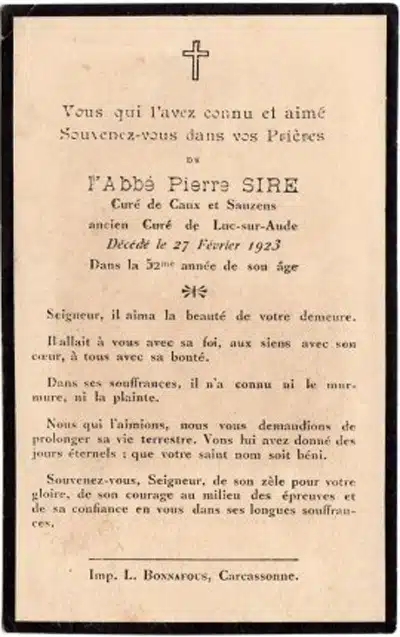
« Le lundi 30 mars 1903, le R.P. Cerceau, Supérieur des Fils de l’Immaculée et régisseur de Castelnègre, exploitation agricole proche d’Alet-les-Bains, rend visite à l’abbé Saunière. Il est accompagné de l’abbé Pierre Sire, curé de Luc-sur-Aude. Le curé de Rennes-le-Château est en plein chantier. La villa est terminée, mais la tour Magdala n’en est qu’aux fondations. Cela ne pouvait qu’être opportun, puisque les deux hommes sont venus INSPECTER les travaux… » (Michel Vallet)
La piste du Cercle Catholique de Narbonne ?
Bérenger Saunière entretenait‑il des liens plus étroits qu’on ne l’imagine avec le Cercle catholique de Narbonne ? La question revient régulièrement, portée par plusieurs éléments de son parcours et de celui de son entourage.
Certains avancent la piste d’un lien indirect via son frère, Alfred Saunière, dont les relations avec le Cercle catholique narbonnais sont attestées (aumônier à deux reprises, orateur principal, directeur de La Croix du Sud – organe officiel du Cercle). D’autres rappellent que Alfred Saunière fut un temps précepteur des enfants du marquis de Chefdebien, famille elle‑même connectée à divers réseaux ecclésiastiques régionaux. Un fait demeure toutefois notable : Alfred Saunière fut révoqué de ce poste, sans que les raisons précises de cette décision ne soient clairement établies.
À ce stade, ces éléments nourrissent davantage les interrogations qu’ils n’apportent de certitudes. Les connexions existent, mais leur portée réelle reste à établir. Et, pour l’heure, les chercheurs se heurtent à un mur de zones d’ombre. Nous utiliserons également les archives privées de La Gazette de Rennes-le-Château qui démontreront l’embarras de certains écrivains face à l’absence de sources documentées !
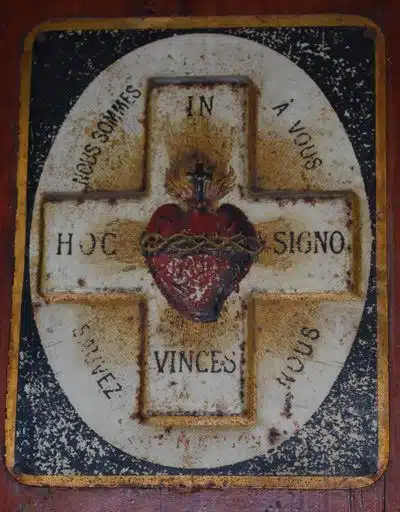
Cependant ce qui est certain, c’est que l’emblème religieuse ci-dessous se trouve dans la partie privative d’un ancien couvent déchristianisé, quelque part dans la région de Limoges. Et là‑bas, la présence du Cercle catholique est omniprésente.
A suivre…
Les pistes de Castelnègre et de Narbonne butent aujourd’hui sur un même obstacle : l’absence de documents nouveaux. Chercheurs et auteurs ont, pour l’heure, épuisé tout ce qui était accessible. Mais une question demeure, insistante : et s’il restait encore quelque chose à découvrir ?
L’aventure continue !
Johan Netchacovitch, rédacteur en chef de La Gazette de Rennes-le-Château ©
News du 3 mai 2026 : Secundus
News : Les premiers éléments issus de notre série d’articles consacrés aux souterrains de Rennes‑le‑Château confirment la présence de structures funéraires sous le chœur de l’église Sainte‑Marie‑Madeleine. Une visioconférence est d’ailleurs prévue cet après‑midi afin de déterminer si le tracé de ces galeries sera rendu public dans les prochains jours.
Parallèlement, de nouvelles informations ainsi que plusieurs documents transmis à la rédaction de La Gazette de Rennes‑le‑Château renforcent l’implication de l’abbé Bérenger Saunière au sein d’un groupe d’influence. Les précisions relatives à cette découverte seront dévoilées au fil de nos prochaines publications ! Pour rester au coeur de l’aventure 👉 https://portail-rennes-le-chateau.com/ !
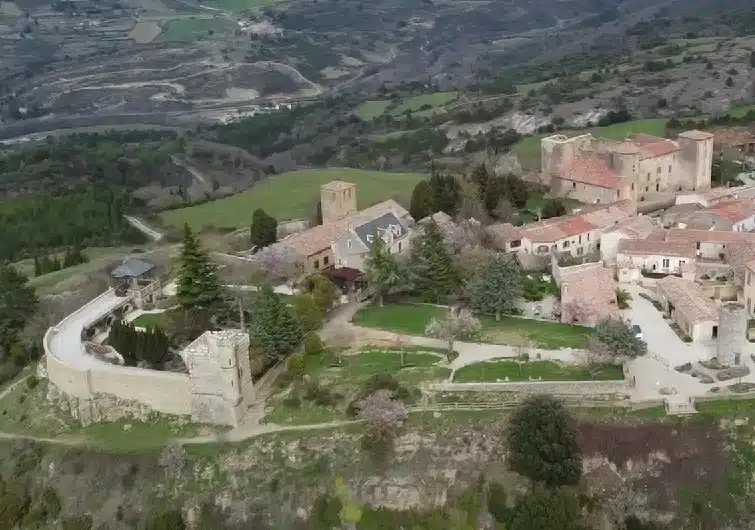
La photographie dépasse largement le statut de simple illustration… : elle renvoie directement à la présence avérée de plusieurs souterrains situés sous le site. Ces galeries, longtemps évoquées mais jamais documentées, apparaissent dans nos investigations, ouvrant la voie à de nouvelles vérifications et analyses.
Johan Netchacovitch, rédacteur en chef de La Gazette de Rennes-le-Château ©
News du 23 avril 2026 : Primus
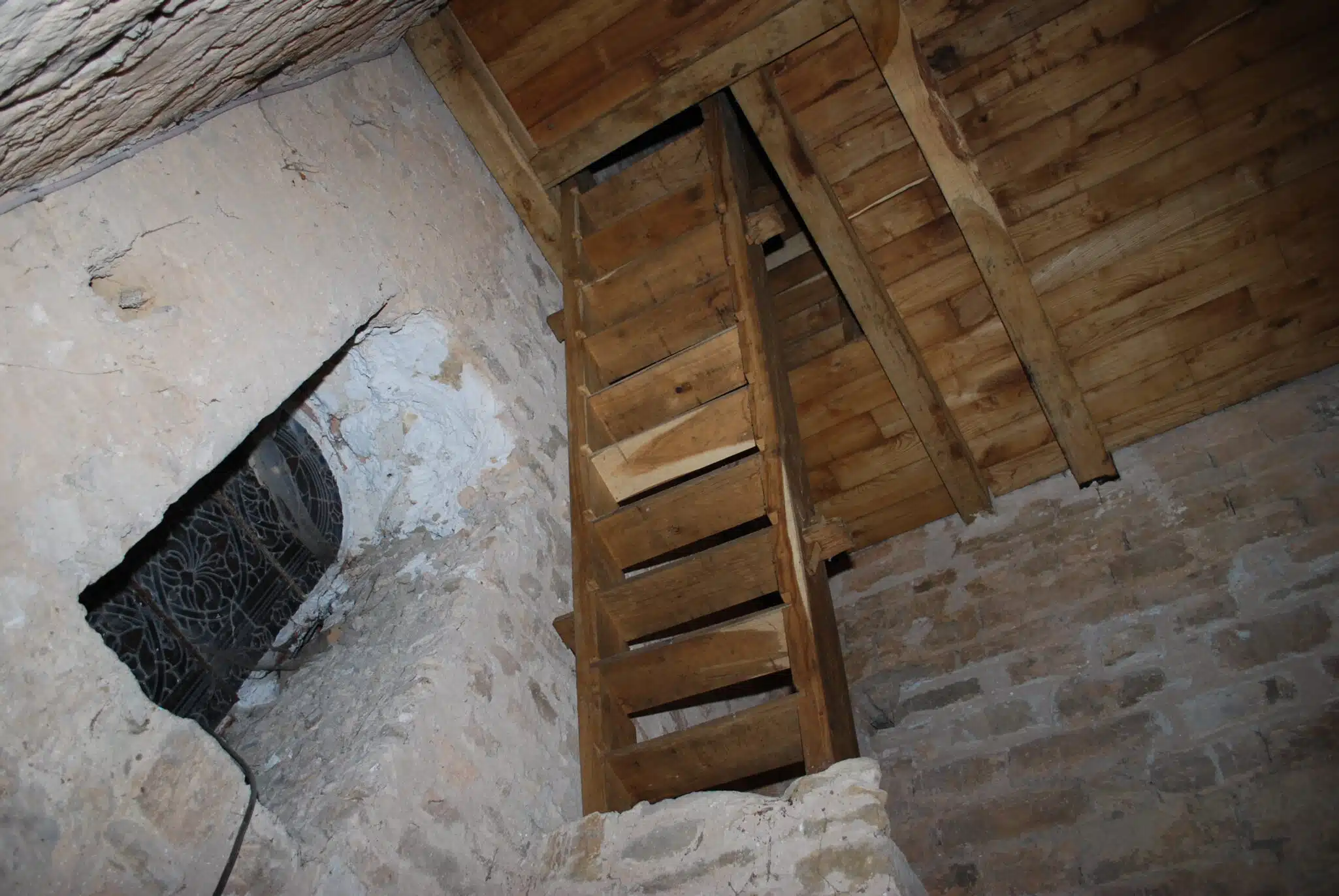
La vérité ne se dévoile qu’en prenant de l’altitude : depuis le clocher de Sainte‑Marie‑Madeleine, sous le vitrail qui veille sur Rennes‑le‑Château. In tempore non suspecto.
L’enquête continue — pour encore quelques mois.
News du 6 avril 2026 : Une vague d’interrogations après l’invalidation de 45 bulletins
La rédaction a été largement sollicitée ces derniers jours à propos du scrutin municipal du 15 mars 2026 à Rennes-le-Château (Aude), marqué par un résultat pour le moins inhabituel.
Deux listes étaient en lice. Au terme du vote, la liste du maire sortant, Alexandre Painco, a obtenu 51 voix sur 99 votants, 3 bulletins blancs. La liste concurrente, menée par Pascale Caste (Rennes-le-Château en confiance, 1 – Mme Pascale CASTE ; 2 – M. Adrien COLMENERO ; 3 – Mme Jacqueline GOOSKENS ; 4 – M. Serge COLMENERO ; 5 – Mme Aline CHADEFAUD ; 6 – M. Jean-Paul RAYMOND ; 7 – Mme Ona VAN DER GRINTEN) n’a pour sa part recueilli aucune voix. Un résultat qui a immédiatement suscité l’étonnement… avant que l’on apprenne que 45 bulletins avaient été déclarés nuls.
Une négligence étonnante, d’autant que cette règle figure clairement dans les guides officiels destinés aux candidats — une simple recherche en ligne permet de la retrouver en quelques minutes.
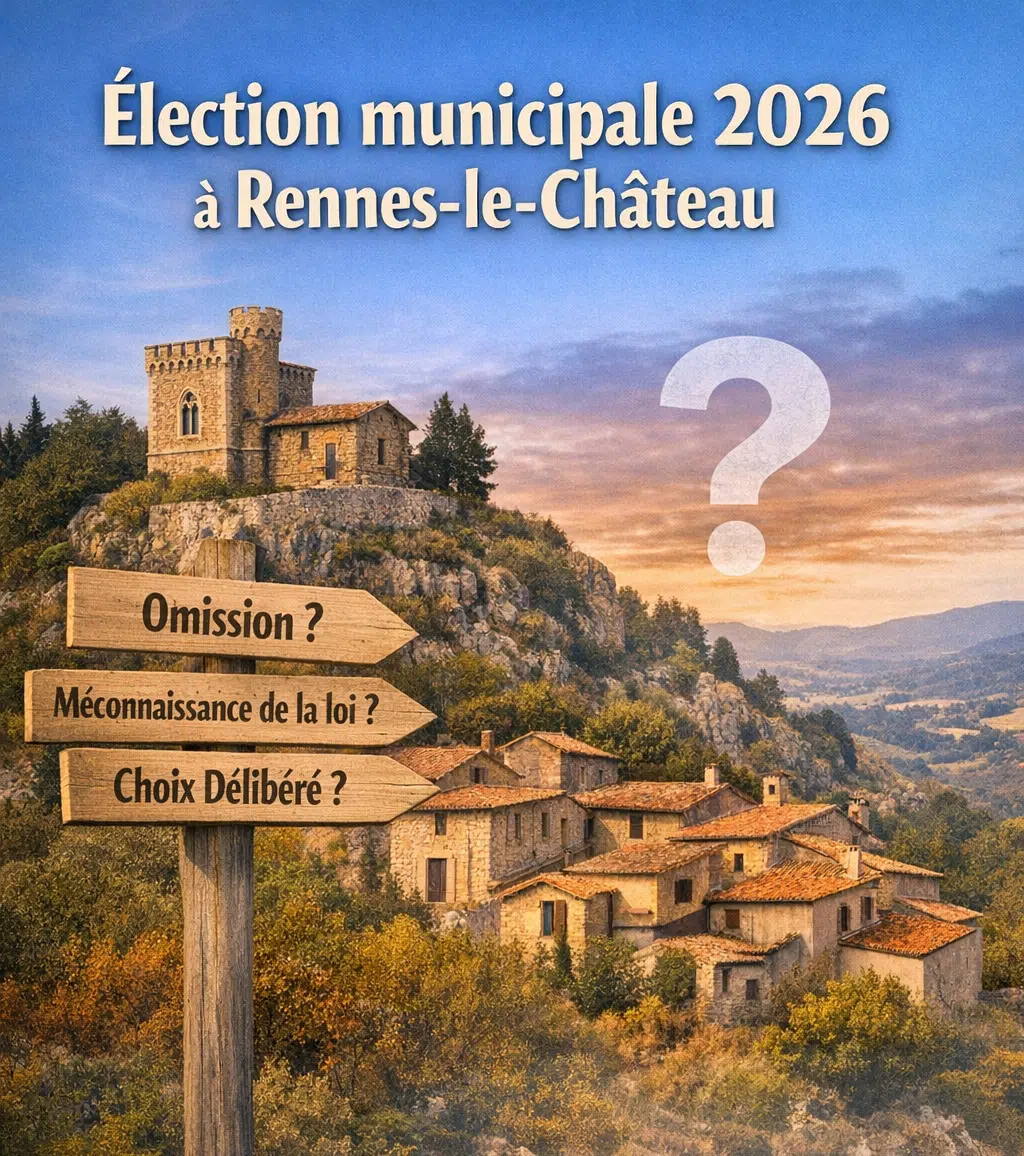
Selon les informations recueillies, ces bulletins ont été invalidés en raison d’une omission réglementaire : la liste Caste ne mentionnait pas la nationalité des candidats ressortissants d’un autre État membre de l’Union européenne, une indication pourtant obligatoire dans le cadre des élections municipales.
Surpris par une telle négligence, les membres de la rédaction ont procédé à une vérification rapide. Une recherche en ligne de quelques minutes a suffi pour retrouver la règle en question, clairement explicitée dans les documents officiels destinés aux candidats.
Dans une brochure du « Ministère de l’Intérieur – Elections municipales 15 et 22 mars 2026 – Mémento à l’usage des candidats – Communes de – de 1000 habitants (Version du 22 décembre 2025) », nous lisons dès la première page de texte :
Page 2 – « En synthèse, la loi porte les principales évolutions suivantes » :
3°) Elle adapte également les règles de validité des bulletins de vote dans les communes de moins de 1000 habitants. La loi met ainsi fin à la pratique du panachage : tout ajout, suppression ou changement d’ordre des candidats entraîne la nullité du bulletin. La nationalité des candidats non Français ressortissants de l’Union européenne doit par ailleurs être impérativement affichée sur le bulletin de vote, à peine de nullité (voir point 9.1 du présent mémento). »
Page 32 – « 9.1. Règles de validité des suffrages » :
« Sont ainsi nuls et n’entrent pas en compte dans le résultat du dépouillement » :
3. « Les bulletins imprimés ne comportant pas, en regard du nom d’un candidat ressortissant d’un État membre de l’Union européenne autre que la France, l’indication de sa nationalité«
Rennes-le-Château continue de se distinguer par des singularités récurrentes, invitant chacun à s’interroger : ce fait relève-il d’une omission, d’une méconnaissance de la loi, ou d’un choix délibéré ?
Par ailleurs, l’attention se tourne déjà vers l’élection présidentielle de 2027. Cette échéance politique rappelle la candidature atypique d’un chercheur bien connu lors du scrutin de 2022. La question demeure : quelle sera la nature de son engagement en 2027 ?
Les 7 élus de la liste « RE-UNIS POUR RENNES-LE-CHÂTEAU » :
| 1 – M. Alexandre PAINCO (maire) | OUI |
| 2 – Mme Virginie MAYO (2e adjointe) | OUI |
| 3 – M. Frederic GORDO (1er adjoint) | OUI |
| 4 – Mme Rachel COOPER | OUI |
| 5 – M. Arthur GONZALEZ | OUI |
| 6 – Mme Colette TRICOIRE | OUI |
| 7 – M. Morgan MARROT | OUI |
| 8 – Mme Natalia HILBÉ | |
| 9 – M. Jerôme METGE |
Mais l’aventure continue !
Mise à jour à 14:43, 6 avril 2026, Johan Netchacovitch, rédacteur en chef de La Gazette de Rennes-le-Château ©
News du 1er avril 2026
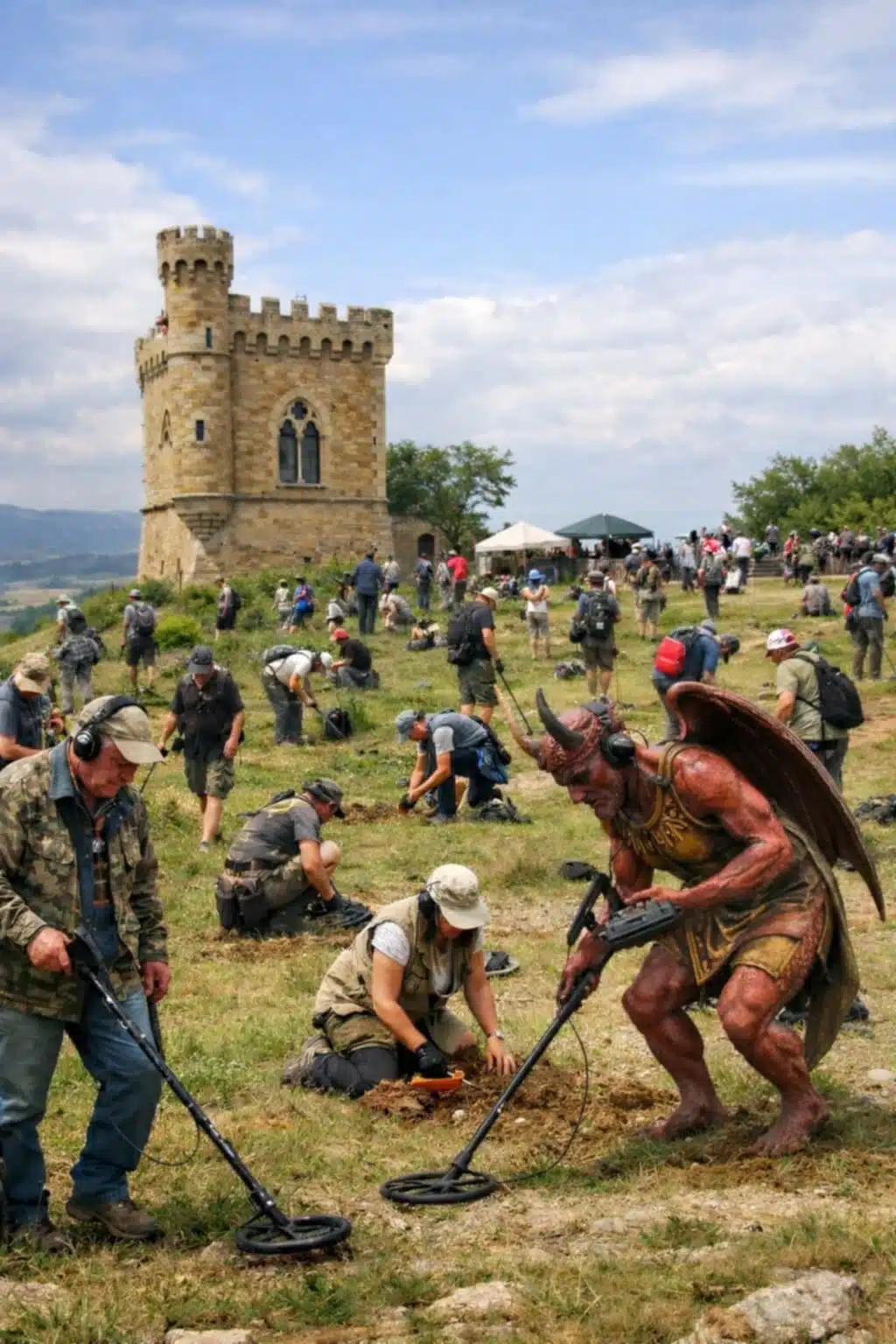
Nous revenons d’un reportage dans ce village dont il vaut mieux taire le nom… Vous reconnaîtrez pourtant sans peine la silhouette familière de sa tour Magdala, le diable cornu échappé de l’église, et quelques-uns de ses « valeureux » chercheurs, toujours prêts à dégainer la théorie la plus improbable.
À l’aube, le village n’a pas été frappé par la pluie ni par une soudaine colère du pech de Bugarach, mais par les pics et piolets du redoutable groupe des « VCC », un autophénomène typiquement audois ! Résultat : les ruelles ont retrouvé l’éclat d’autrefois, le belvédère son gravillon impeccable, et le village sa bonhomie légendaire.
Les lecteurs les plus observateurs reconnaîtront sans doute quelques figures bien connues de la recherche locale… Et pour célébrer cette expédition mémorable, nous lançons un concours dont le règlement est disponible à l’adresse indiquée !
News du 14 mars 2026
News : L’AFFAIRE BÉRENGER SAUNIÈRE : L’ENQUÊTE QUI VA TOUT RÉVÉLER
Des informations éparses, secrètes, jamais reliées… Un puzzle enfin reconstitué : tombeau, calice, monastère, société discrète, trafic, prêtre, évêque, pape… Tous les éléments sont là. Et cette fois, ils font sens.
 Une enquête journalistique exclusive, menée avec rigueur et passion.
  Dossiers confidentiels, documents oubliés, révélations inédites…
  Découvrez les visuels, les connexions, les indices.
Bientôt en ligne dans La Gazette de Rennes-le-Château !
Restez connectés, partagez, commentez… l’histoire s’écrit sous vos yeux.
L’aventure continue !

News du 14 mars 2026
Michel Vallet, le démystificateur de Rennes‑le‑Château : Une Histoire dans l’Histoire
Mais où veut en venir Michel Vallet en niant certaines évidences ? Des documents inédits et d’autres incompris seront bientôt en ligne dans la Gazette de Rennes-le-Château pour nuancer l’interview, voire la contredire…
Pour voir « Michel Vallet interviewé par Mike Aldebaran », cliquez ici ! !
« Michel Vallet démonte patiemment l’idée d’un trésor fabuleux découvert par l’abbé Saunière. Selon lui, l’enrichissement du curé s’explique par un mélange de dons privés, de mécénat ecclésiastique et d’une gestion financière parfois discutable, mais loin des fantasmes populaires. Les constructions du domaine — Villa Béthanie, Tour Magdala — relèvent davantage du goût personnel et de l’éclectisme religieux du XIXᵉ siècle que d’un programme codé ou ésotérique.
L’auteur réfute également les thèses apparues après 1956, notamment celles de Gérard de Sède et du « Prieuré de Sion », qu’il considère comme des fabrications ayant déformé la réalité historique. S’il balaie les hypothèses les plus extravagantes — trésor wisigoth, secrets mérovingiens, pistes templières — il reconnaît toutefois des zones d’ombre : documents manquants, incohérences de témoignages, réseaux ecclésiastiques encore mal connus. Autant d’éléments qui entretiennent un mystère plus humain que mythique. » (Mike Aldebaran)
On peut, dès lors, se poser la question du dépôt de l’évêque de la Cropte de Chantérac à Rennes-le-Château… !
News du 26 février 2026
Le nouveau livre d’Isaac Ben Jacob, La torah Hachem, explore les premiers chapitres de la Bible où se cache une architecture scientifique sophistiquée. Son étude nous plonge dans les profondeurs vertigineuses du texte biblique, là où la physique moderne rencontre la métaphysique antique, où les équations d’Einstein dialoguent avec les commentaires des grands maîtres du Talmud.
Torah Hachem d’Isaac Ben Jacob – Une exploration révolutionnaire des secrets scientifiques et métaphysiques de la Genèse. Pour ceux qui cherchent la Vérité au-delà du voile. Découvrir la présentation du livre et la biographie de l’auteur !
News du 10 février 2026
Le double article est en ligne : « La Pierre de Coumesourde » !
Nos mises en ligne des articles d’Isaac Ben Jacob sur les Origines du Prieuré de Sion ont secoué la toile à travers plusieurs pays ainsi qu’en France, notamment dans certaines « structures » plus ou moins discrètes ou secrètes…, visibles partiellement sur les réseaux sociaux ! Les téléphones et messageries ont chauffé et ce n’est qu’un début vu les contenus à mettre encore en ligne…
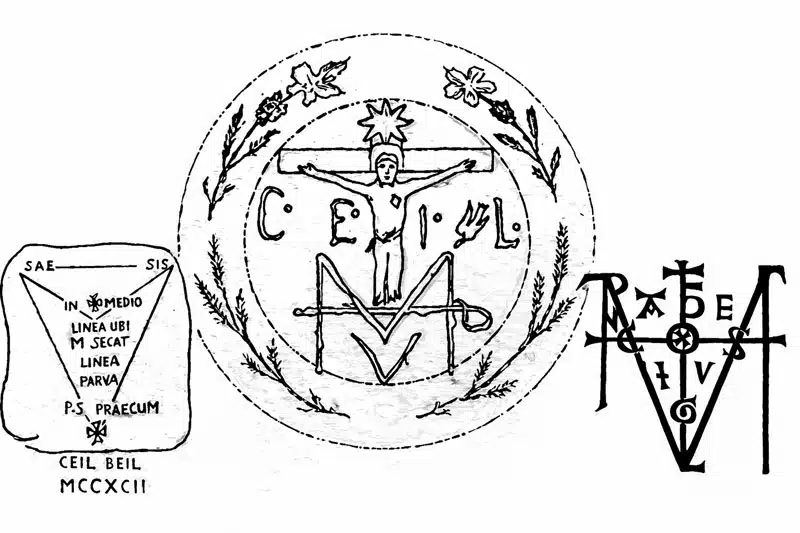
Mais reprenons le fil, nous sommes en 2016, le 21 septembre, et une étude interpelle déjà dans nos colonnes ! Elle est suivie de deux autres : les 25 décembre 2016 et 27 décembre 2017. Nous travaillons à leurs remises en ligne en lien, étonnant, avec celles d’Isaac Ben Jacob !
Nous comptons avoir terminé en soirée ou demain… Mais quels seraient donc les liens entre la pierre de Coumesourde (qu’elle ait existé ou pas), l’Hostie miraculeuse de Vintras et le monogramme de Frédéric III de Habsbourg ?
News du 31 décembre 2025
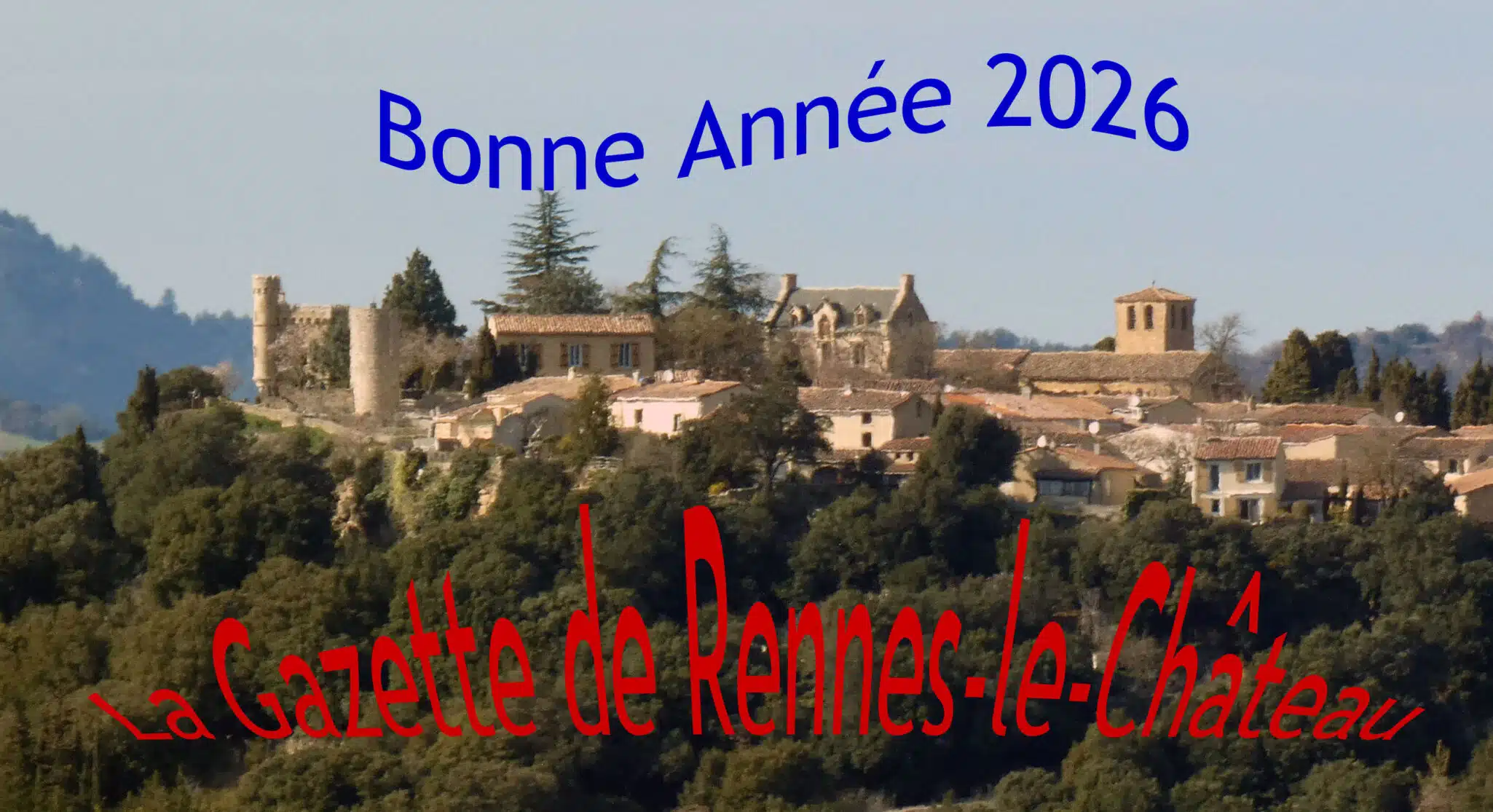
La rédaction de la Gazette de Rennes-le-Château vous souhaite une heureuse année 2026 !
Dans les prochains jours, une étude inédite sur les Wisigoths à Rennes-le-Château sera en ligne. Ce sera détonnant… La suite également des souterrains de RLC recoupée par des recherches des années… 60 ! Un inédit sur le Prieuré de Sion et, comme nous avons trié nos comptes rendus de recherches et les documents illustrés des années 1990 à 2005, quelques pépites ! L’aventure continue !
News du 24 décembre 2025
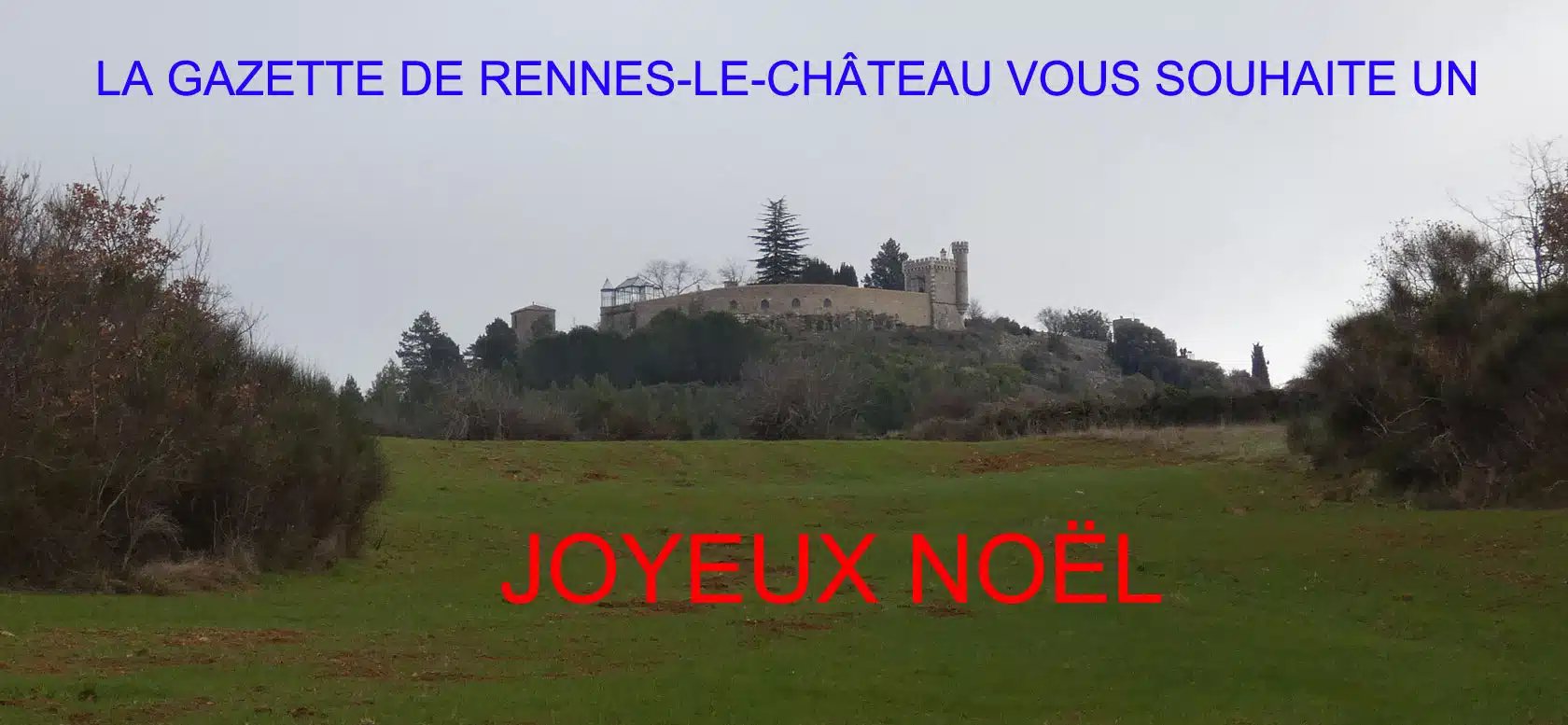
Joyeux réveillon de Noël aux lectrices et aux lecteurs de la Gazette de Rennes-le-Château ! Bientôt quelques nouveautés !
News du 19 décembre 2025
Cadeau de Noël des admiratrices et admirateurs de la Gazette de Rennes-le-Château ! Mille mercis ! L’aventure continue !
News du 15 décembre 2025
Etude inédite sur le Petit Parchemin et sa localisation😀
« Ne pouvant comprendre ce texte, il a souhaité « conserver la main », afin de pouvoir utiliser un jour cette avance qu’il avait sur d’autres chercheurs. » (Edouard Jauclin)😉
News du 12 décembre 2025
En guise de test, nous avons mis en ligne sur FB le montage photo ci-dessous : église du Tarn et celle de Rennes-le-Château avec le diable en dessous ! (Photo François Pous ©) Le test est concluant avec plus de 6000 vues sur FB… et le nombre augmente d’heure en heure ! Nous mettrons donc en ligne d’autres photos et documents intéressants, voire inédits. L’aventure continue !
News du 2 décembre 2025
Soulatgé bleu- bleu-bleu ! Je conseille la visite de l’église  Moi à la Cité de Carcassonne !
News du 1er décembre 2025
News du 4 novembre 2025
News des 14 octobre (mise à jour 23h00), 7 octobre, 25, 22, 21, 20, 17 septembre et 13 novembre 2025
Nous étions conviés au conseil municipal de Rennes-le-Château ce jeudi 13 novembre 2025. Suite à des échanges très constructifs, nous mettrons en ligne très bientôt les informations recueillies sur la fresque et les sondages de l’église.
Un million d’euros pour la restauration de l’église Sainte Marie-Madeleine – Une fresque qui n’aurait pas dû susciter de telles réactions selon le Conseil Municipal de Rennes-le-Château. Le conseil municipal fut également instructif quant à la géopolitique castelrennaise. Bientôt en ligne…
7 octobre : Après un échange téléphonique du lundi 22 septembre 2025 avec le maire de Rennes-le-Château, Monsieur Alexandre Painco, voici sa réponse (courriel du 29 septembre 2025) : « Je vous informe que vous serez invité à intervenir à la fin du prochain conseil municipal. Les conseillers municipaux et moi-même seront ainsi disponibles pour répondre à vos diverses interrogations. Je vous tiendrai au courant dès que la date sera fixée. » Dont acte.
Nous investiguons sur la fresque car nous voulons absolument éviter ce syncrétisme : « Bonjour Johan, comment était-elle cachée pour qu’on ne la découvre que maintenant ? » (X) TOUT est écrit… La suite dans les prochaines heures… C’est encore possible de joindre la Gazette de RLC pour témoigner !
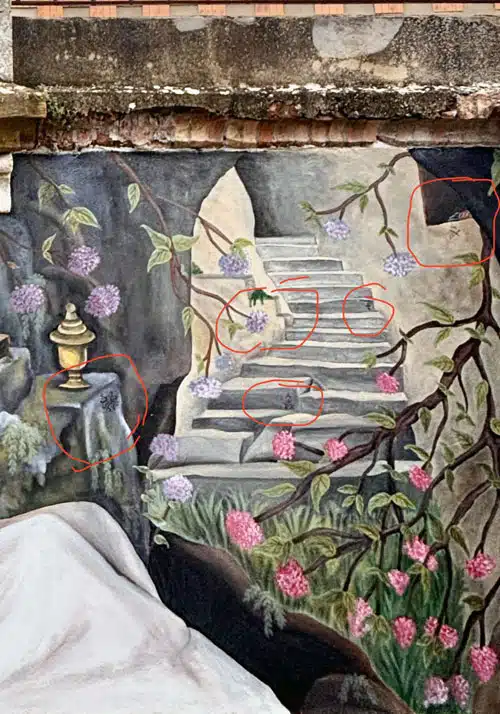
Mise à jour 21 septembre 2025 à 20h35 ! Des internautes ont prévenu la rédaction d’étranges signes peints sur la fresque ! Chacun interprétera la façon dont l’énigme est peinte… Dont acte !
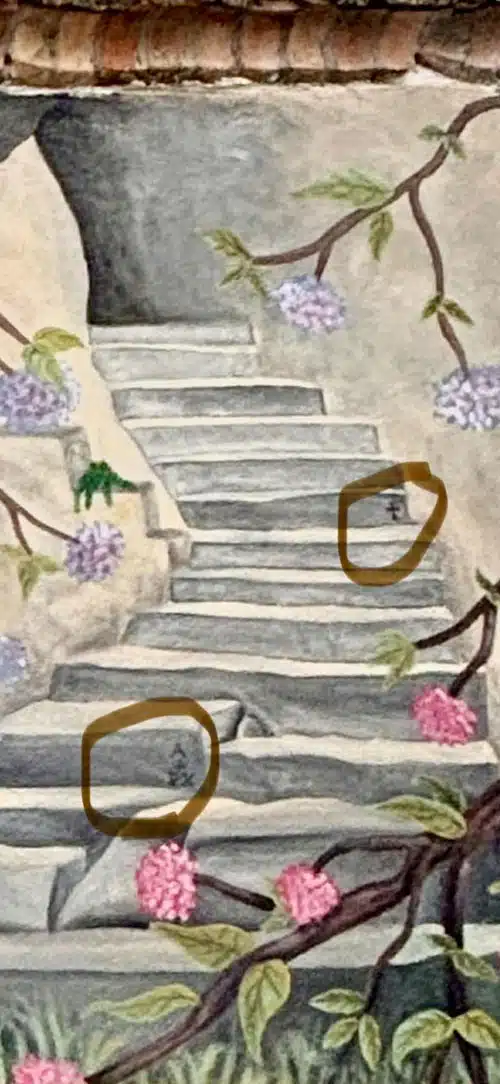
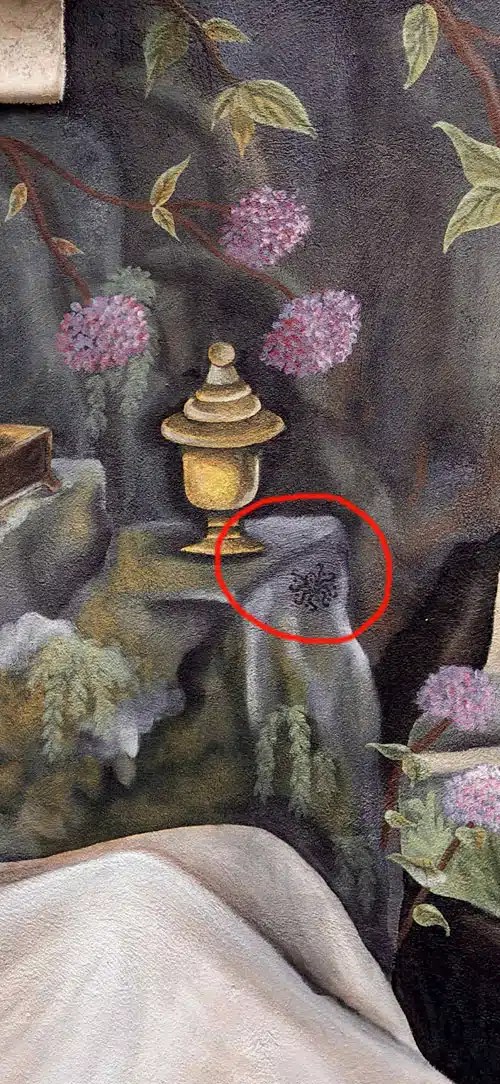
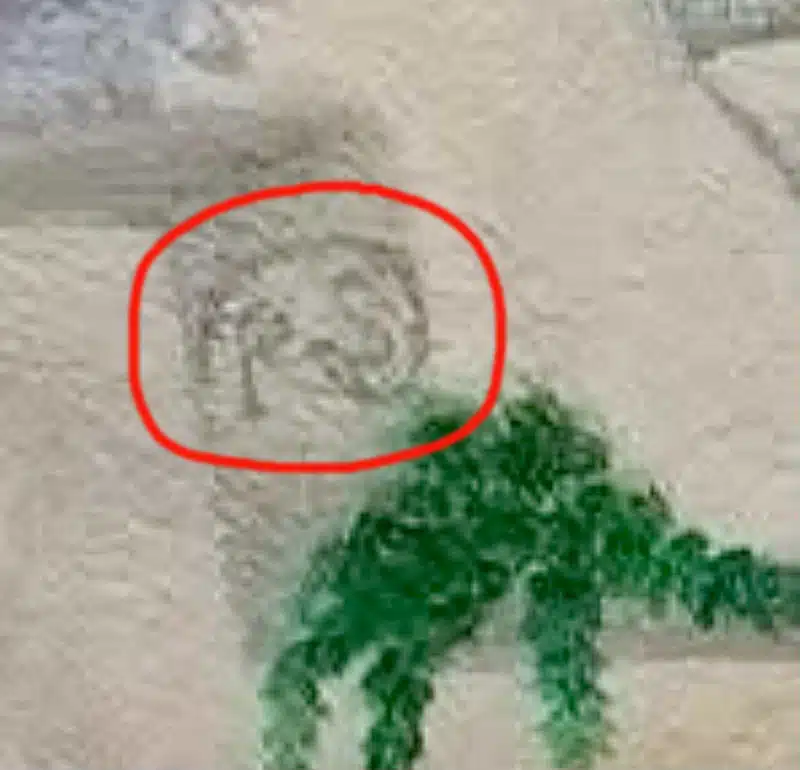
Vous êtes nombreux à avoir contacté la rédaction pour obtenir des informations concernant la genèse du projet de la fresque dans le Domaine de l’abbé Saunière, les choix de la mairie de Rennes-le-Château, le cahier des charges et les objectifs de l’artiste. Le reportage sera bientôt en ligne… Dans l’attente, des photos sont en ligne ci-dessous avec la possibilité de vous exprimer.
La fresque a été dévoilée dans le Domaine de l’abbé Saunière à Rennes-le-Château… Nous remercions les internautes qui nous ont envoyé les photos ci-dessous.
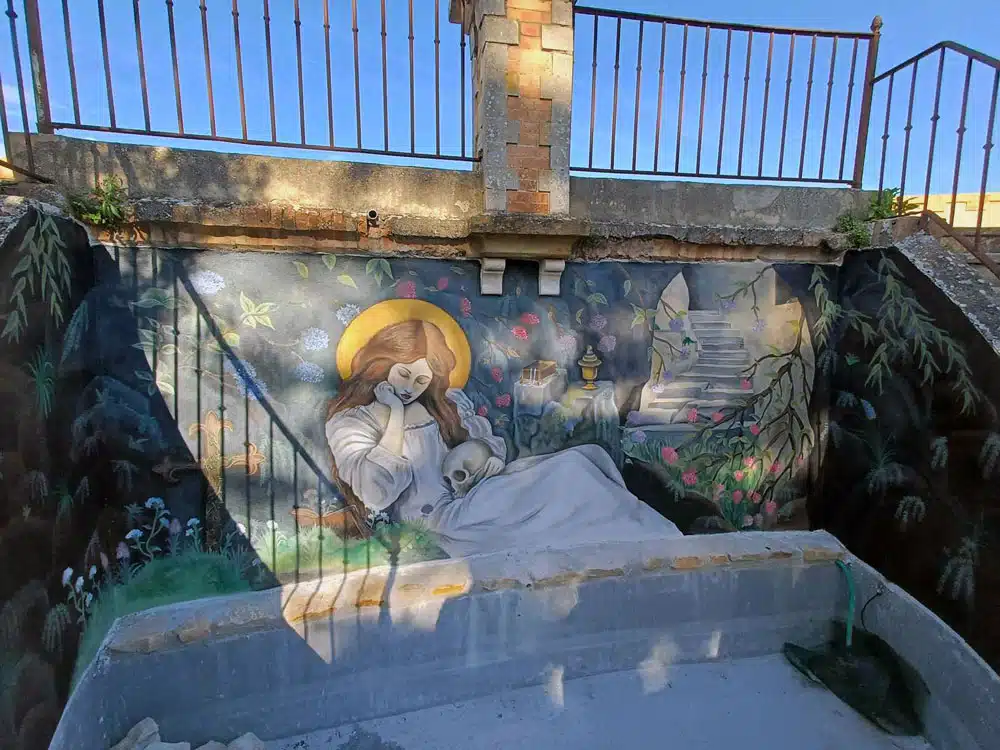
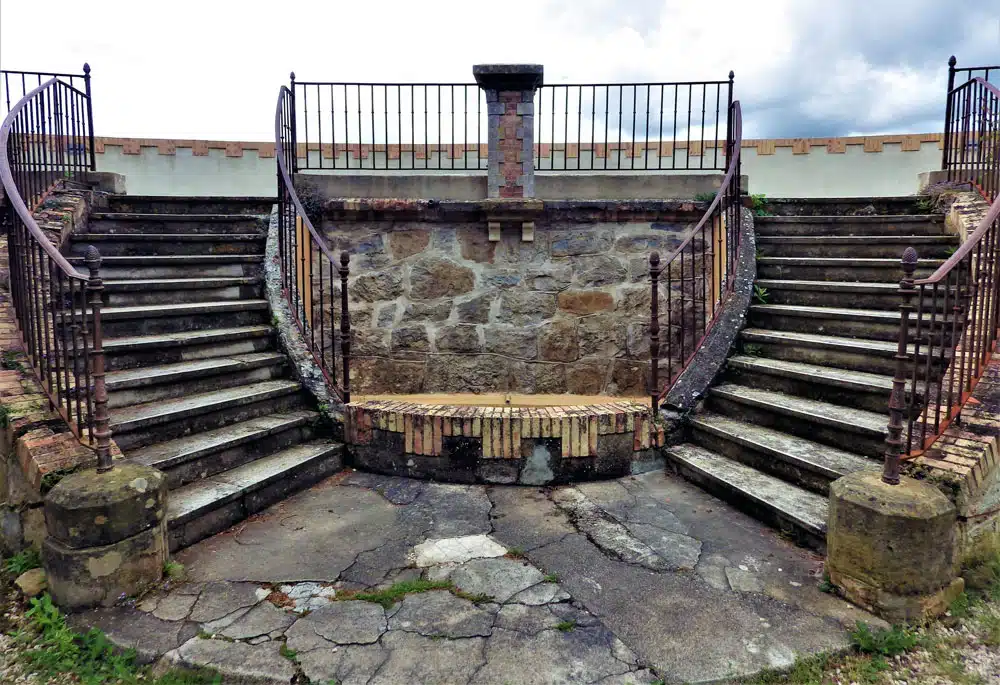
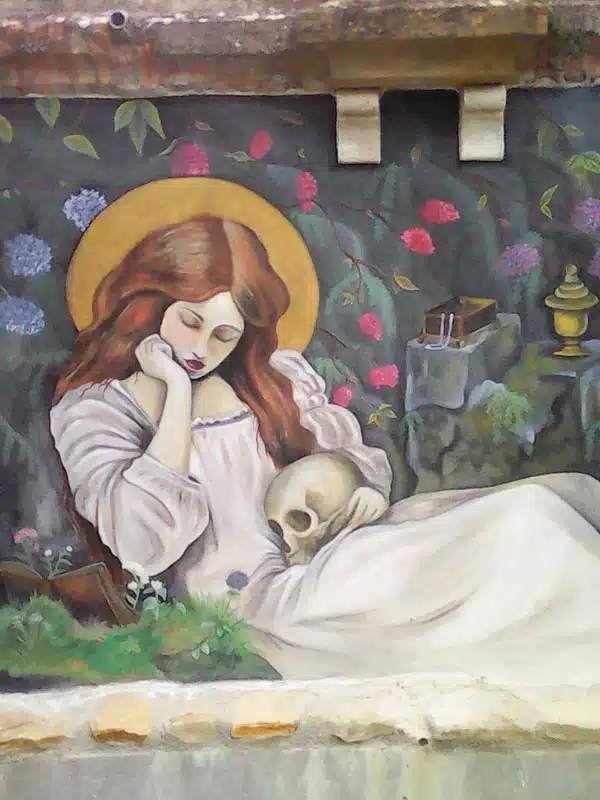
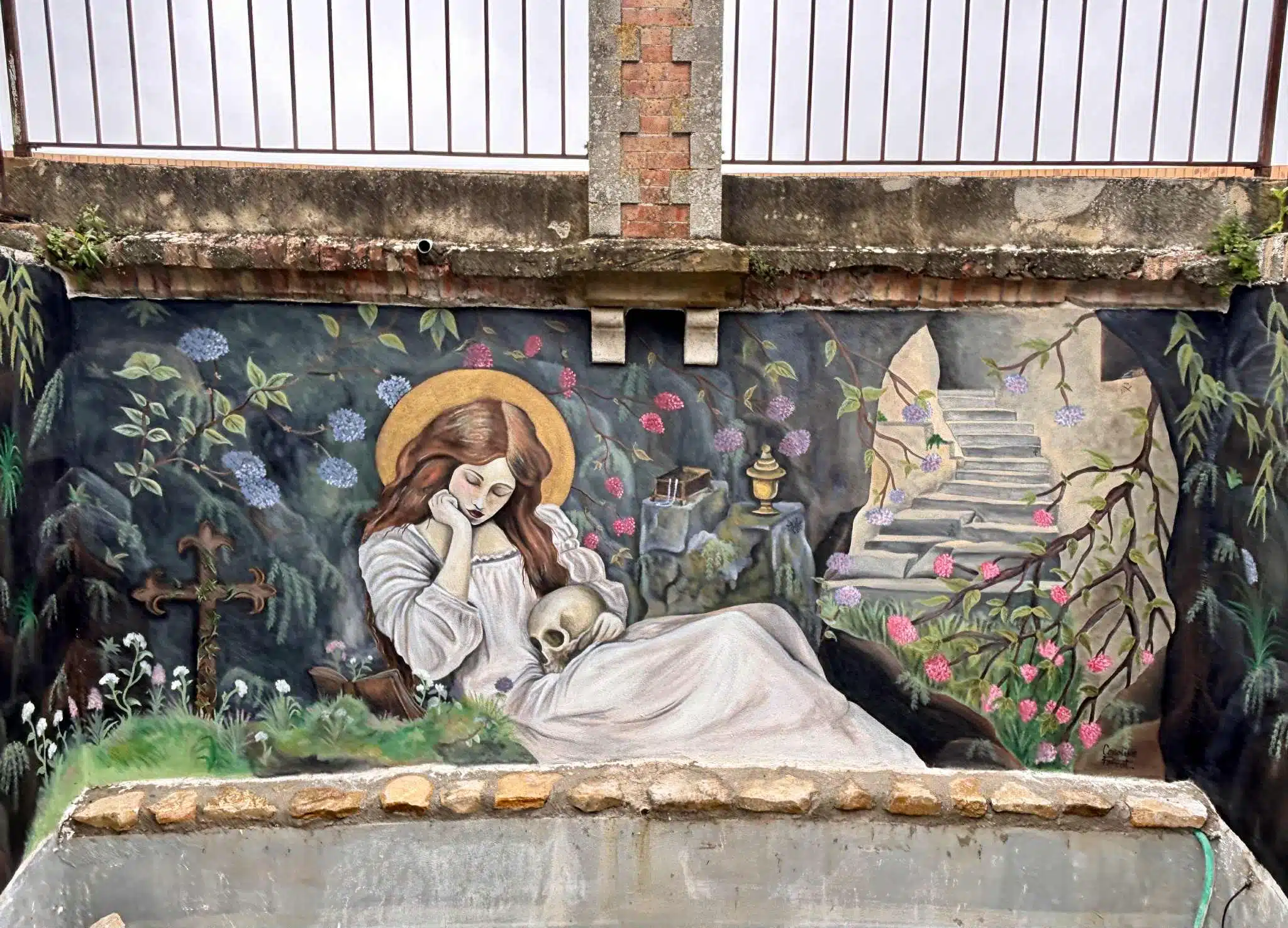
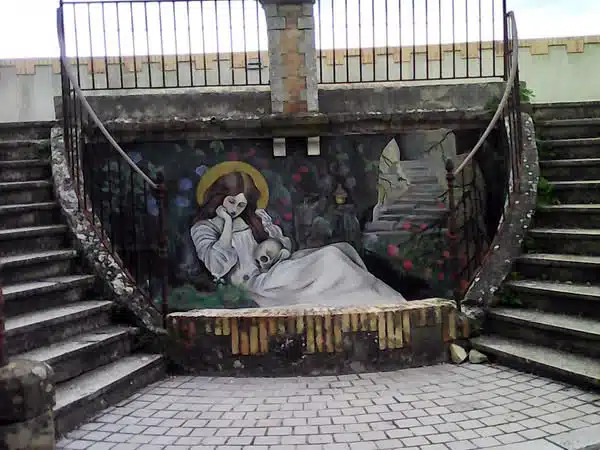
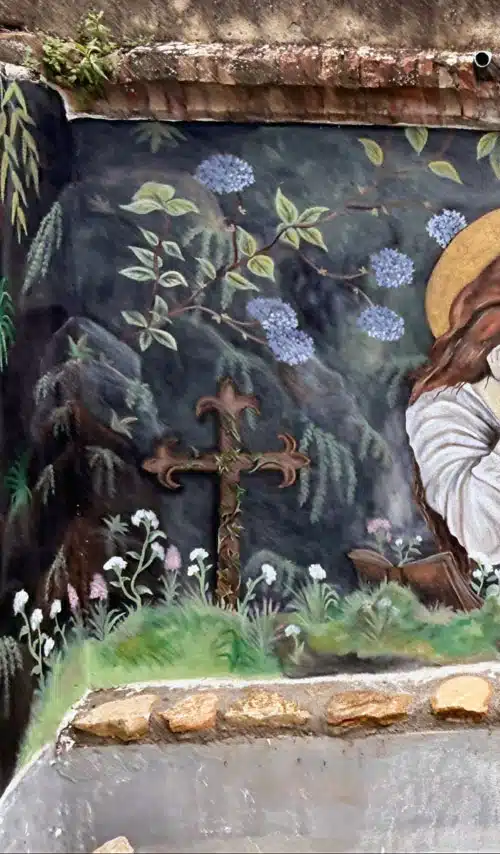
Vos avis ? Via FB ou via la rédaction !
Premières photos des travaux d’ « embellissement » dans le domaine de l’abbé Saunière, entre les deux rampes menant au belvédère ! Nous remercions notre correspondant local 🙂
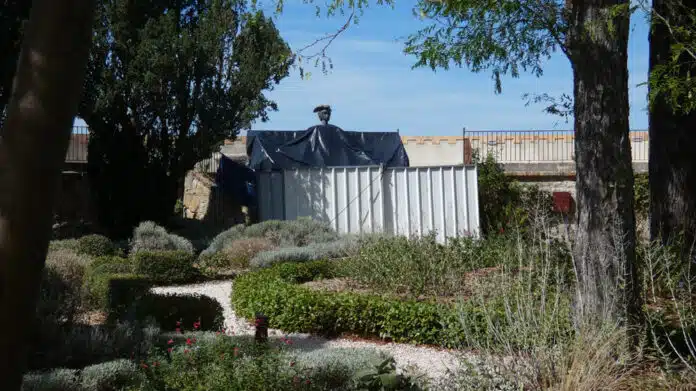
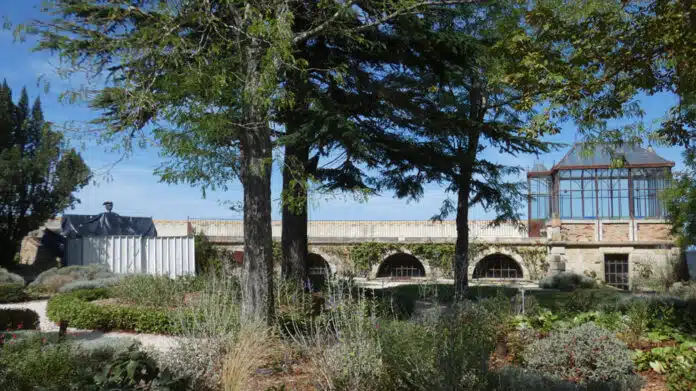
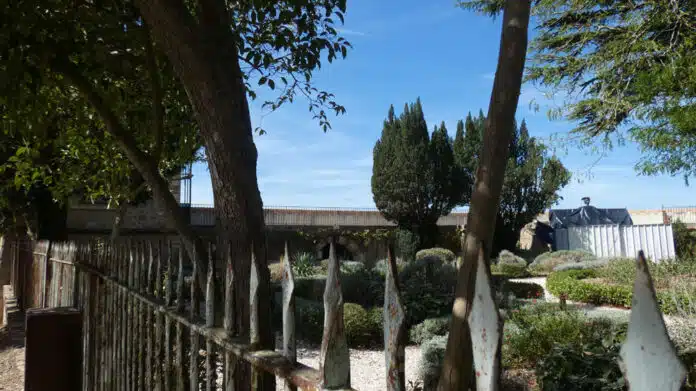
Selon nos informations, ce sont des travaux d’ « embellissement » des jardins de Bérenger Saunière… Dont acte !
News du 23 septembre 2025
News : JACQUES RAVENNE, « Les Templiers Ressuscités », interviewé par Mike Aldebaran ce mardi 23 septembre à 21h00 https://www.youtube.com/watch?v=DdSnRlLMoJs !

News du 18 septembre 2025
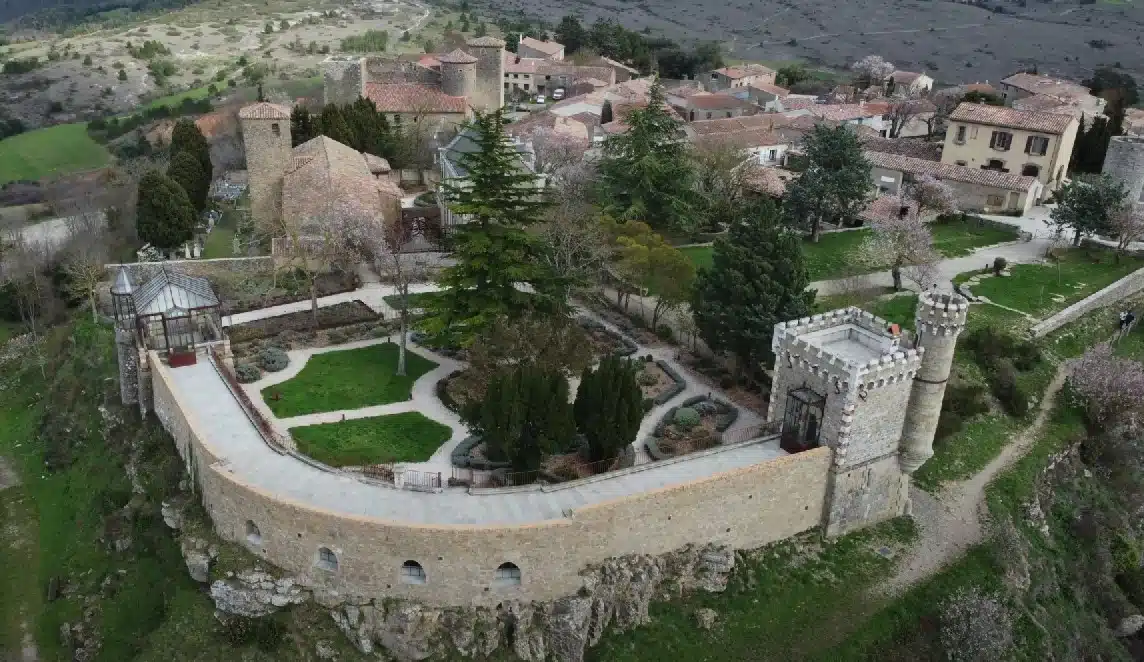
News : Les sondages géotechniques de l’entreprise Hydrogéotechnique pour les futurs travaux de sécurisation de la structure de l’église ont été brefs, une à deux journées. Ils se sont focalisés au niveau du monument aux morts le long de l’église sainte Marie-Madeleine de Rennes-le-Château dans un parterre fleuri contigu à la sacristie (voir photos). L’Atelier d’architecture Caroline Serra de Carcassonne, architecte du patrimoine, avait mandaté ces relevés pour diagnostiquer les futures restaurations à réaliser au niveau des fondations de l’église et/ou de sa structure !
Les plantations ont été replantées après les sondages. Seules traces, les boulons remplacés des barrières démontées devant le monument aux morts, et un serre-joint en haut de la barrière désolidarisée du mur de la sacristie.
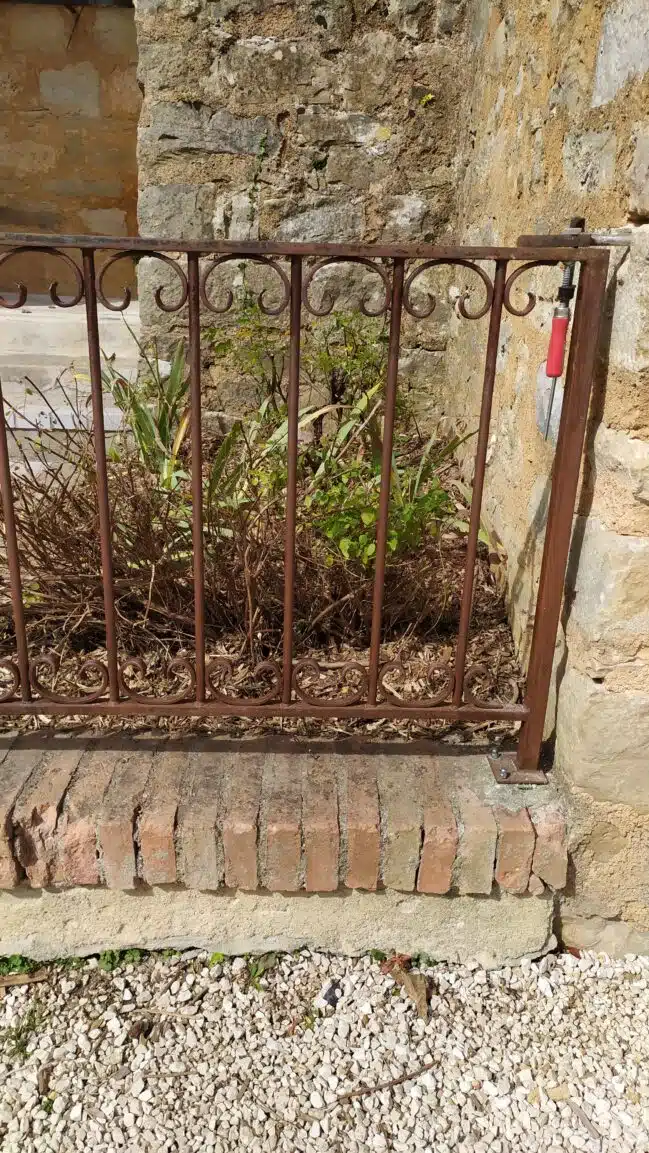
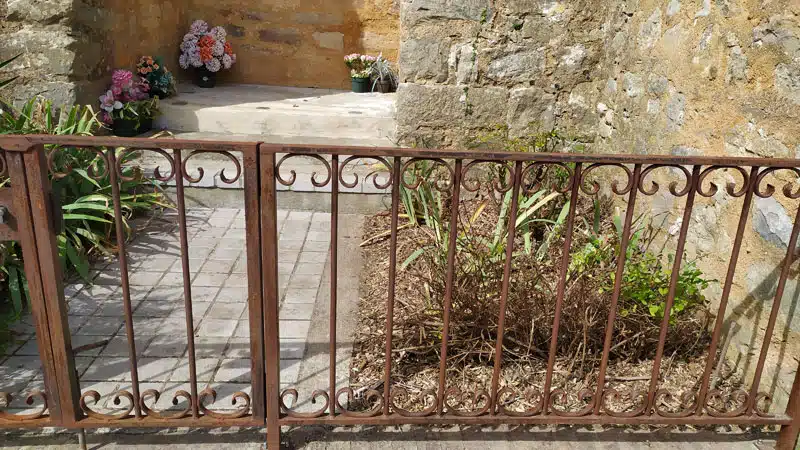
Selon nos informations, un autre sondage aurait eu lieu de l’autre côté de la sacristie, proche de la pièce dite secrète, près de la fontaine attenante. Lors de notre passage le 7 septembre 2025, quelques traces subsistaient : morceau de pierre au sol et traces bleues.
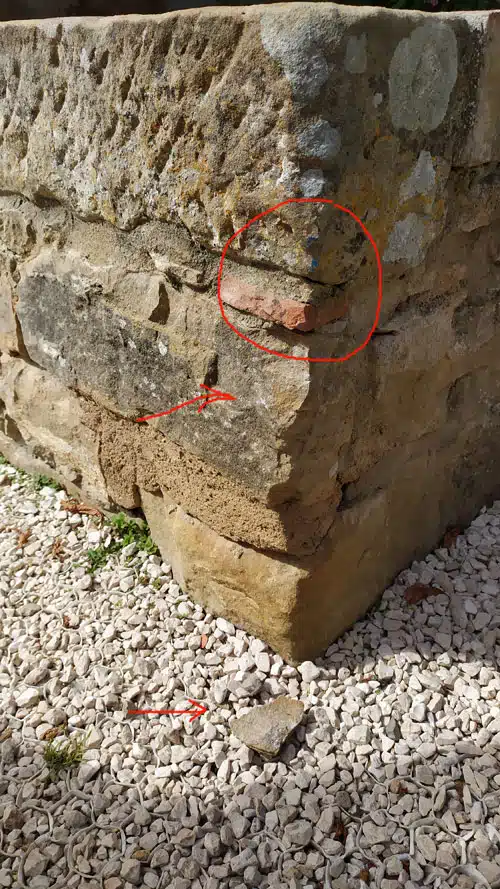
Le 17 septembre 2025, les traces avaient quasi disparu… comme frottées.
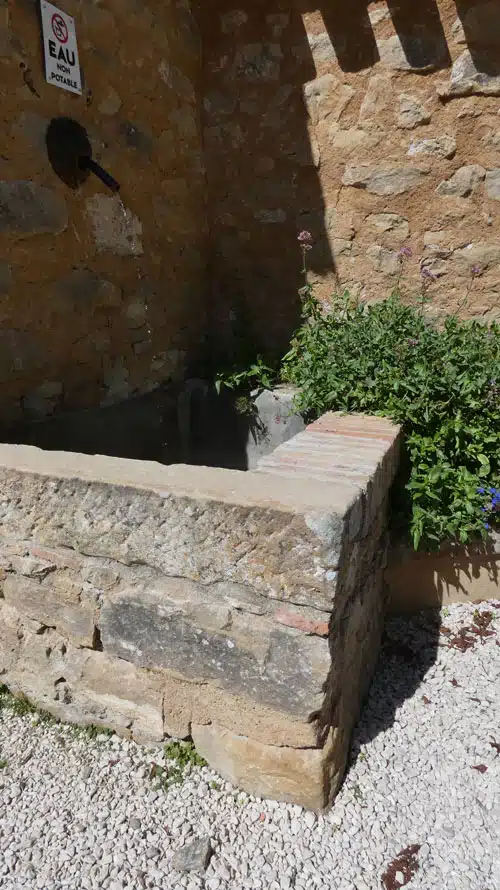
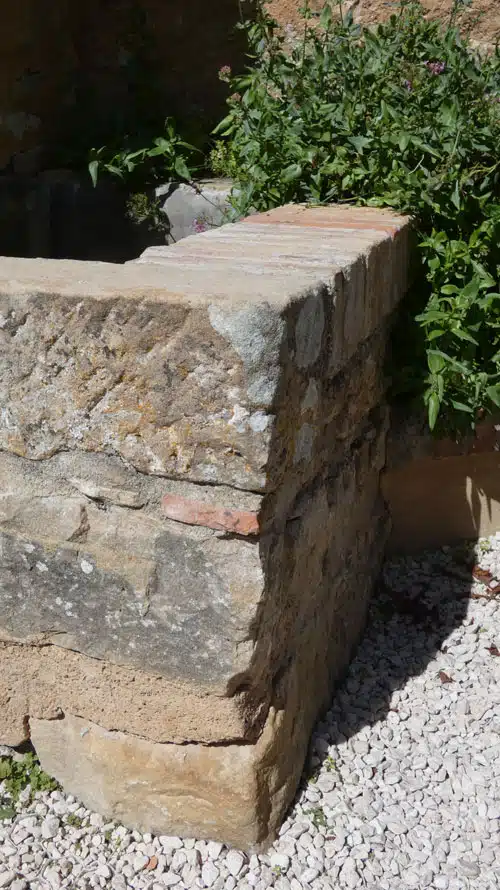
Mais qui est donc l’Atelier d’architecture Caroline Serra de Carcassonne, architecte du patrimoine ? Il est connu de nos lecteurs puisque une de nos journalistes, Caroline Machut, avait couvert la conférence du 29 juillet 2022 à la Capitelle de Rennes-le-Château sur l’église paroissiale sainte Marie-Madeleine.
« Dans le cadre de futures réfections de l’église sainte Marie-Madeleine de Rennes-le-Château, l’atelier Caroline SERRA, a été sollicité pour établir un diagnostic du bâtiment. Les études ont été menées par Elisabeth MARTIN, historienne, Michel VERROT, architecte des Bâtiments de France 1980, Christian FALIPOU, ingénieur structure, sous l’égide de Hugues VAN AERDE, architecte du patrimoine.
L’église Saint Marie-Madeleine est protégée par la DRAC depuis le 26 juillet 1994, classée aux Monuments historiques. » (Caroline Machut)
Son reportage complet est en ligne avec la triple intervention, les questions-réponses et les réflexions de la rédaction : L’état de l’église de Rennes-le-Château.
Lire les reportages sur ces sondages des 30 aout, 31 aout et 1er septembre !
Un conseil pour se parquer à Rennes-le-Château !
News 1er septembre – 31 aout (mises à jour) & 30 aout 2025
30 aout 2025 Nous avons été avertis de palissades posées dans le jardin du calvaire jouxtant l’église de Rennes-le-Château au même endroit que des fouilles clandestines entreprises dans la nuit du 29 au 30 décembre 2017 et à côté du cèdre abattu.
31 aout 2025 : Le premier adjoint de la mairie de Rennes-le-Châteu, Frédéric GORDO, vient de nous donner des précisions sur les palissades dans le jardin du calvaire : « Ce sont des préparations pour des sondages géotechniques pour les futurs travaux de sécurisation de la structure de l’église ! Pour le moment, ce sont juste des barrières. Les arrêtés municipaux seront affichés en début de semaine ? Rien n’a commencé ! »
Nous soulignons qu’il s’agit d’un bel exemple de communication ! A suivre donc !
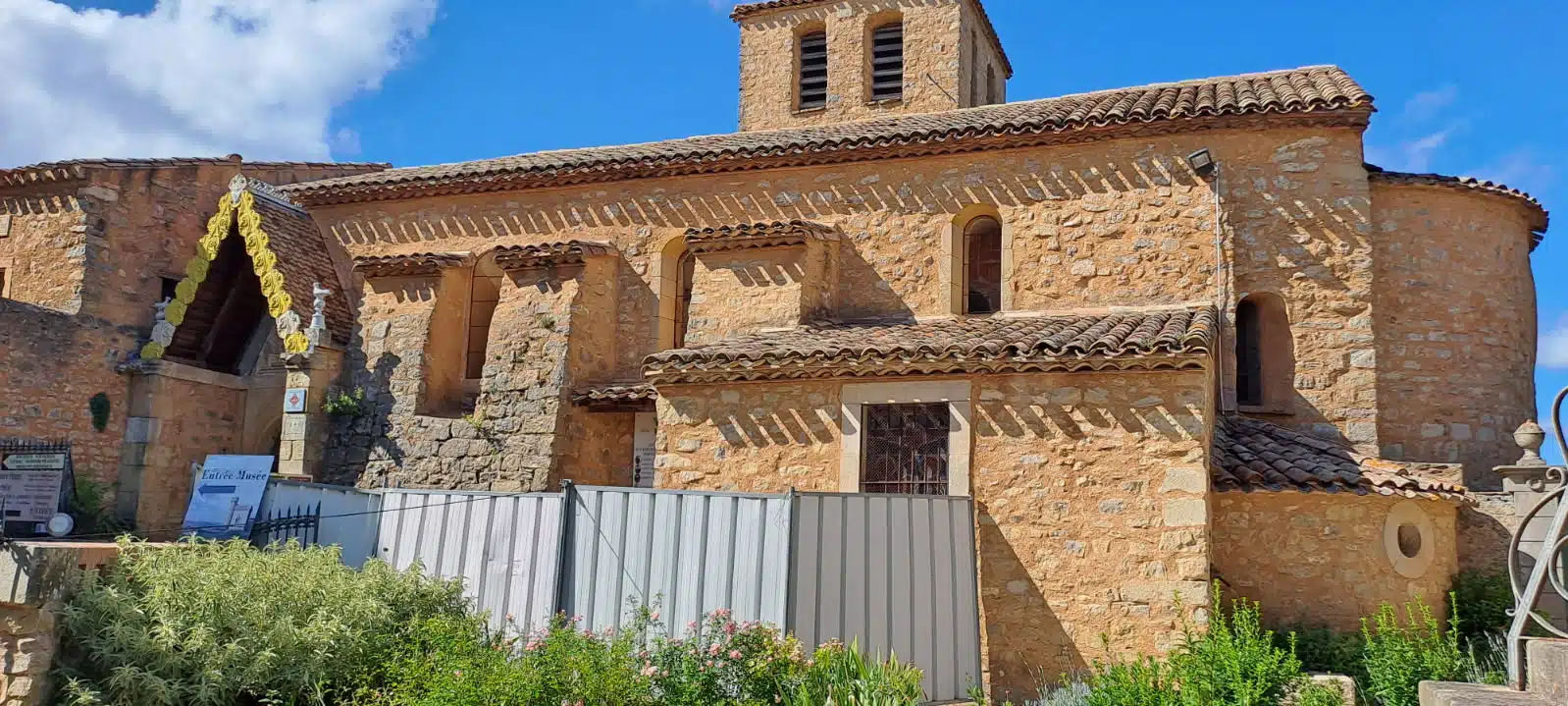
Ce 1er septembre 2025, affichage de l’arrêté municipal sur les travaux dans le jardin du calvaire, signé le 29 aout 2025 ! Nous remercions notre correspondante locale, Marie Lebailly, pour l’envoi des photos.
Autorisation donnée à l’entreprise Hydrogéotechnique pour réaliser des sondages géotechniques, à savoir carottages, pénétrométrie, sondages pressiométriques.
Lieu : « L’emprise au sol est circonscrite devant le monument aux morts, de la grille d’entrée à deux battants jusqu’à l’angle de l’église (sacristie) selon le plan annexé. » Le plan est absent…
Durée des travaux : du 1er septembre au 14 septembre inclus.
Lire l’arrêté ci-dessous.
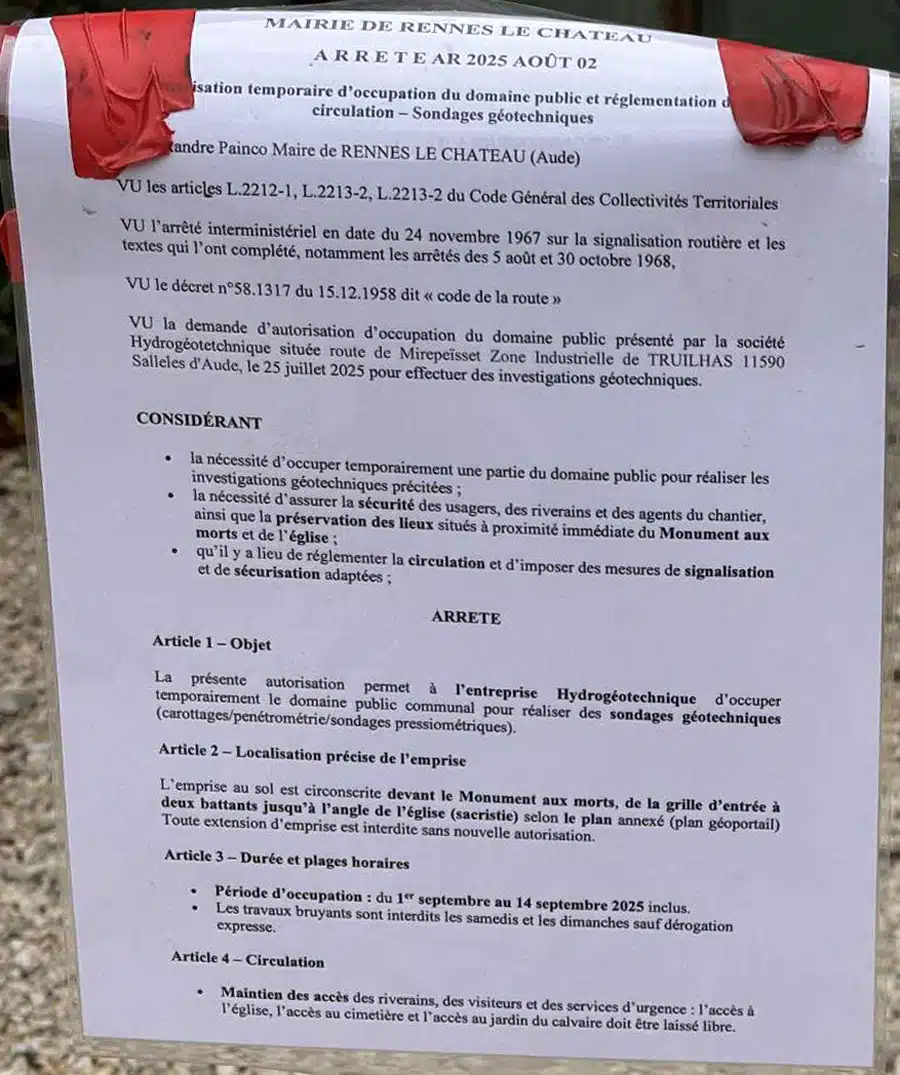
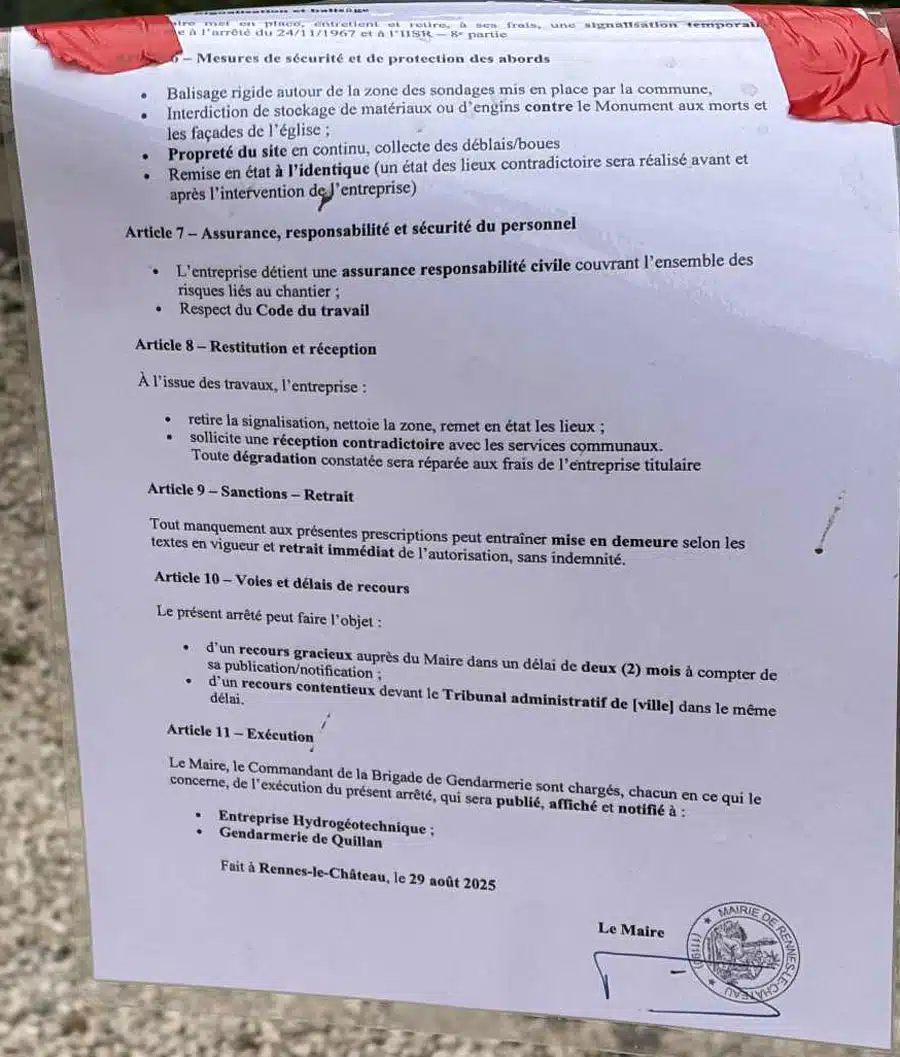
Vous serez peut-être bientôt sollicités par une future souscription publique… (Info d’un témoin)
Fouilles clandestines du 29 au 30 décembre 2017
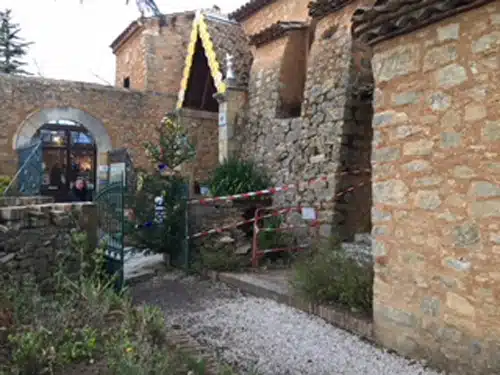
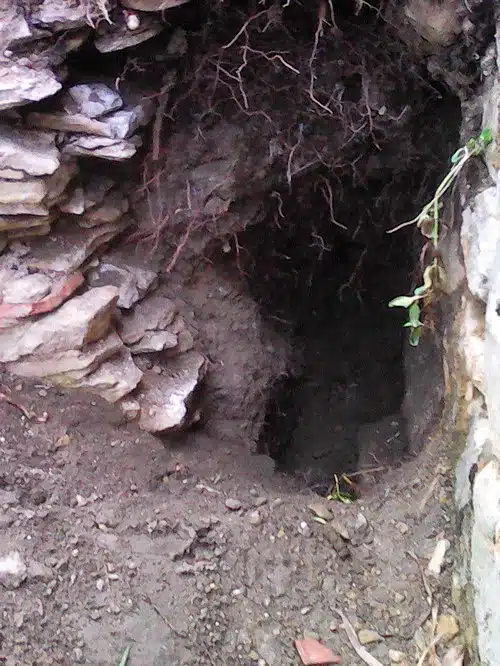
Dans la nuit du 29 au 30 décembre 2017, un trou a été creusé dans le jardin du calvaire à droite de la porte d’entrée de l’église de Rennes-le-Château et à gauche du monument aux morts (voir les photos) !
Le trou a été découvert par Marcel Captier, 2e adjoint au maire de Rennes-le-Château. Environ un mètre cube de terre et de pierres du mur a été entassé pêlemêle aux alentours. Les fondations de l’église sont apparemment atteintes.
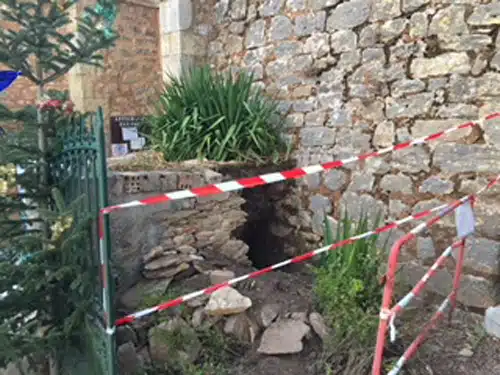
Le but était manifestement de rejoindre le sous-sol de l’église en retrouvant un éventuel souterrain ! Le ou les vandales n’a (ont) pas réussi.
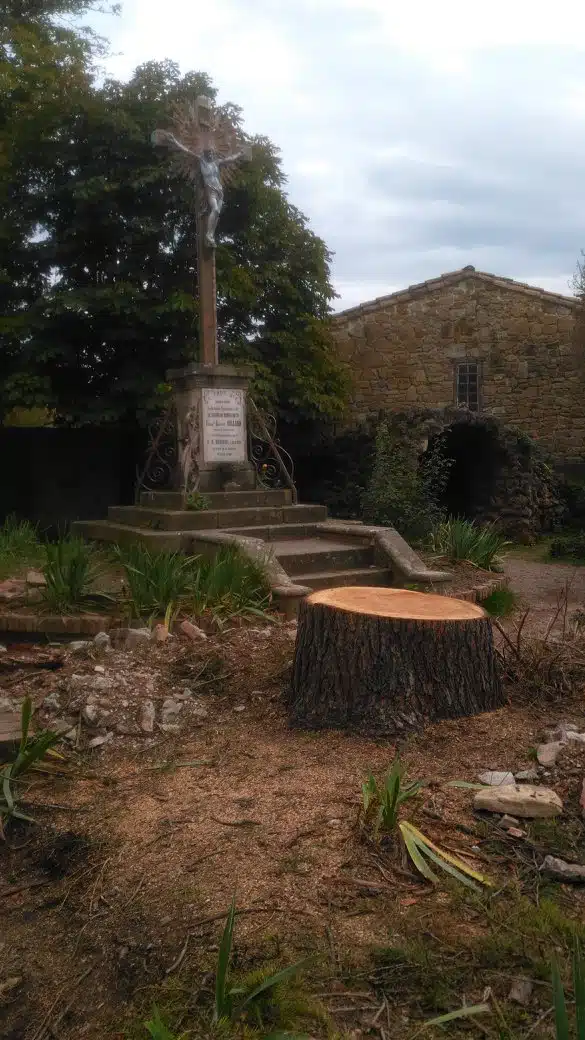
Ensuite le cèdre abattu le 10 octobre 2019
L’abattage du cèdre dans le même lieu fut condamné par de très nombreuses personnes, sans que les raisons de l’abatage soient étayées par des professionnels… (Lire l’article sur l’abatage du cèdre avec le reportage vidéo !)
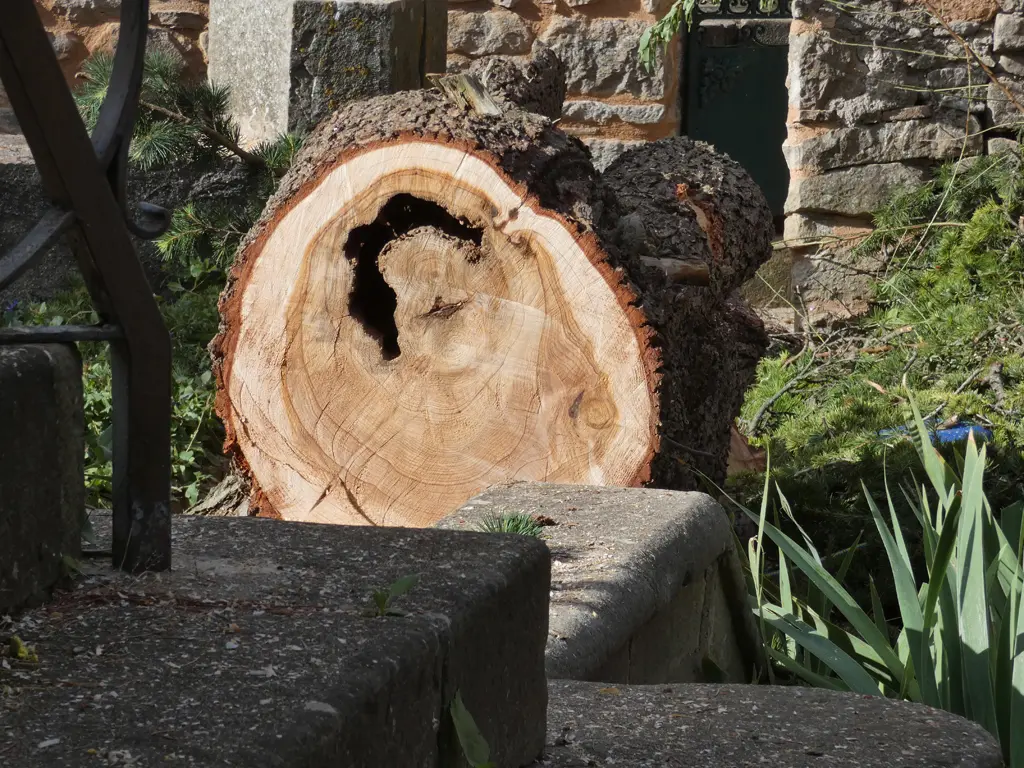
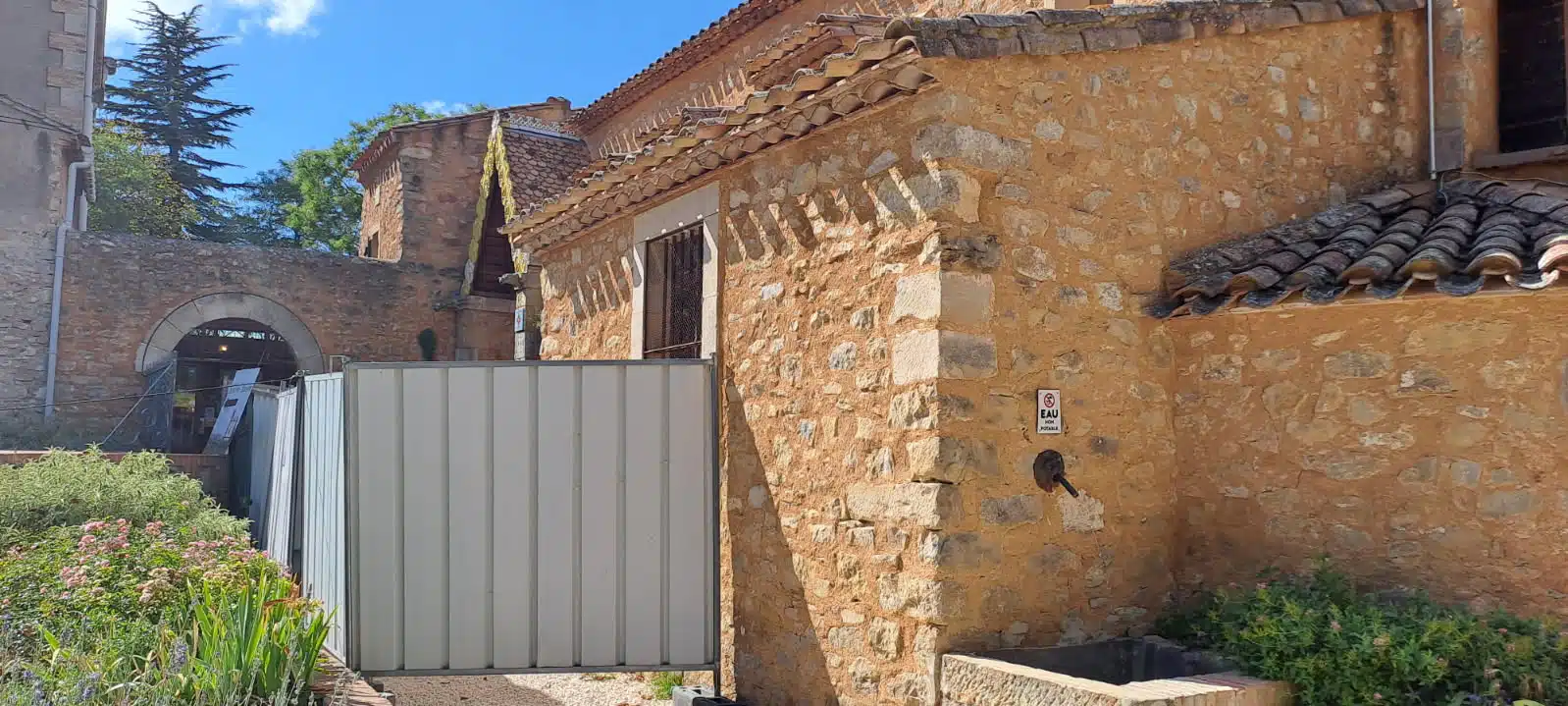
Fin aout 2025
Nous ne manquerons pas de vous tenir informés de la suite de ces « travaux »… Aucun document explicatif n’est affiché !
Mise à jour du 9 aout 2025 – 30 mai 2025
Le tome 2 de Patrick Ferté longtemps considéré comme le monstre du Loch Ness castelrennais paraitra le 28 aout 2025 !
Nous avions gardé l’info secrète puisque c’était le souhait de notre source… Vous procurez en avant-première le tome II de Patrick Ferté 33 ans après la sortie du tome I : https://amzn.to/4kknzRe !
On peut dire que l’info est recoupée vu l’endroit où se trouve ce 2e tome « Arsène Lupin – La symphonie des coïncidences », Editions Trédaniel, 544 pages, parution le 28 août 2025.
« Natif du Triangle d’or lupinien, Patrick Ferté, historien chevronné, avoue avoir fait le mur de l’Université et du CNRS pour s’adonner à un jeu de cache-cache avec le gentleman cambrioleur de l’Histoire de France hermétique. De cet escape-game piégé, nul ne sortira intact.
Du même auteur : Arsène Lupin Supérieur Inconnu. La clé de l’œuvre codée de Maurice Leblanc (Guy Trédaniel éditeur, 1992, 2004, 2021). » (Editeur)

Pour comprendre les affaires de Rennes-le-Château, Rennes-les-Bains, Gisors et Stenay, il faudra vous transformer en rat de bibliothèque, et pas uniquement lire les livres sur ces énigmes.
Ô que non ! Des encyclopédies, aux monographies locales en passant par les illustrations et cartes, qu’elles soient de Cassini ou IGN, sans oublier les œuvres littéraires, ésotériques ou exotériques !
Je tire le fil d’Ariane du livre de Patrick Ferté « Arsène Lupin Supérieur Inconnu – La clé de l’oeuvre codée de Maurice Leblanc ».
Comme j’en suis au préambule, j’ajoute un complément indispensable à tout honnête chercheur, c’est la pratique du terrain, instruments à la main et yeux aux aguets. J’y reviendrai en évoquant certains lieux cités par Patrick Ferté et d’autres de notre crû.
Dans cette quête, mon vrai fil d’Ariane est Maurice Leblanc, alias Arsène lupin ou serait-ce l’inverse ? Allez savoir avec la gouaille d’Arsène et la malice de Maurice…
L’oeuvre de Maurice a connu diverses analyses… » A SUIVRE…
D’après nos sources, un tome III devrait sortir assez vite après le tome II 😉
Ce sera l’événement 2025 si la qualité de ce tome 2 se confirme 😉
Vous procurez en avant-première le tome II de Patrick Ferté : https://amzn.to/4kknzRe !
9 aout 2025 et 30 mai 2025, Johan Netchacovitch ©
24 juillet 2025
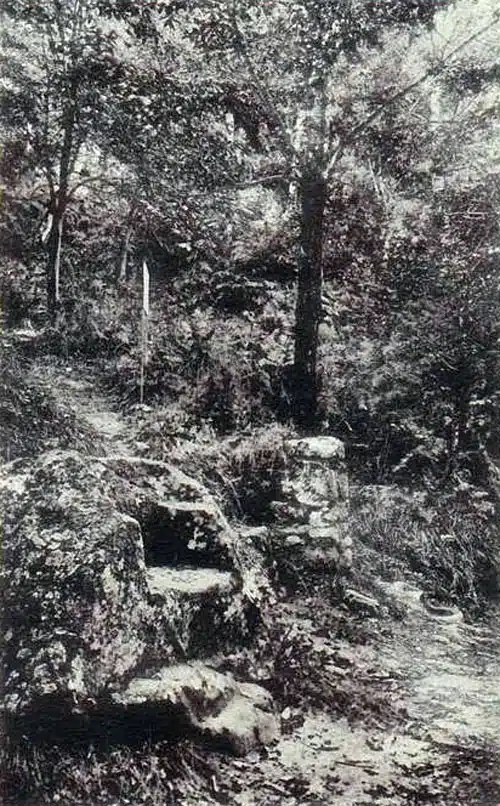
L’abbé, le siège et la stèle
Depuis 21 années que nous relayons et créons l’actualité de la Haute-Vallée de l’Aude, nous avons mis en ligne plus de 10000 news ! Certaines en lien avec les animations et conférences, d’autres avec la production littéraire sans compter les interviews, études et reportages produits par notre média ou notre chaine Youtube. Parmi les multiples articles parus sur d’autres sites, nous avons déniché parfois de remarquables études fruit de longues recherches !
En cette période de vacances, nous vous avons sélectionné trois études de cet acabit. Elles font le point et/ou apportent des éléments probants et neufs :
- « Les anomalies de la stèle de Marie de Nègre d’Ables » par Tony Bontempi
- « Le fauteuil du diable » par Patrick Mensior
- « Souvenirs de l’abbé Gaudissard » par Christian Attard
13 juin 2025
News : L’évêque de Carcassonne a effectué une visite épiscopale à Rennes-les Bains (lire la news du 4 juin 2025). Dans les prochains jours, nous serons en mesure de vous en parler. Ce fut très surprenant et instructif !
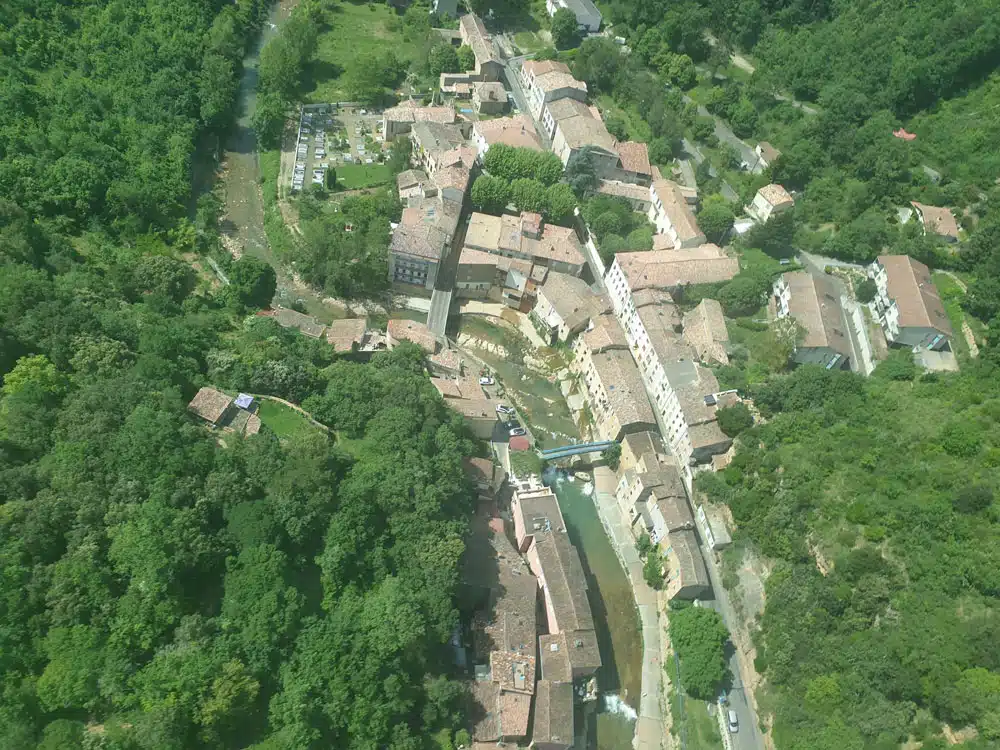
L’avis de l’évêque, le dossier Saunière, l’église de Rennes-le-Château, le cimetière de Rennes-les-Bains et… beaucoup plus ! A SUIVRE !
4 juin 2025
L’évêque de Carcassonne et Narbonne sera demain, 5 juin, à Rennes-les-Bains.
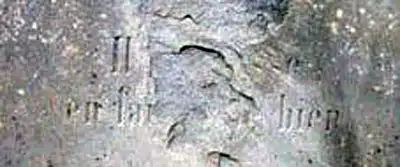
La devise ecclésiastique de Monseigneur Bruno Valentin est « Il est passé en faisant le bien » (pour vérification le site de l’église catholique de France (https://eglise.catholique.fr/guide-eglise-catholique-france/personne/mgr-bruno-valentin/).
Pour la suite, le 6 juin, Kris Darquis a rédigé un article très intéressant intitulé « Le 6 juin dans l’affaire de Rennes-le-Château et de l’Aiguille creuse » à lire attentivement https://portail-rennes-le-chateau.com/laiguille-creuse-de-maurice-leblanc-et-la-date-du-6-juin/ !
Faut-il rappeler aussi que Christian Doumergue a écrit « Le secret dévoilé » publié le… 6 juin 2013 !
A suivre…
12 mai 2025 Colloque Conférences Infos route
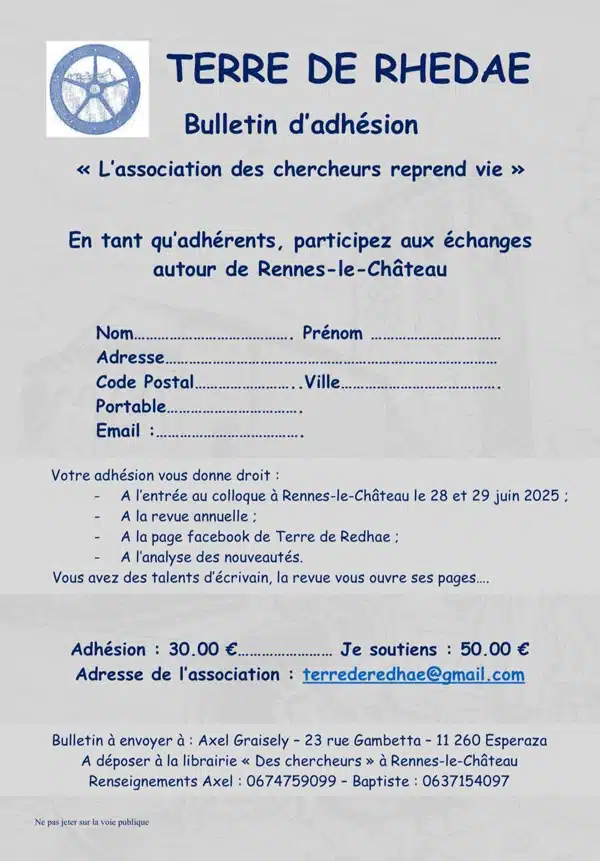
Colloque de Terre de Rhedae
News : Nous avons le plaisir de vous prévenir de la renaissance de Terre de Rhedae en sommeil depuis 2020 ! Si nous reviendrons amplement sur les nouvelles chevilles-ouvrières de l’association castelrennaise dans les prochaines semaines, nous vous conseillons de cocher deux dates dans vos agendas : les samedi 28 juin 2025 et dimanche 29 juin 2025 !

Nous mettrons en ligne les interviews des trois membres du Bureau avant les conférences de fin juin.
Affiliation à Terre de Rhedae
Pour faire partie des premiers nouveaux membres de Terre de Rhedae, vous pouvez télécharger le bulletin d’adhésion et le renvoyer ainsi que votre chèque au trésorier, Axel Graisely, 23 rue Gambetta, 11260 Espéraza ! Cliquez ici pour copier le bulletin d’adhésion.
Infos routières
De nombreux lecteurs nous ont contactés pour faire part de leur désarroi face aux sens interdits menant à la colline dès lors « perdue »…
Puisque la communication n’a jamais la préoccupation des édiles locaux, voici un bref topo pour aider nos lecteurs avant la période estivale.
Depuis janvier 2025, la traversée de Rennes-les-Bains est déviée dès l’entrée du village en venant de Couiza par le pont menant à Montferrand face à l’épicerie. La déviation vous mène de l’autre côté du village à hauteur du pont de Sougraigne. Comme les travaux prennent du retard, nous vous avertissons des sens uniques vers Rennes-le-Château.
Pour rejoindre ce village depuis Rennes-les-Bains, vous devez emprunter la route de Lavaldieu à partir de la Ferrière, en sens unique sauf pour les locaux. Et de Rennes-le-Château vers Rennes-les-Bains, depuis le plateau, vous diriger vers La Cabanasse, route également à sens unique sauf pour les locaux… ! Vous avez suivi ?
Tout cela dans le but de prévenir les chercheurs qui investiguent du côté de l’antenne télé. Ils doivent s’y rendre via la montée vers Rennes-le-Château et, au plateau, s’orienter à gauche vers la Cabanasse. Bonnes recherches !
3 mai Montpellier Projection Georges Combe
Le Temps des OVNIS, un temps suspendu
News : Que dire du film de Georges COMBE, LE TEMPS DES OVNIS, réalisé par Daniel ROBIN ? Le voir et le revoir !
Le dimanche 6 avril 2025, je le revoyais pour la cinquième fois. Georges Combe avait accepté mon invitation pour présenter son film à Montarnaud dans l’Hérault, dans le cadre des repas ufologiques de Montpellier. La magie opère inlassablement. Un récit toujours autant enchanteur, poétique, inquiétant, captivant. Ce film nous projette dans un voyage de 1h52 au filage si fluide et juste, entrelaçant les entrevues de spécialistes de renom et de très belles images de synthèse de Didier Ozil et Vincent Favrot ; une trame mélodieuse emportée par la musique de Gilbert Grilli. Une exploration, des questionnements, qui bousculent nos croyances et notre imagier « tôle et boulons ».
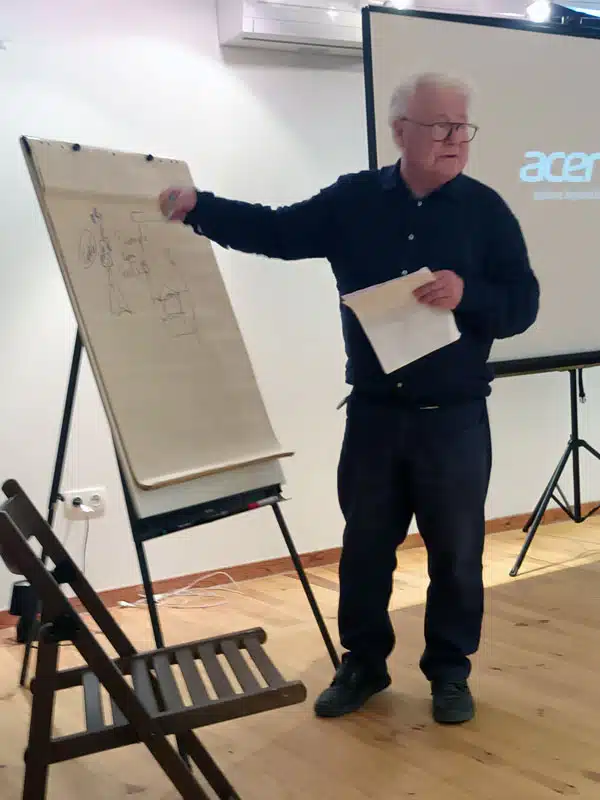
Il aura fallu 9 ans à Georges Combe et son équipe, de 2013 à 2022, pour réaliser ce film que je n’hésite pas à qualifier d’approche hors du commun dans le paysage des documentaires sur les ovnis.
Voici un extrait de l’introduction au film, issu du livret accompagnant le coffret DVD : « Nous avons souhaité que ce film propose une vision originale du phénomène OVNI : une sorte de réflexion, voire de méditation, sur l’idée même qu’il puisse exister des manifestations inexplicables au sein de notre réalité. Ces problèmes sont à la fois philosophiques, scientifiques et techniques. Ils sont aussi sociaux, politiques, psychologiques et artistiques. C’est toute une conception du monde qui se dévoile à travers le phénomène ovni. »
Georges a pris le temps, avant la projection, de nous expliquer la genèse du film, et comment il en était venu à s’intéresser aux ovnis.
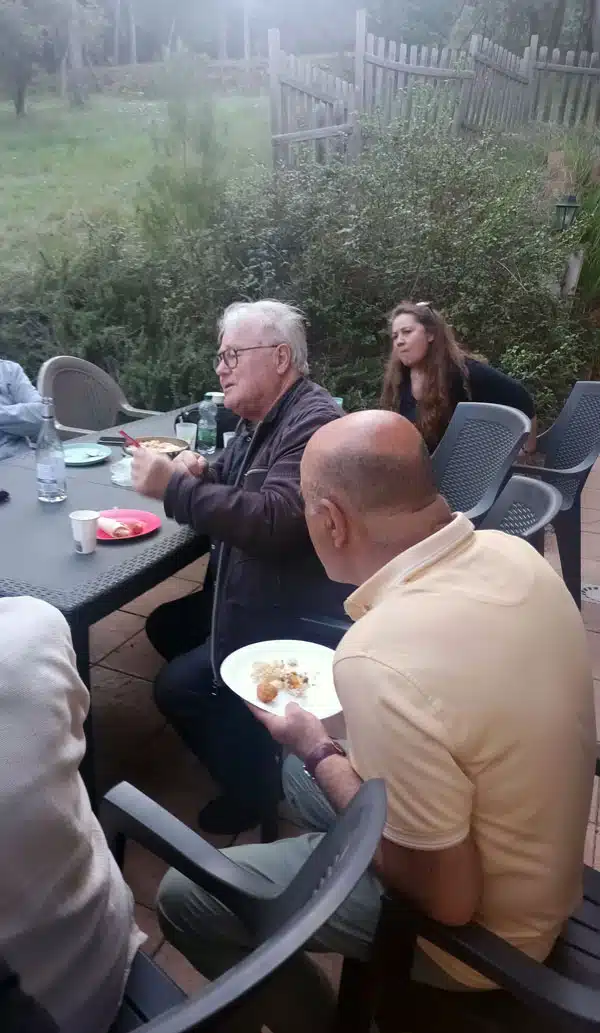
Á l’issue de la projection, la soirée s’est prolongée autour d’un repas partagé, avec un public conquis autour de Georges Combe. Un grand merci à Laurence, Sylvie, Thierry et Charles pour leur aide à la logistique de cette soirée. Dans la quiétude de la pinède et du jour déclinant, nous avons écouté Monsieur Combe répondre à nos questions, prolongeant le mystère du Temps des Ovnis. Le temps est suspendu. Pourtant le dur temps de la réalité terrestre nous indique que le jour se retire et fait place en douceur à l’arrivée de la nuit. La soirée s’achève. Le lendemain, j’ai accompagné Georges à la gare. Quelques heures plus tard, il me confirme être bien arrivé. Mais nous, ne descendons pas du train ! Georges Combe n’a peut-être pas dit son dernier mot. Continuons à le suivre, à découvrir ou redécouvrir l’ensemble de sa filmographie.
Le voyage n’est pas fini. Et si l’aventure ne faisait que commencer ?
Nous vous rappelons que le meilleur film sur Rennes-le-Château est l’oeuvre également de Georges Combe : « Rennes-le-château, du trésor au Vertige », réédité sous le titre « Rennes le château, de saunière à Da Vinci ». (NDLR)
3 mai 2025, Caroline MACHUT
« CINÉ-RENCONTRE MONTARNAUD Dimanche 6 avril
News : « CINÉ-RENCONTRE MONTARNAUD Dimanche 6 avril, 16h00 Projection du film LE TEMPS DES OVNIS en présence de son auteur George COMBE. Un discours, des questionnements, des témoignages de spécialistes, inédits et troublants sur le thème des ovnis et extraterrestres qui nous visiteraient. Un film à l’esthétique novatrice, poétique, captivante. Á l’issue de la projection, le réalisateur répondra à vos questions et proposera à la vente les DVD de l’ensemble de ses films.
Repas partagé à l’issue des échanges. Organisé par les Repas Ufologiques de Montpellier, 5 €, places limitées, réservation nécessaire auprès de Caroline 07 79 40 51 95 ou Jean-Baptiste 06 40 79 08 89. Lieu de la rencontre : Villa la Pinède, chez Laurence Girard, domaine les pins la Roque et Pétrou 34 570 MONTARNAUD ! » (Caroline)

La genèse du film sera expliquée !
Dans la vidéo d’aujourd’hui, nous allons explorer ensemble l’un des mystères les plus fascinants de France : Rennes-le-Château et son légendaire trésor. Préparez-vous, car nous allons plonger au cœur d’une intrigue riche en énigmes, en théories captivantes et en personnages historiques mystérieux. Ensemble, nous examinerons les indices laissés au fil du temps et analyserons les nombreuses hypothèses qui continuent de passionner chercheurs et curieux du monde entier. Un voyage palpitant vous attend ! » (La Séance de Minuit)
12 avril 2025 : Les templiers et la crucifixion
News : Alain Gournet, passionné par les histoires de Rennes-le-Château et des Templiers, nous a réservé une excellente surprise avec son premier livre « Les templiers et la crucifixion ». Il le sous-titre : « Étude du chapiteau de la crucifixion de saint Pierre à l’église de la commanderie templière de Montsaunès », 9 mars 2025, 116 pages, 19 €.
L’auteur parcourt les églises romanes depuis de nombreuses années, à la recherche de la compréhension du message gravé dans la pierre, par les ‘ymagiers’ romans. Parfois, des sculptures acceptent de lui livrer quelques-uns de leurs secrets. La connaissance de l’art roman et de de l’esprit des ‘ymagiers’, des textes sacrés, lui a permis de faire une analyse synthétique de certains chapiteaux de l’église Templière de Montsaunès (31, France), qu’il nous livre ici.
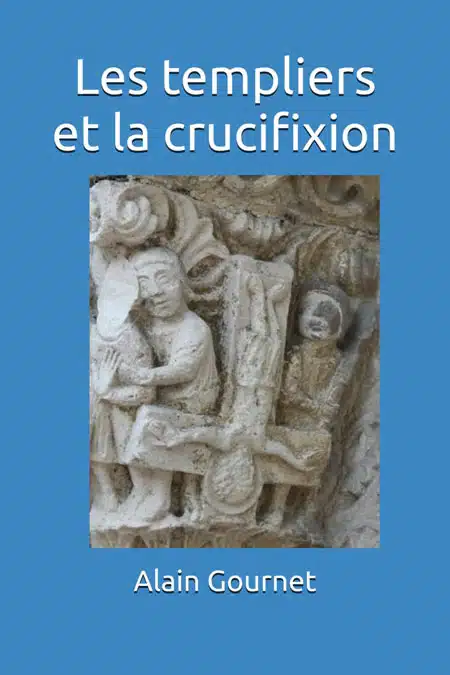
« Le 13 octobre 1307 dans toutes les commanderies les Templiers sont arrêtés. Ils sont accusés de nombreux méfaits parmi lesquels le reniement de la crucifixion. Mais jamais rien n’aura été prouvé autrement que par des aveux obtenus sous la torture.
Cependant dans l’église de la commanderie templière de Montsaunès dans le département de la Haute-Garonne, un chapiteau pourrait bien amener la preuve que Philippe le Bel et son âme damnée, Guillaume de Nogaret, auraient aimé avoir. Cet ouvrage propose une analyse qui pourrait bien confirmer cette théorie du reniement de la crucifixion.
L’auteur propose au lecteur un voyage à la rencontre des pauvres chevaliers du Christ et du Temple de Salomon, de saint Bernard de Clairvaux, de saint Malachie et de ses prédictions. Saint Malachie qui offrira à saint Bernard les secrets du christianisme celtique. Mais aussi une description du martyre de saint Pierre et le rôle de Longin (Longinus) lors de la crucifixion du Christ. Le lecteur sera initié aux arcanes de l’art roman, et à la psychologie des ‘Ymagiers’, ces sculpteurs qui nous ont laissé ces ‘Ymages’. Ils avaient pour habitude de montrer une chose et d’en désigner une autre.
L’auteur puise dans son expérience acquise par la visite de nombreuses églises et sites de l’époque romane, sa compréhension de la psychologie des tailleurs de pierre, à l’origine du compagnonnage, et de sa connaissance des textes sacrés, pour proposer au lecteur une analyse inédite, qui conforte l’idée que les Templiers reniaient la croix et la crucifixion. » (Alain Gournet)
Lire un extrait (cliquez sur « Lire un échantillon » sous la photo) !
Vous procurez le livre sur les Templiers et Montsaunès d’Alain Gournet !
12 avril 2025, Johan Netchacovitch ©
Questions des lecteurs de la Gazette de Rennes-le-Château et réponses de l’auteur :
Mises à jour du 16 avril 2025, Alain Gournet, auteur du livre :
Première mise à jour : Quand on dit que saint Pierre voulut être crucifié à l’envers, c’est-à-dire la tête en bas, il faut savoir d’où vient l’origine de cette assertion. Elle vient de la légende Dorée, écrite par Jacques de Voragine, au début du XIIIe siècle. Je ne connais pas de chronique officielle relatant cela. La légende dorée est un recueil de légendes et de croyances populaires, avec pour but de glorifier un certain nombre de personnages et de saints. Il ne faut pas considérer la légende Dorée comme une biographie officielle, et lui garder son côté ‘merveilleux’.
Cependant l’église a acceptée de cautionner, par des représentations, un texte sujet à caution, il faut bien le reconnaitre. Saint Pierre est le plus souvent représenté avec un coq, en référence à son reniement du Christ (saint Matthieu, chapitre 26 versets 69 à 75), plutôt que sur une croix inversée. Dans le livre ‘Les Templiers et la crucifixion’, je m’appuie sur les évangiles officiels et apocryphes pour dresser un court portrait de saint Pierre, en retrait de la légende dorée.
Deuxième mise à jour : Johan, Le livre ne cherche pas à soutenir, à tout prix, l’hypothèse que les Templiers ont renié la crucifixion, mais à amener au lecteur qui en chercherait la confirmation, une occasion ‘tangible’ de le croire.
J’aurais pu ajouter un chapitre sur d’autres exemples de représentations ‘curieuses’. Une en particulier que je n’ai pas souhaité citer car je n’en suis pas le découvreur. Elle m’a été rappelée par Michel Armengaud, un écrivain et conférencier remarquable, et se situe dans l’église Templière d’Eunate. Les lecteurs qui ont fait le pèlerinage à saint Jacques de Compostelle, ou qui s’intéressent au Pèlerinage, n’auront pas manqué de visiter cette merveilleuse église, où l’on trouve une représentation de la crucifixion, mais sans la croix, ce qui donne à réfléchir.
Je rappelle que le monde des Templiers conserve beaucoup de mystères, en particulier les graffitis de Domme ou de Chinon, qui, à ce jour, n’ont pas trouvé d’explication. Alors, le mérite que je revendique est d’amener une explication de l’un des artefacts templiers. Ce qui m’a intéressé et que j’ai souhaité faire partager à travers le livre, est le fait que le chapiteau cité en exemple est donné comme la crucifixion de saint Pierre, comme le dit Mr Poncini, et jamais, à ce jour, remis en question. C’est ce que j’appelle un biais de confirmation, et l’objectif du livre est de démontrer qu’il existe une autre analyse. Le biais de confirmation est la tendance à favoriser, rechercher et interpréter les informations de manière à confirmer nos croyances ou hypothèses préexistantes.
Bien sûr, dans le livre, j’argumente sur les raisons qui justifient que le sculpteur ait pu représenter autre chose que la crucifixion de saint Pierre, et c’est ce que je crois qui en fait l’intérêt et que j’ai eu envie de faire partager.
Le livre a un autre objectif, c’est de partager avec le lecteur un certain nombre d’expériences, de considérations sur l’environnement des Templiers, avec l’espoir qu’il passe un agréable moment, pour les quelques euros qu’il aura investis.
Fébus Trencavel : Montsaunès dans l’Aude ?
Johan Netchacovitch Gazette Rlc : en Haute-Garonne ; tout est expliqué dans l’article !
Jean Michel Clercy : Pourquoi les templiers renieraient-ils la croix puisque, par leur engagement, ils la portent sur leur tenues ?
Christian Poncini : Jean Michel Clercy, les Templiers n’ont jamais porté la croix latine, mais une croix dite grecque c’est-à-dire à quatre côtés égaux. Au début, ils ne portaient pas de croix, puis ensuite la croix dite pattée. Quant au crucifié, effectivement, ayant beaucoup parcouru la France en visitant de nombreux sites templiers, je n’ai jamais trouvé de croix latine ou de crucifix avec ou sans le crucifié. Ce qui fait penser que les pauvres chevaliers du Christ croyaient dans le christ vivant.
Alain Gournet, auteur du livre : Il est vrai que dans mon livre, je mets ce point au conditionnel, comme beaucoup de choses concernant les Templiers, il faut rester prudent. L’objet de mon livre est de démontrer que, si les Templiers ont renié la croix comme on les en a accusés, cette sculpture de Montsaunès peut être interprétée dans ce sens, et en être une preuve.
Pour ce que j’en sais, la croix portée par les Templiers apparait sur leurs vêtements plusieurs décennies après la création de l’ordre. Elle aura différentes formes au fil du temps. Quelle est sa signification et que symbolise-t-elle ? Peut-être différentes choses selon qui l’arbore.
La croix n’est pas qu’un symbole chrétien. Dans certaines sociétés initiatiques, elle symbolise les quatre horizons, la matière. Donc la croix portée par les Templiers n’a pas forcément la signification que les chrétiens lui donnent, mais à cette époque, la porter me parait un excellent alibi.
De la même manière, j’explique dans mon livre que si quelqu’un à cette époque avait ‘éventé’ la supercherie du chapiteau de Montsaunès, il existait une explication de ce chapiteau tout à fait acceptable pour un croyant.
N’oublions pas que la vraie motivation des premiers Templiers, à aller en orient, si peu nombreux, en laisse certains perplexes sur les objectifs de leur mission.
Pierre Jimenez : J’habite à côté de Montsaunès. Et je suis très intéressé par les Templiers. Je visite beaucoup de sites templiers. L’intérieur de l’église de Montsaunès est spectaculaire.
Johan Netchacovitch Gazette Rlc : Pierre Jimenez, il y a des lieux également dans l’Aude comme Campagne-sur-Aude ! Auriez-vous des infos sur les heures d’ouverture de l’église ? Merci !
Pierre Jimenez : pour visiter, il faut aller chercher les clefs à la mairie. Quand vous viendrez, pouvez-vous m’envoyer le jour et l’heure en MP, je pourrais venir vous rencontrer si vous voulez bien.
Johan Netchacovitch Gazette Rlc : Pierre Jimenez, merci pour l’info ! Je ne manquerai pas de vous prévenir !
David Crouzevialle : Cela me fait penser aux satanistes qui mettent la croix à l’envers ; en fait, ils vénèrent Pierre ?
Les satanistes ou ceux qui vénèrent le diable ou les forces du mal retournent toujours la croix ; j’ai vu ça car j’ai étudié le côté obscur avant d’aller ver la lumière, mais je n’avais jamais fait le rapprochement avec Pierre ; je savais qu’il avait été crucifié la tête à l’envers, mais je pensais que c’était sur une croix droite et pas à l’envers, très curieux !
Alain Gournet, auteur du livre : je me doutais un peu que si tu faisais un article sur mon livre, je serais amené à répondre à quelques questions, et c’est très enrichissant d’échanger ainsi.
Selon la tradition, Pierre a demandé à être crucifié la tête en bas. Mais c’est surtout par la ‘Légende dorée’ de Jacques de Voragine que nous connaissons cette anecdote.
Comme j’ai le plaisir de reprendre la phrase de Monseigneur Brincard l’évêque du Puy-en-Velay dans le livre de René de la Coste-Messelière ‘Les chemins de saint Jacques’ : « Les légendes sont faites pour édifier les esprits ». Et ne sont pas forcément synonymes de vérité.
Seulement, la tradition a assimilé cette anecdote, à tel point que, comme je le signale aussi dans mon livre, et j’ajoute une photo, le pape Jean-Paul II a utilisé à plusieurs reprises un siège avec la croix inversée. Bien sûr, c’est parce qu’il occupait le trône de saint Pierre, mais il faut aussi se souvenir qu’il aimait jouer avec les ambiguïtés. Et là, c’était quand même un peu osé pour un pape !
Amitiés à toi Johan et à M. David Crouzevialle
Vous procurez le livre sur les Templiers et Montsaunès d’Alain Gournet !
4 avril 2025 Mike Aldebaran et Rudy : Le Trésor de Rennes-le-Château
News : Ce vendredi 4 avril à 20h15, Damien Wake , Rudy Jacquier et Mike Aldebaran vont analyser l’émission Mystères sur Rennes-le-Château sur la Chaine Youtube de La Séance de Minuit !
« L’émission “Mystère” diffusée sur TF1 était un programme captivant qui plongeait ses téléspectateurs au cœur d’histoires paranormales et d’enquêtes surnaturelles. Chaque épisode proposait de revisiter des faits inexpliqués, des témoignages surprenants ou encore des phénomènes étranges, cultivant un suspense qui tenait en haleine jusqu’aux toutes dernières minutes. Grâce à ses reportages et à son ambiance angoissante, “Mystère” a marqué de nombreux esprits en France, devenant au fil du temps une véritable référence pour les amateurs de frissons et de récits hors du commun.
30 mars 2025 Les Chroniques de Johannus : lien maçonnique dans le déplacement de l’abbé
News : Dans nos colonnes, nous accueillons un nouveau chroniqueur qui est connu de nos lecteurs, Johannus ! Auteur d’études plus longues comme sur la « Stèle Marie de Nègre ou de la SESA », « L’église de Rennes-le-Château : double église« , « Le secret de Boudet – La piste maçonnique teintée de Rose-Croix », « Le K de l’abbé Henri Boudet dans son cromlecK », « Les Bergers d’Arcadie décryptés : la règle des Trois B dévoilée », etc.
Il poste également ses news sur la page FB de Rennes- le- Château Les 4 vérités.
La première chronique de Johannus est en lien avec la news ci-dessous : « La nouvelle tombe de l’abbé Saunière de 2004 a la forme d’une arche… Or cette arche est liée à un rituel particulier de la Franc-Maçonnerie. A-t-on voulu associer Saunière à ce rituel ? Le sujet de sa participation à un rite lié à la FM est ancien et discuté. Voir dans la plaquette ci-dessous citée les représentations de l’Arche qui ressemble en partie au nouveau tombeau. A-t-on voulu par ce dernier signifier quelque chose ? Ce n’était pas le cas de l’ancienne sépulture : https://www.scribe.fr/…/documents/VdH121_presentation.pdf ! »
Quelques réflexions de Johan Netchacovitch : je vous conseille de lire le document « Ab urbe condita » jusqu’à sa fin… (Il est repris dans la news du 25 mars 2025) quand on sait qu’une des chevilles-ouvrières du déplacement de la tombe de Bérenger Saunière du cimetière de Rennes-le-Château au Domaine du village est franc-maçonne ! Quand on sait également que le document « Ab urbe condita » est issu du livre de Thomas Plantard, édité en 1992.
Voici ce que j’écrivais le 15 septembre 2004 : « Le corps de l’abbé déplacé ce 14 septembre 2004 » :
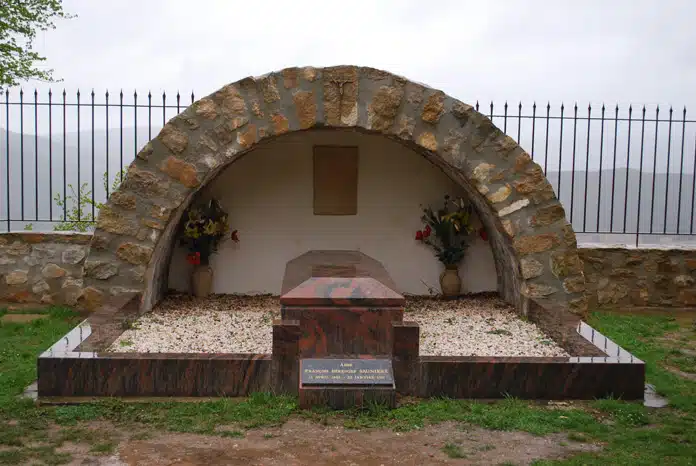
« Ce mardi 14 septembre 2004, la dépouille de l’abbé Bérenger Saunière a été déplacée du cimetière de Rennes-le-Château dans le mausolée cultuel du domaine voisin, ancienne propriété de l’abbé. Ce transfert organisé dans le plus grand secret s’est opéré sous la surveillance de la gendarmerie qui a tenu à l’égard tous les curieux et les habitants du village !
Est-ce l’acte de vandalisme de la semaine précédente qui aurait précipité les événements ?
Dans la nuit du mardi au mercredi 7-8 septembre, le fronton sculpté au-dessus du portail du cimetière de Rennes-le-Château a été renversé et cassé ! Une tête de mort appuyée sur 2 tibias le décorait. Elle aurait comporté la particularité d’avoir 22 dents, chiffre éminemment symbolique! D’autres lieux du domaine de l’abbé, comme la tour Magdala, comptent 22 marches et autant de créneaux.
L’interview du maire : Le maire du village, Monsieur L’Huiler, s’en était ému auprès du journaliste de « L’Indépendant » : « Il s’agit, certes, de vandalisme mais c’est avant tout une profanation. C’est à ce titre que j’ai déposé plainte. Il va falloir absolument sécuriser ce site. Nous sommes tous très choqués. » (09/09/04)
Le sondage : La rédaction de la Gazette de Rennes-le-Château a mis en place un sondage sur ce problème épineux. Le bilan en date du 15 septembre 2004 est très révélateur de l’avis tranché de nos lecteurs :
Contre le déplacement 77,09 % (397 votes)
Pour le déplacement 18,06 % (93 votes)
Sans avis 4,85 % (25 votes)
La rédaction remercie ses correspondants locaux ! » (15 septembre 2004, Johan Netchacovitch © Archives de la Gazette de RLC)
En conclusion, je constate d’étranges liens entre de prétendues affabulations qui datent de 1992 (le manuscrit « Le Cercle »), un déplacement de tombeau mais pas de n’importe qui, de Bérenger Saunière, en 2004, et une franc-maçonnerie active au début du XXIe siècle dans l’Aude ! Et tout cela à travers l’Arche !
25 mars 2025 Informations complémentaires
La news sur le document « Ab urbe condita » a suscité l’envoi de courriels à la Gazette de Rennes-le-Château ! Les questions et interrogations concernaient l’origine du document et le trésor de Saint-Wandrille.
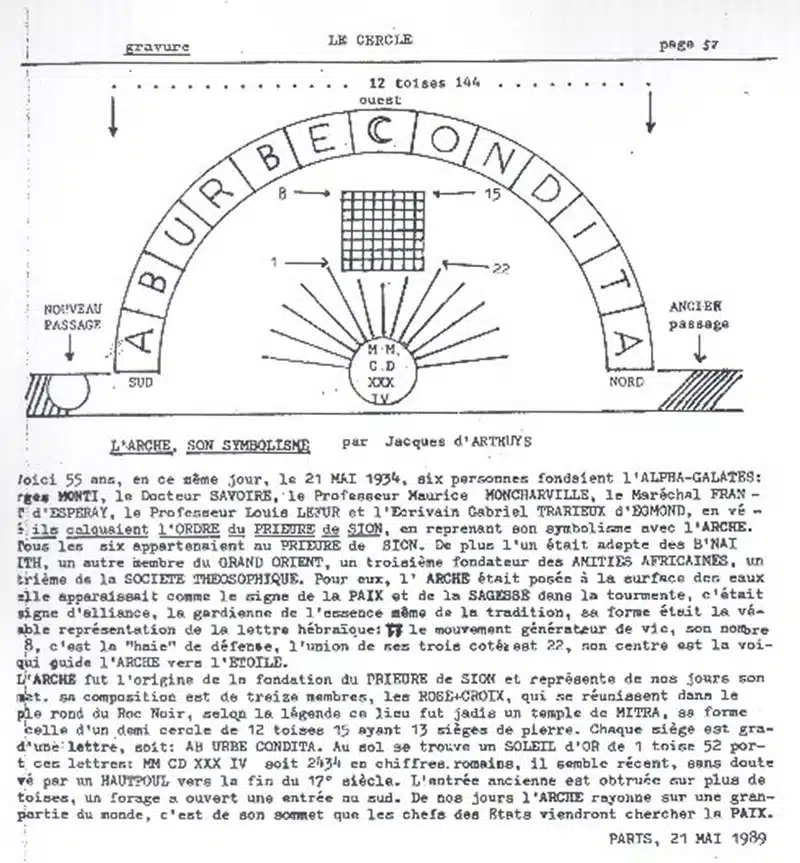
Document « Ab urbe condita »
Le document « Ab urbe condita » est issu du livre de 85 pages « Le Cercle », sous-titré « Rennes-le-Château et le Prieuré de Sion » de Thomas Plantard de Saint-Clair, édité en 1992. Il se trouve à la page 57 accompagné d’un texte explicatif qui renvoie au Roc Noir ou Rocko Negro proche du château de Blanchefort à Rennes-les-Bains. Est-il besoin de rappeler que le père de Thomas, Pierre Plantard, était propriétaire de terrains qui incluaient ce roc ! L’explication de Jacques d’Arthuys évoque le Temple Rond sous Rocko Negro que d’aucuns cherchaient encore il y a quelques années… Il ne s’agissait pas de chercheurs lambda mais de personnes inféodées au Prieuré de Sion…
Cette locution latine signifie littéralement « A partir de la fondation de la Ville », celle de Rome. C’est une œuvre de l’historien Tite-Live qui en entame la rédaction aux alentours de 31 av. J.-C.
Un soleil d’or plus récent a été ajouté à la gravure, il comporte le chiffre romain 2434, c’est-à-dire 2434 – 753 (date de la fondation de Rome en – 753 avant Jésus-Christ) = 1681 (l’année) ! L’époque est précisée « vers la fin du 17e siècle » et l’auteur, un Hautpoul, seigneur local.
L’année est signifiante pour le Prieuré de Sion :
– le 17 janvier… 1681, une assemblée de recréation de l’Ordre se déroule à Rennes-le-Château.
– Sur la stèle de Marie de Nègre d’Ables, la troisième ligne à partir de la fin du texte a été modifiée (MDCOLXXXI) en fermant le deuxième C en O, ce qui a pour conséquence de supprimer un siècle à la date qui devient 1681. Il s’agit bien de la volonté d’obtenir 1681 car il existe d’autres C dans le texte, dont la fermeture n’aurait pas la même incidence. Lire l’étude de ULPIAN.
– Et nous retrouvons le chiffre « 681 » dans le décodage du grand parchemin qui aurait été trouvé par l’abbé Bérenger Saunière dans son église de Rennes-le-Château. Lire l’étude de Daniel Dugès sur le grand parchemin.
– Sur le pilier wisigoth qui soutenait le maitre-autel de l’église de Rennes-le-Château avant que Bérenger Saunière ne le déplace dans le jardin de la Vierge devant l’église en l’inversant, il a fait graver « MISSION 1891 », date effectivement d’une mission évangélique dans sa paroisse ! En inversant le pilier, vous obtenez 1681.
Bref, l’étude d’Alain Cocouch fait ressurgir un document comme il en existe de nombreux dans les textes du Prieuré de Sion. Ce qui ressort de celui-ci, c’est que Pierre Plantard est persévérant dans son balisage. Je m’interroge ici sur son attitude : s’il était uniquement un mythomane, pourquoi a-t-il dépensé de l’argent pour acquérir ces parcelles de terrain sur les lieux de sa mythomanie ?
Précisons qu’après une refonte complète du cadastre de Rennes-les-Bains, les parcelles achetées par Pierre Plantard sont intégrées en une seule et unique parcelle de… 73,16 hectares. A suivre…
Pour être informé des Chroniques de Rennes-le-Château, nous vous conseillons celles de Johannus !
Un trésor à Saint-Wandrille
Dans les multiples liens entre la Normandie et le Razès wisigoth, un fait divers semble assez méconnu : la découverte d’un véritable trésor par des louveteaux dans l’abbaye de Saint-Wandrille chère à Maurice Leblanc puisque sa soeur, Georgette, y a habité avec son époux, Maurice Maeterlinck. En fait, ils y étaient locataires.
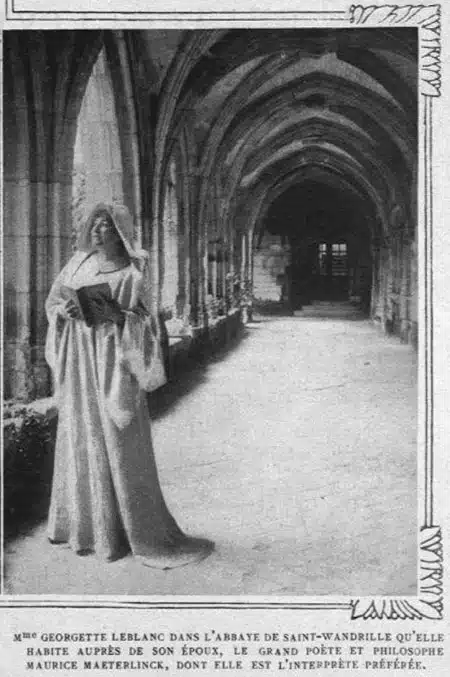
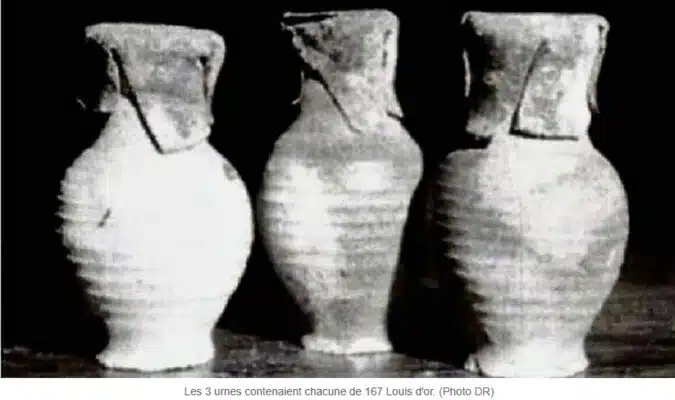
Nous sommes le 11 mars 1954, les louveteaux de Saint-Wandrille Rançon se livrent à « une chasse au trésor Nature » à thématique « fleurs et bourgeons » à l’initiative du révérend père Pierre Donaint. Manifestement, certains loups, comme Jean-Pierre Mazé, s’en désintéressent et partent à la recherche d’un autre type de trésor… Un signe étrange dans le mur de clôture attire son attention, il descelle la pierre et trouve « une petite urne en terre cuite d’une vingtaine de centimètres, elle est fermée par une feuille de plomb scellée à la cire. A l’intérieur, un trésor, de véritables pièces d’or, des Louis d’or, dont le plus récent date de 1746 !
Jean-Pierre, Jacques et Pierre décident de continuer à explorer le mur, et ils trouvent toujours à moins d’un mètre de hauteur deux pierres avec des symboles dessus, ce qui donnera un calvaire, un carré séparé en deux, et un rond avec un point au milieu, oui, le symbole de fin de piste, le même qui est gravé sur la tombe de Baden Powell. Ce sont donc trois pots de terre cuite remplis de louis d’or qui sont découverts par les louveteaux, le tout sur moins de 16 mètres de longueur de mur. A l’intérieur, ce sont 501 pièces d’or représentant Louis XV. Comme c’est la règle, le trésor est divisé entre le propriétaire du lieux, l’abbaye, et « l’inventeur » du trésor, ici nos trois louveteaux. » (https://latoilescoute.net/) Lire la suite !
18 mars 2025 AB URBE CONDITA mène à Saint-Wandrille !
News : Le chercheur Alain Cocouch utilise les dates pour en tirer un sens caché lié à la numérologie ou à la chronomancie. La numérologie étudie les significations symboliques des chiffres, souvent extraits de dates, pour y déceler des messages ou des influences spirituelles. La chronomancie, quant à elle, est une pratique divinatoire qui consiste à interpréter les dates ou les moments pour prédire ou comprendre des événements.
Il nous livre ici, à partir du document « Ab Urbe Condita », une étude chiffrée qui aboutit dans un lieu culte de Maurice Leblanc à travers son oeuvre mais aussi sa biographie : Saint-Wandrille ! Etrange synchronicité en cette année qui devra mettre à l’honneur le « père » d’Arsène Lupin… Nous y reviendrons bien évidemment !
« Pour celles et ceux pour lesquels la méthodologie que j’exerce à mon tour ne serait pas claire, l’un des chemins empruntés par les initiés successifs repose sur l’emploi de dates de différents calendriers et leur correspondance avec soit des évènements, soit des personnalités, mais encore des sites historiques. » (Alain Cocouch)
Découvrir l’étude de « Rennes-le-Chateau-Phase-finale » !
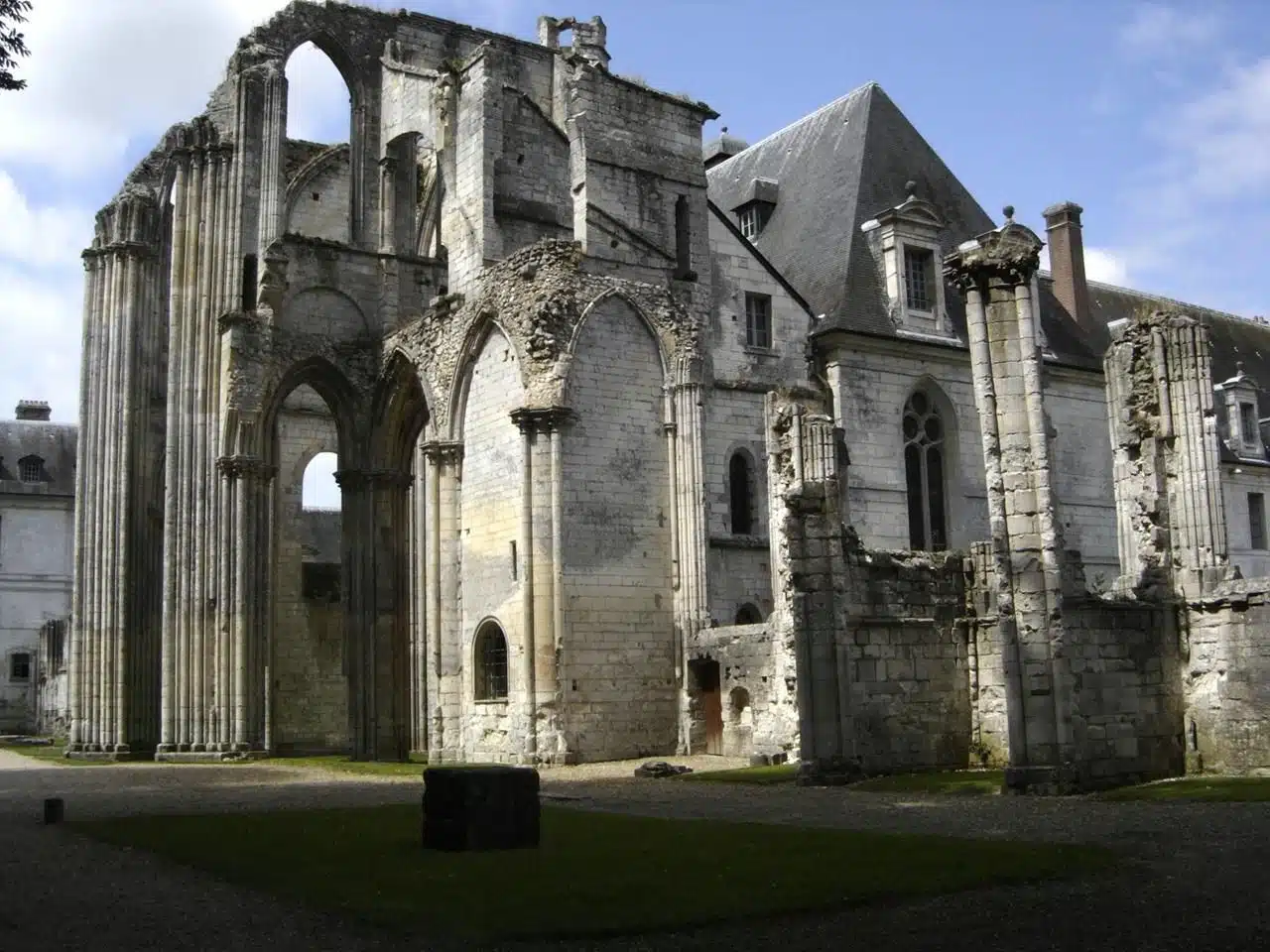
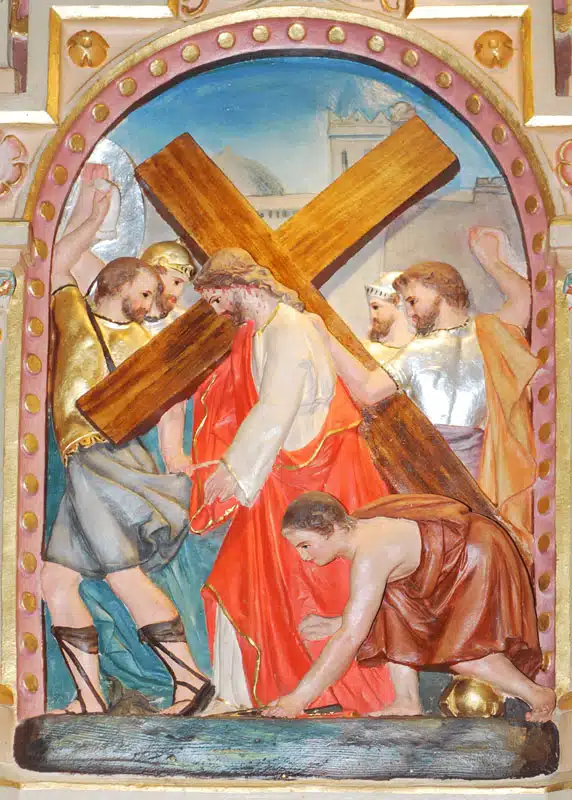
18 mars 2025 Jean Bertrand raconte
News : « Jean Bertrand est un des plus anciens chercheurs, membre du Cercle du 17 janvier. Il nous a fait l’honneur d’une interview dans laquelle il révèle un petit détail de la station II du chemin de Croix au sein de l’église de Rennes-le-Château (RLC). Le chercheur offre une piste nouvelle de réflexion, et chacun pourra y réserver une part du merveilleux dans l’Histoire. » (L’Indépendant.fr) Lire l’article.
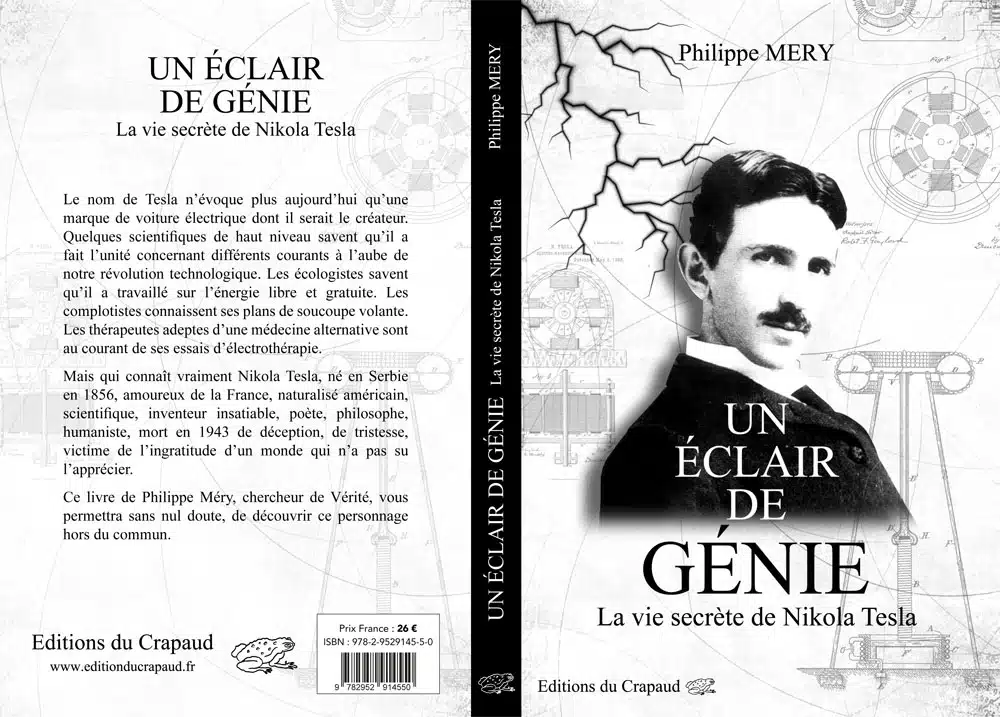
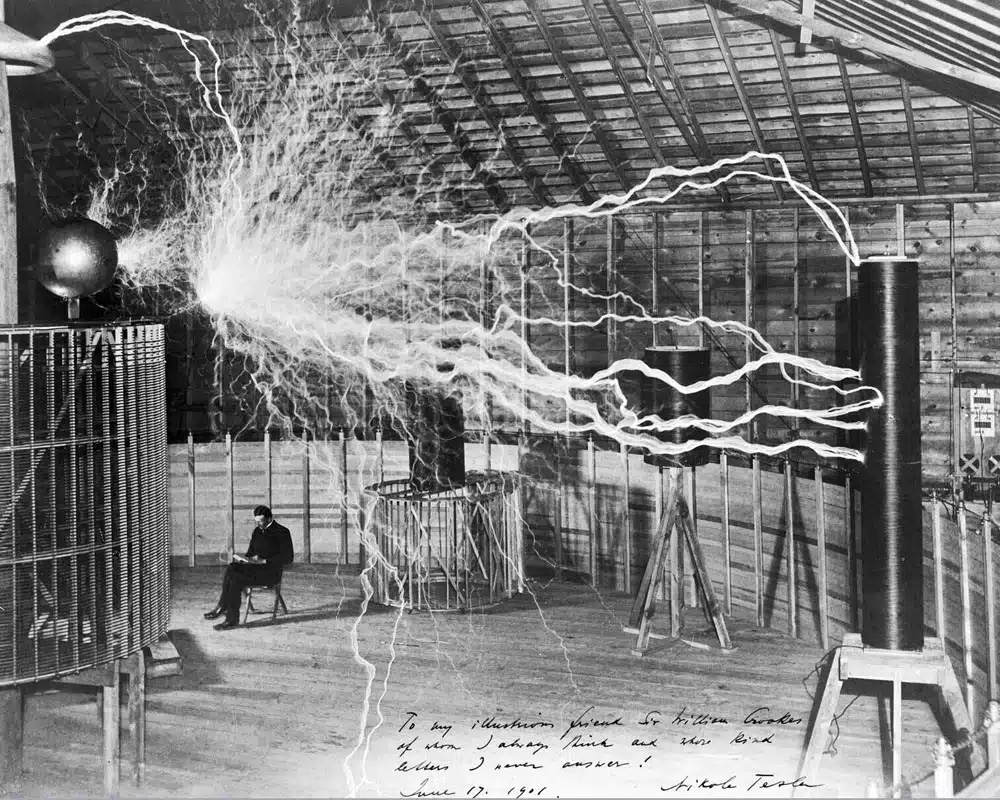
26 février 2025 Interview de Philippe Méry sur Nikola Tesla
News : La Gazette de Rennes-le-Château a interviewé Philippe Méry qui vient de publier « Un éclair de génie – La vie secrète de Nikola Tesla » aux Editions du Crapaud – https://editionducrapaud.fr/, 308 pages, 26 €.
Gazette de Rennes-le-Château : Bonjour Philippe, vous avez écrit et édité un nouveau livre courant 2024, sur quel sujet et pourquoi ?
Philippe Méry : C’est exact, j’ai écrit un livre sur la vie secrète de Nikola Tesla. Secrète parce que, dix ans avant sa mort à 83 ans en janvier 1943, il était blacklisté par Hoover, le patron du FBI (on le faisait passer pour sénile, alors qu’il avait été un des plus grands savants et chercheurs de son époque et ce jusqu’à son dernier jour) !
Je m’étais déjà intéressé à lui lors de l’écriture de mon livre sur la Santé (« Tu ne vas pas t’en rendre malade ? ») pour expliquer l’impact des ondes scalaires émises par le cerveau, ondes qu’il avait mises en évidence en 1899. Ensuite, en 2023, je cherchais un scientifique de renom qui puisse m’aider à crédibiliser l’existence des Ovnis et des extraterrestres suite à la parution de mon précédent livre « Et si tout n’était que mensonge ? ». En effet, dans la troisième partie de ce livre, j’avais évoqué l’existence de bases secrètes dans les flancs du Mont Bugarach et de vols extraterrestres. Elle en avait fait ricaner quelques-uns qui demandaient des preuves et des avis scientifiques… les voilà !
Nikola Tesla m’a plus que comblé à ma grande surprise et à celle de ceux qui ont déjà lu le livre. Dans le secret le plus total, on apprend qu’il était en contact avec les extraterrestres et avait développé deux familles de soucoupes volantes : la première fonctionnant à l’énergie libre mais limitée par les émetteurs de cette énergie, et la deuxième fonctionnant grâce à l’antigravité… et au mercure dont j’avais écrit qu’on le trouvait à foison son forme de cinabre dans le Bugarach. Je renvoie tous les sceptiques professionnels aux 2 vidéos réalisées sur NuréaTV par un autre scientifique français Chris Essonne : https://www.youtube.com/watch?v=K3iMxpa7OTw et https://www.youtube.com/watch?v=TUXgqmnbmh8.
Gazette de Rennes-le-Château : Pour le livre sur Nikola Tesla, quelles ont été vos sources et comment les avez-vous trouvées car elles sont très rares !
Philippe Méry : Mes moyens : le flair, l’intuition, la méthode, beaucoup de chance.
Plus concrètement, mes sources :
- La filière américaine : un gros livre de Margaret Cheney qui traite surtout du personnage, deux livres de Marc Seifer, l’historien officiel de Tesla et un film en 5 épisodes (une mine de renseignements, de docs, d’images) qu’il a tourné avec 4 autres scientifiques pour History Channel à l’occasion duquel ils ont vérifié toutes les inventions et informations sur Tesla.
- La filière canadienne : avec plusieurs enquêtes de journalistes et un livre principal d’Arthur Matthews dont le père avait collaboré secrètement avec Tesla.
- Une filière yougoslave : avec les témoignages de son neveu Sava Kosanovic, ambassadeur aux USA, qui témoigne sur les relations secrètes FBI/CIA/Roosevelt/ Tesla.
- Une filière française : le livre de Didier Van Cauwelaert sur le dialogue ‘médiumnique’ Geneviève Delpech/Tesla/Einstein. Il s’agit là d’un livre incroyable dont il est possible de vérifier les pistes.
Gazette de Rennes-le-Château : Qu’avez-vous découvert comme autres secrets marquants dans la vie de Nikola Tesla ?
Philippe Méry : Pas d’histoires d’amour, pas d’enfants cachés (il trouvait les femmes belles mais comme une perte d’énergie préjudiciable à son génie), pas de fonds détournés, pas d’intrigues politiques… rien qui puisse intéresser BFMTV :-). Concernant ses autres inventions comme les voitures électriques, l’énergie libre, le rayon de la mort, etc., je vous renvoie à mon livre.
Gazette de Rennes-le-Château : Plus rien à ajouter alors sur ce personnage que vous me présentiez comme mystérieux ?
Philippe Méry : Si, bien sûr, parlons maintenant de l’homme. C’était un original généreux qui a consacré sa vie à ses recherches uniquement pour l’amélioration de celle des humains (sans doute une mission pour lui). Pour se résumer c’était un humaniste !
En dehors de l’électricité sous toutes ses formes, il était au courant de tout ce qui touchait les Arts, (musique, théâtre, littérature, sculpture), la Santé (la diététique, il développa l’électrothérapie que le Français d’Arsonval lui volera). Il a la passion des animaux et particulièrement des colombes blanches comme Picasso (il a compris que les ondes scalaires permettent la communication sous toutes ses formes, même avec les animaux). Il s’intéresse à tout ce qui est ésotérique ou qui touche à la parapsychologie. Mais surtout, il va s’intéresser au bouddhisme initié par un grand maître Yogi Swami Vivekananda qui lui parlera aussi des vimānas (ovnis hindous qui fonctionnaient au mercure, eux aussi, 3000 ou 4000 ans avant Jésus-Christ). Ils vont se rencontrer, sympathiser et collaborer suite à une soirée donnée en l’honneur de Sarah Bernhardt en tournée à New-York. Y était également invitée, et cela vous ramènera les pieds sur terre et même à Rennes-le-Château, aussi incroyable que cela vous paraisse, Emma Calvé passionnée également d’ésotérisme. D’ici qu’on ait parlé ensuite de Tesla dans la villa Béthanie, il n’y a qu’un pas !
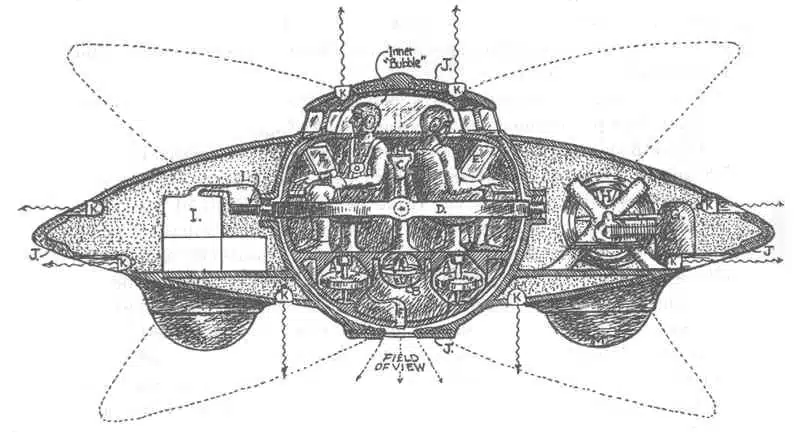
Gazette de Rennes-le-Château : Philippe, merci, on ne pouvait pas mieux finir cette interview pour la Gazette de RLC, je pense que vous avez encore beaucoup de choses à nous apprendre sur Nikola Tesla. Je conseille donc aux lecteurs de la Gazette de se procurer ce livre dans toutes les librairies de la région ou sur le site de l’auteur avec une petite dédicace si souhaitée ! Vous procurez le livre aux Editions du Crapaud : ici !
Vous pourrez échanger avec Philippe Méry lors d’une visioconférence-Zoom chez DEBOWSKA PRODUCTIONS à Rennes-les-Bains et en ligne et direct le vendredi 28 février 2025 à 18h00 !
Découvrir le programme des visioconférences avec Marc DEVALMOREL, Philippe MERY, Ludovic LUISSIER, Catherine BENOIT, Dominique AUCHER.
26 février 2025, Johan Netchacovitch ©
15 janvier sur France 2
News : Ce mercredi 15 janvier de 13h50 à 15h, dans l’émission « Ça commence aujourd’hui » de Faustine Bollaert, sur le thème des villages mystérieux, il y aura quatre témoignages présentés par des invités venus de régions différentes. Christian Doumergue évoquera la « soudaine fortune de Bérenger Saunière » !
Vous avez la possibilité de revoir l’émission en cliquant ICI 😉
Conférences 2025 ! News du 12 janvier 2025
News : En ce début d’année, la Gazette de Rennes-le-Château est déjà sollicitée pour vous avertir des conférences, des projections des prochains mois !
Debowska Productions
A Rennes-les-Bains, Debowska Productions continue ses activités en ce mois de janvier 2025 ! Pour les projections, c’est sur place 5, Grand Rue des Thermes, 11190 Rennes-les-Bains ; pour les visioconférences, c’est via Internet. Vous pouvez aussi commander, télécharger ou louer ces DVD. Découvrir le programme de janvier 2025 !
Cercle du 17 janvier
Organisation du Cercle du 17 janvier le… 17 janvier à 10 heures : conférence de Michel Vallet et Michel Azens « L’enrichissement de l’abbé Sauniere ! Hypothèses ».
13 heures : Repas au bistrot des amis. Nombre de places limitées. Repas 30€. Priorité aux membres du cercle du 17 janvier. Rappel des Pommes bleues !
Marie-Madeleine ou la quête de l’âme
Le vendredi 31 janvier 2025 de 20h00 à 22h00, Christian Doumergue donnera une conférence sur le thème de son dernier livre « Marie-Madeleine ou la quête de l’âme » à la salle polyvalente Zaragosa, rue de la Poste, 66280 Saleilles (près de Perpignan).
Pour toutes les informations à ce sujet et pour réserver, il suffit de scanner le QR Code sur l’affiche ou de cliquer directement ici !
Lire l’interview de Christian Doumergue sur son dernier livre « Marie-Madeleine ou la quête de l’âme » !
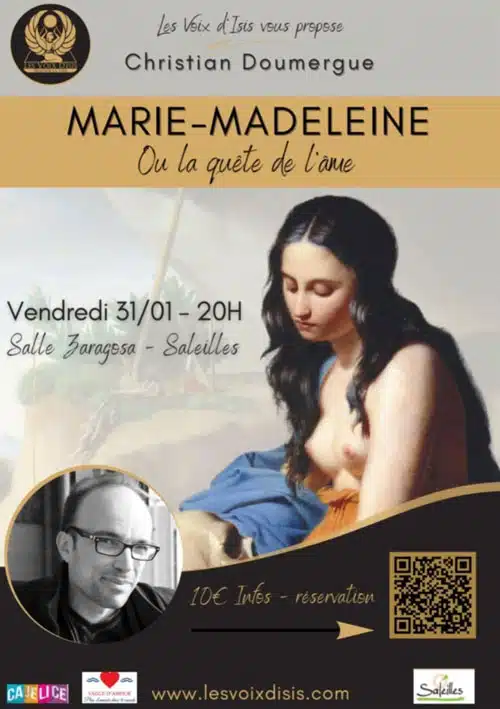
« Au terme de cette conférence, j’aurai le plaisir de dédicacer mon ouvrage du même titre publié chez le Courrier du Livre / Trédaniel ainsi que plusieurs autres de mes livres. » (CD)
Château H. (Toulouse)
Conférence de Ludovic Richer : « L’occultisme et les sociétés secrètes à la belle époque ! » Le samedi 1er février à 18h, près de Toulouse, au Château H, Rue Notre Dame, 31540 Saint-Julia – Tarif : 8 €.
Synopsis
« La Belle Époque, période de prospérité et d’effervescence culturelle s’étendant de la fin du XIXᵉ siècle au début de la Première Guerre mondiale, marque également l’âge d’or de l’occultisme. Alors que les avancées scientifiques bouleversent le monde, une fascination grandissante pour les mystères de l’invisible s’impose, portée par un désir de percer ce qui échappe à la raison. C’est une époque où ésotérisme, spiritisme et sociétés secrètes se mêlent dans une quête de sens et de spiritualité.
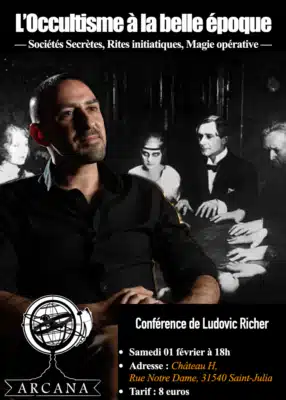
Ainsi, je vous invite à plonger avec moi dans cet âge d’or des Sciences Occultes, à la rencontre des grandes figures de l’époque : Stanislas de Guaita, Papus, Samuel et Moina Mathers, Aleister Crowley, Dion Fortune, et bien d’autres encore. Nous franchirons ensemble les portes des sociétés initiatiques de cette époque pour explorer leurs objectifs, leurs rituels et leurs croyances, au-delà des mythes et des fantasmes qui les entourent. » (Ludovic Richer)
Avis de la rédaction
Nous vous conseillons cette conférence d’abord vu les compétences du conférencier, ensuite par rapport à l’actualité castelrennaise 2025 qui reprendra certains des thèmes de la conférence… dès le 15 janvier – l’article est prêt ;-), enfin, plus tard cette année, avec un scoop en cours de vérification… Vous abonnez à la lettre de diffusion de la Gazette de Rennes-le-Château vous permet d’être informés en priorité ! Pour s’inscrire gratuitement, c’est ici ! Attention, vous devez confirmer votre inscription via un email que vous recevrez dans votre boite de réception (parfois dans vos spams) !
Repas Ufologiques du Languedoc à Montpellier 2 mars
News : Nous vous annonçons dès à présent la conférence de Ludovic Richer « Les dieux civilisateurs – La théorie des anciens astronautes », le dimanche 2 mars 2025 à 16h00 au Domaine des Pins, La Roque et Petrou à 34570 Montarnaud. Réservation auprès d’Hugues au 07 86 36 23 53 ou Hugues.sautot@gmail.com ! C’est une organisation des Repas Ufologiques du Languedoc à Montpellier.
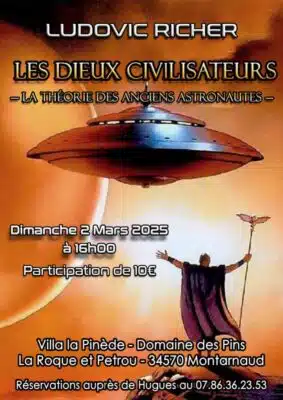
Synopsis
« Bien avant l’avènement des trois grandes religions abrahamiques (judaïsme, christianisme, islam), les anciens cultes de l’Antiquité vénéraient une myriade de divinités.
Mais qui étaient donc ces anciens dieux ?
Au IVe siècle avant J.-C., Évhémère, un philosophe grec, développa une nouvelle théorie appelée l’évhémérisme. Selon lui, les dieux n’étaient en réalité que des hommes d’exception qui, ayant marqué leur époque de manière extraordinaire, furent élevés au rang de divinités par leurs successeurs. Cette théorie fut notamment utilisée par les premiers chrétiens pour décrédibiliser la croyance en ces divinités païennes.
Des siècles plus tard, cette idée évolua pour donner naissance au néo-évhémérisme. Désormais, les anciens dieux ne sont plus perçus comme de simples hommes, mais comme des êtres venus d’ailleurs, qui auraient, grâce à leurs connaissances scientifiques avancées, posé les bases des premières civilisations (Égypte, Sumer, etc.). Ces nouvelles hypothèses furent propulsées par des auteurs à succès tels que Robert Charroux, Erich von Däniken ou Zecharia Sitchin.
Ces « Anciens Astronautes » seraient les véritables bâtisseurs des grands monuments de l’Antiquité (pyramides, géoglyphes de Nazca, Moaï de l’île de Pâques, etc.), ou du moins, les humains auraient édifié ces structures grâce aux technologies qu’ils leur auraient transmises.
Le néo-évhémérisme, ou théorie des anciens astronautes, est aujourd’hui au cœur de nombreuses œuvres de fiction telles que Stargate, Prometheus, Indiana Jones et le Royaume du crâne de cristal, et bien d’autres.
- Mais qu’en est-il de la réalité ?
- Existe-t-il des sources historiques et archéologiques pour valider cette hypothèse ?
- Les phénomènes ufologiques constituent-ils une preuve de l’existence de ces dieux civilisateurs ?
Nous allons voyager entre mythe et réalité, entre mythologie et histoire des civilisations, entre religion et ésotérisme, afin de dérouler le fil de cette histoire. » (Ludovic Richer)
News du 4 janvier 2025
Interview d’Arphaÿs par Tony Baillargeat
News : Invité d’idFM 98.0 en juin 2023, Romuald Cassiaux (Arphaÿs) y a été interview sur son livre « Le code Arsène Lupin – Maurice Leblanc et le savoir perdu » aux Editions de l’Opportun, par Tony Baillargeat.
Ils échangent sur Gino Sandri, le codage de Maurice Leblanc, le savoir de l’auteur d’Arsène Lupin, la gématrie, le personnage de Fulcanelli, la ville de Blois, la géographie sacrée, l’Argonne, etc. Lire l’interview !
Commander le livre d’Arphaÿs « Le code Arsène Lupin – Maurice Leblanc et le savoir perdu » !
Les pierres du cimetière de Rennes-le-Château
Patrick Mensior signe un article sur « LES PIERRES DE L’OSSUAIRE, DU CURÉ ET DE LA MARQUISE ? » : « Depuis le début de l’histoire de Rennes-le-Château, plusieurs pierres tombales interrogent
sur leur origine et leur localisation dans le cimetière.
Quelle est l’origine de la dalle recouvrant l’ossuaire ? D’où provient la pierre tombale située
sur la sépulture de Bérenger Saunière ? » Lire l’étude !
News du 19 octobre 2024
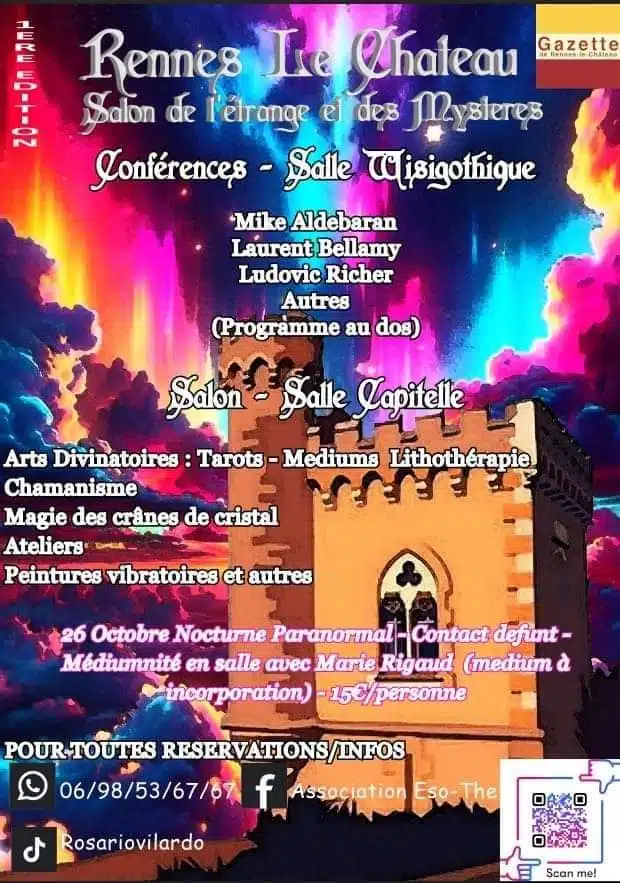
1er Salon de l’Etrange et des Mystères de Rennes-le-Château
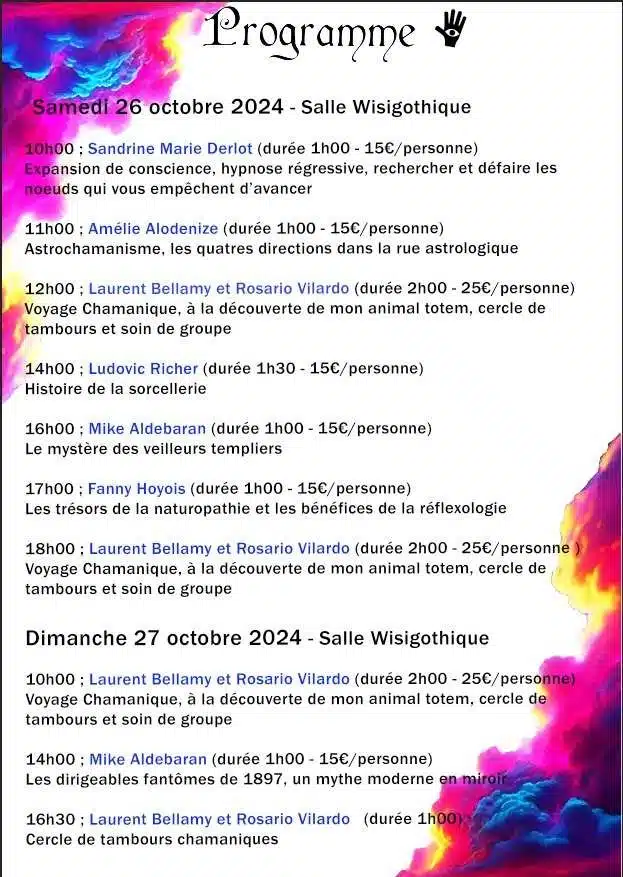
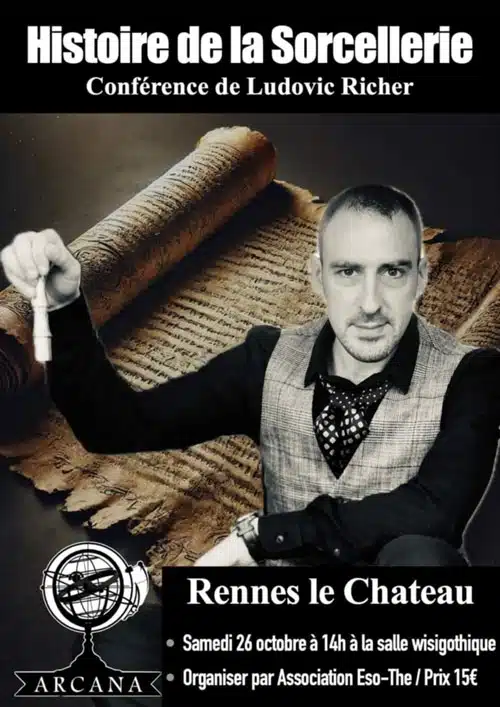
News : Les samedi 26 et dimanche 27 octobre 2024, Conférences de Mike Aldebaran, Ludovic Richer Arcana, Laurent Bellamy, Sandrine Marie Derlot, Amélie Aladenize, Rosario Vilardo, et Fanny Hoyois à la Salle Wisigothique de Rennes-le-Château et le Salon à la Salle de la Capitelle.
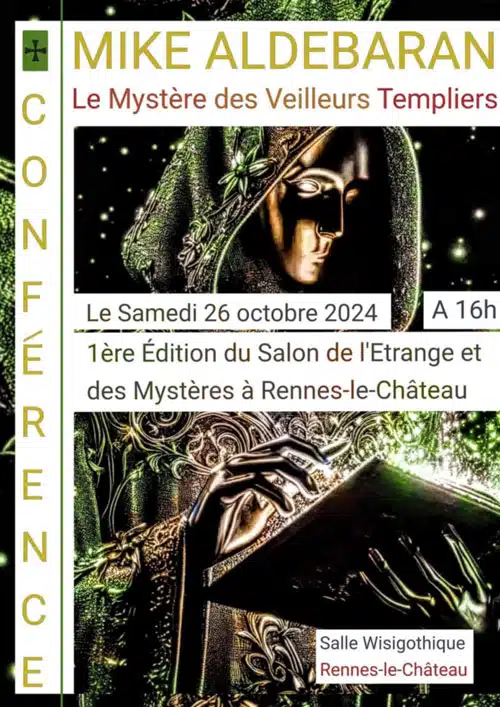
« Le Mystère des Veilleurs Templiers », conférence de Mike Aldebaran le samedi 26 octobre 2024 à 16h à la salle wisigothique de Rennes-le-Château !
News du 6 octobre 2024
1ère édition du Salon de Livre de Rennes-les-Bains
News : Notons la bonne initiative de Jean-Christophe Casanova des Editions Matana, qui organise le 1er Salon du livre de Rennes-les-Bains le dimanche 13 octobre 2024 de 9 h à 20 h à l’Espace Delmas de la commune ! Contacter l’organisateur 06 50 33 29 24.
Les écrivains présents seront nombreux et nous soulignons la diversité de leurs publications : Jean-Pierre Monteils – découvrir ses livres, Richard Stanley, Evelyne Genique, Emmanuel de Careil et ses livres, Axel Graisely et son guide sur Rennes-le-Château, Jean-Michel Pous et ses recherches, Jeff Lechatman, Pascal d’Arcadie, Aurélie d’Arcadie, Valérie Guillon, Penélope Bonnaud, Germain Blanc-Delmas et sa connaissance de RLC, Gérard Baylet, Nadine Lamaison, Jean-Louis Sanchez, Madeleine Ribot-Vinas, Magali Husson, Jean-Christophe Casanova.
Véronique Jouve présentera les livres de son père, George Kiess et ses dernières découvertes.
Programme :
9h-10h : Ouverture du Salon du Livre et accueil des auteurs par un discours d’inauguration du Maire de Rennes-les-Bains, Olivier Buscail
10h-18h : Salon du Livre
18h-20h : Table ronde avec Krystel Maurin, Jean-Pierre Monteils, Valérie Guillon et Jean-Christophe Casanova.
Des idées de lectures !

Nuit des Templiers au Bézu
News : La soirée et la nuit du 12 au 13 octobre (lire le reportage, la légende, voir les photos), le rendez-vous des chercheurs et curieux aura lieu au château du Bézu dans l’espoir de voir, selon la légende…, « une longue file d’ombres blanches venant du cimetière abandonné montant vers les ruines ; ce sont les Templiers trépassés. Ils cherchent l’église, la petite église d’autrefois, pour y chanter l’office des défunts ! »
News du 26 septembre 2024
I dialoghi d’Arcadia
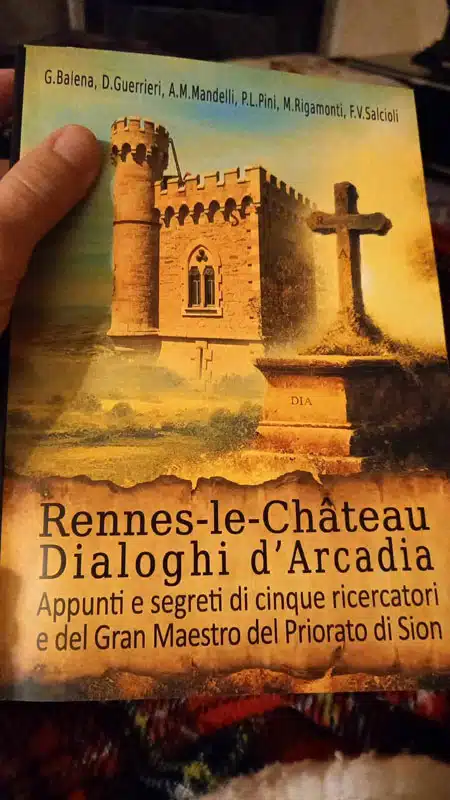
News : Le 28 septembre à Brisighella à 10h, à la Sala Cicognani, via Pascoli n° 1, il y aura une conférence et une rencontre avec les auteurs de la publication « Rennes-le-Château. Dialogues de l’Arcadie ».

Les sources et les origines de la légende de Rennes-le-Château, l’histoire des prêtres, des artistes, des églises et des anciennes familles qui en gardaient les secrets, les liens incroyables avec l’Italie et la Romagne, un portrait mystérieux qui émerge de la poussière et les phénomènes inexplicables du territoire magique du Graal.
Un groupe d’experts et de chercheurs se réunit pour partager des secrets, des notes et des questions encore ouvertes.
Le programme de la journée :
10h00/10h15 : Ouverture de la conférence et présentation des auteurs
10h30 : présentation vidéo sur Rennes-le-Château pour ceux qui ne connaissent pas les lieux, le village et son histoire encore entourée de mystère.
10h45/11h30 : Francesca Valentina Salcioli « Les sources de la légende ».
11h35/12h15 : Anna Maria Mandelli « Histoires de familles et de prêtres anciens. Des secrets, des mensonges. Quelles vérités sont cachées ? »
12h20/13h00 : espace pour les questions.
Pierre Cubat, cuisinier du tsar, les grottes de sa villa à Alet-les-Bains
Vivian Perrin consacre deux messages pour lier Pierre Cubat aux repas de Bérenger Saunière ou Antoine Gélis. Il évoque les grottes de son parc à Alet. Cela vous rappelle-t-il quelqu’un ou quelque chose ? Lire les 2 messages.
Pour compléter votre information ou pour ceux qui n’ont pas de compte FB, la bio de Pierre Cubat !
News du 22 septembre 2024
Un chercheur communique : Jean-Christophe Casanova
News : Ce dimanche 11 août 2024 à Rennes-le-Château, Jean-Christophe Casanova a donné une conférence intitulée « Histoire et mystères de l’Aude » dans laquelle il a évoqué outre le parcours des abbés Henri Boudet et Bérenger Saunière, l’histoire du trésor juif des premier et second Temples, la présence de juifs dans l’Aude, les liens entre les juifs et l’Ordre du Temple – dont fait état le Dr Yves Victor Kamami dans son livre « Le Onzième Templier » paru chez Bibliophane en 2006 -, le vol de 30 % du trésor juif par Nicolas Pavillon, Nicolas Fouquet et Louis XIV de 1645 à 1678 qui a servi à financer les travaux de construction des châteaux de Vaux-le-Vicomte et de Versailles.
Puis, il a continué sa conférence sur les recherches du trésor par les nazis dans les années 30, la mission d’Otto Rahn, le vol de documents de la communauté juive effectué par l’agent Georges Monti (1880-1936), complice d’Otto Rahn, l’achat du Domaine de la Salz par Joseph Mognier (1872-1947 ?) à Marcel Ricard le 5 mai 1922 dont fait état Jean-Pierre Monteils dans son livre « La Rivière au Bois dormant » publié par l’association Salicorne en 2005.
Ensuite, Jean-Christophe Casanova a évoqué les employés juifs de Joseph Mognier et André Flamand (1902-1979) qui, selon les dires du conférencier, les dénonceront en 1942 d’où la rafle de 70 juifs à Rennes-les-Bains le 26 août 1942, la vente du Domaine de la Salz par Joseph Mognier à Otto Skorzeny en 1944 dont fait état le dossier Varache de 1977 sur le passé du Domaine de la Salz, le vol de 30 % du trésor par le commando d’Otto Skorzeny en mars 1944 et son transport par fourgons jusqu’à l’Obersalzberg (la résidence d’Hitler).
Enfin, le futur auteur a terminé avec le rôle de Pierre Plantard et de Jean de Rignies après-guerre dans les mystifications autour de Gisors et Rennes-le-Château, l’épisode rocambolesque du Pech d’En Couty en 2011, la reprise du Domaine de la Salz par la mairie de Sougraigne le 8 mars 2022 et l’expulsion des trois squatters qui s’y trouvaient depuis 2013.
Nous attendons donc la parution du livre de Jean-Christophe Casanova prévu en 2025.
Pour les chercheurs : Cartes géologiques numériques en libre accès !
Accédez aux données du BRGM : cartes géologiques du 1/1 000 000 au 1/50 000, dossiers de la Banque de données du Sous-Sol et logs géologiques, données sur les eaux souterraines…
InfoTerre et son visualiseur cartographique sont des outils de découverte pour connaître et comprendre le sous-sol. InfoTerre offre aux professionnels de l’aménagement et au grand public un accès à la connaissance géologique digitale et à des données géoscientifiques interopérables.
Découvrir le potentiel remarquable de cet outil gratuit !
Le légendaire trésor des Templiers de Gisors… jamais trouvé !
Le site du journal Ouest France a consacré un article sur le prétendu trésor du château de Gisors le 19 juillet 2024. Le journaliste Nicolas Montard retrace l’histoire du lieu lié aux légendes trésoraires, les apports des Templiers, le curieux comportement du gardien du château, Roger Lhomoy, et sa rencontre avec Gérard de Sède. Il attire l’attention sur la Tour du Prisonnier !
News du 5 septembre 2024
La pierre de Coumesourde partiellement décodée
News : Geneviève Béduneau (1947 – 2018) a consacré une étude à la pierre de Coumesourde ! Elle y décrypte la phrase latine « IN MEDIO LINEA UBI M SECAT LINEA PARVA », ainsi que le « PS-PRAECUM » ! Seules lui résistent les inscriptions « S AE » et « SIS » en tant que lieux de localisation. Quant aux croix, elles sont de l’ordre des Hospitaliers (Ordre de Malte actuel)… Ce qui parait logique vu la proximité de La Valdieu !
Etude à lire mise en ligne par Patrick Mensior.
Le trou de trop du Pech Cardou
Stevens Harold nous conduit sur le pech Cardou avec son style inimitable : à voir !
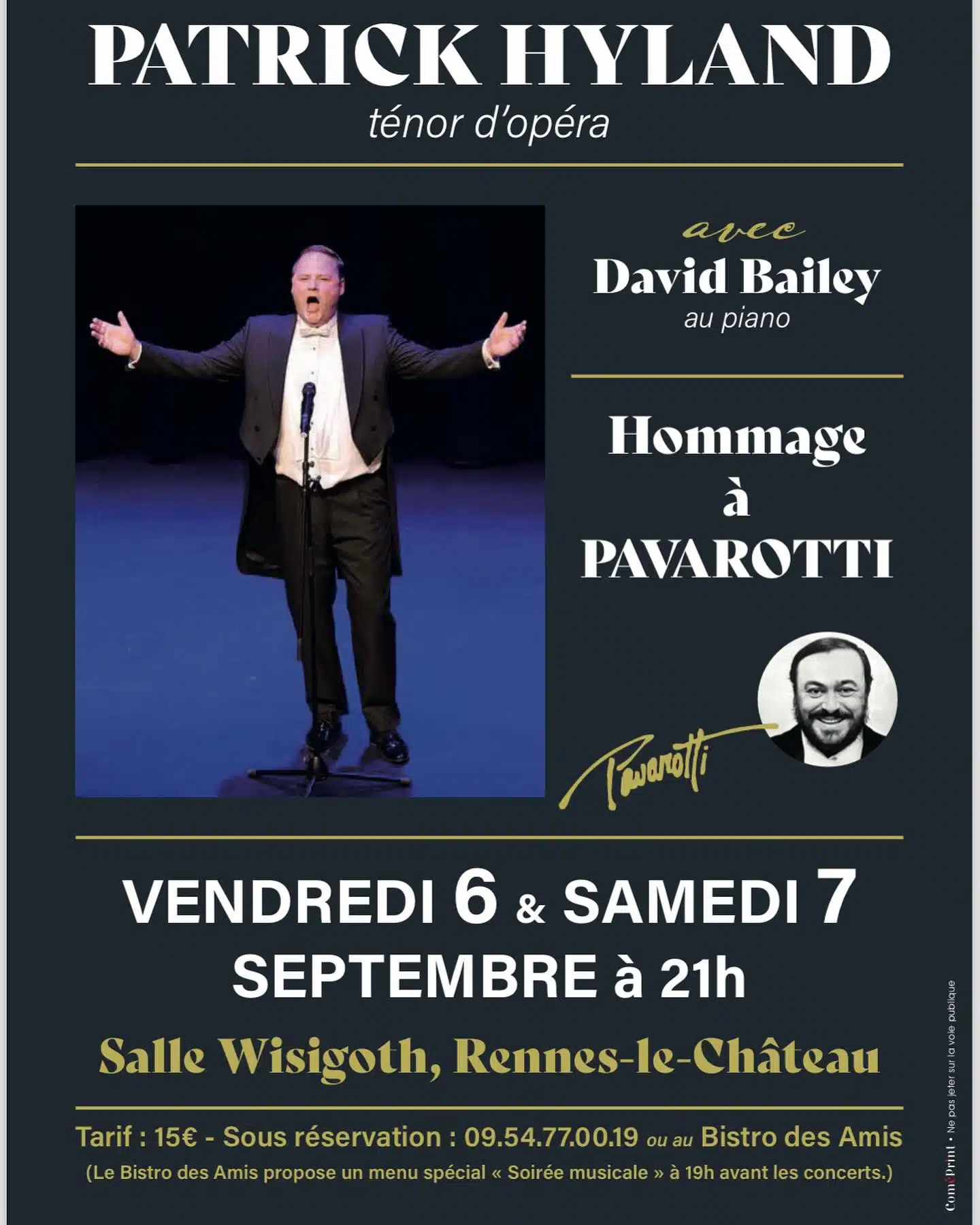
Patrick Hyland et David Bailey
News du 20 juin 2024
Le catharisme démystifié
Conférence conseillée de Jean-Pierre Monteils ce samedi 22 juin à 15h00 à la salle des Fêtes d’Antugnac : « Le catharisme démystifié » !

Heresis : revue d’hérésiologie médiévale
46 numéros de 1983 à 2024 pour un total de 885 documents à consulter en ligne gratuitement !
Balades de Saint-Hilaire 2024
« Nous organisons comme chaque année les « Balades de Saint-Hilaire » qui se déroulent pendant la saison estivale, en juillet et en août, dans et autour du village.
Quatre balades auront lieu le matin et quatre le soir avec un parcours qui met l’accent sur la patrimoine local et, respectivement, l’olivier et la vigne, au cours d’une marche de 3 km qui se termine par une visite guidée de l’abbaye, ainsi que la possibilité de déguster les vins d’Anne de Joyeuse et de participer à un repas à la fin de la balade.
Un changement majeur cette année : le jour – désormais mardi, et la première sortie aura lieu le 9 juillet. »

News du 10 juin 2024
Conférence à Ath (Belgique) sur “Rennes-le-château”
Mardi 11 juin 2024 à 14:30 à Ath, en Belgique, salle du Palace (Grand-Place)
« Rennes-le-Château où l’histoire rencontre le mystère »
Ce petit village d’environ 100 habitants est connu dans toute la France et bien au-delà. C’est le site de l’une des plus grandes légendes qui ont inspiré beaucoup de gens chez nous et à l’étranger depuis des décennies. Le code Da Vinci de Dan Brown semble être basé sur celui-ci.
Une conférence de Catherine Lheureux !
7,5€ (tarif plein), 5€ (étudiant), 1,25 € (Article 27), 30€ (abonnement 19 séances) !
Le mont Cardou et les pierres levées du Bazel
En venant de Serres et en franchissant l’une des entrées du Cromlech de Boudet en direction de Rennes-les-Bains, vous longez le Mont Cardou à votre gauche et le Château de Blanchefort se trouve sur une proéminence à droite. Deux rivières coulent au pied du Cardou, le Rialsesse côté Nord et la Sals côté Ouest. Coordonnées du sommet du Mont Cardou 42°56’11″N 2°19’38″E.
Le Cardou est truffé de grottes surtout sur son versant Serres, avec un aven. Entre Serres et le Cardou, il y a deux salles dont l’une a servi de lieu de culte à l’époque où les Cathares étaient persécutés.
News du 3 juin 2024
Sur RMC Découverte ce lundi 3 juin à 21h10, « Le masque de fer : le secret enfin révélé » de Jean-Christophe De Revière, Antoine Dreyfus, 1h05 mn, pays de production France ! Des archives récemment mises au jour et des travaux d’historiens révèlent un secret d’Etat, orchestré par l’un des plus grands rois de France, le Roi Soleil. Nous avons mis en ligne les livres de Sandra Gobert sur le secret du masque de fer !
A 22h15, même chaine, « The Holy Grail in America », de Andy Awes, 1h40, Etats-Unis !
News du 26 mai 2024
Bruno de l’épicerie de Rennes-les-Bains continue à animer son groupe des « Passionnés de Rhedae ». A son initiative, une vingtaine de personnes se sont donc retrouvées au Jardin de Marie de Rennes-le-Château ce samedi 25 mai pour sa 14e édition ! Retrouvailles, échanges conviviaux, partages d’informations, tout ce qui caractérise ce genre de repas pour autant que les participants soient animés par une mentalité positive ! Ce fut le cas 😉
Scoop : Jean-Pierre Monteils, notamment, partagera des informations inédites lors de la Table ronde d’aout à Rennes-le-Château.
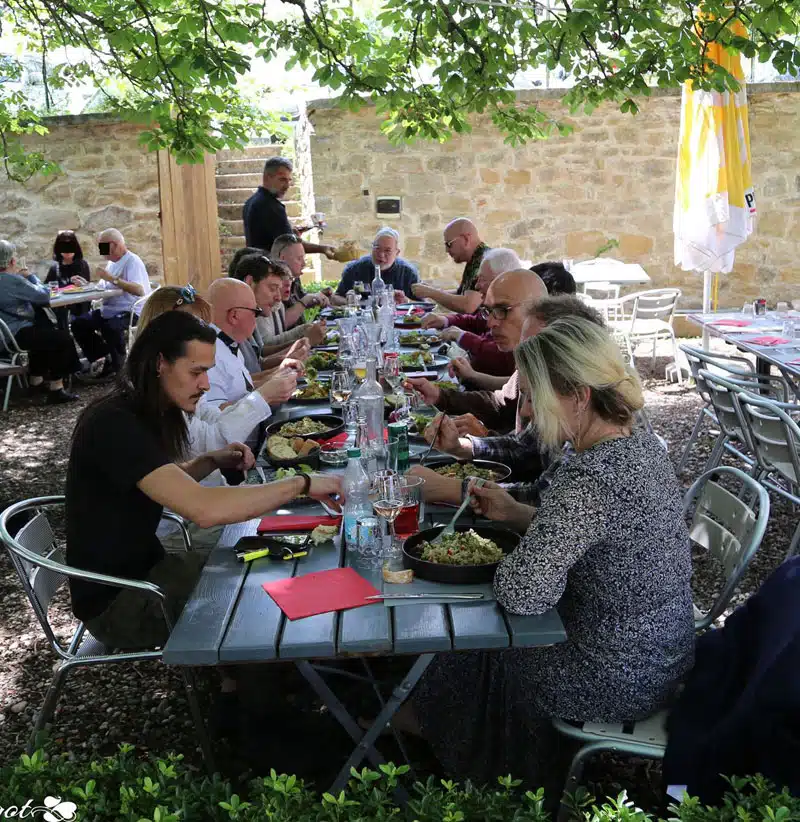
News du 22 mai 2024
Parmi toutes les théories, pistes, informations et désinformations sur les mystères de Rennes-le-Château et de Rennes-les-Bains, une des difficultés est d’y trouver des références crédibles, inchangées et fiables !
Dès lors, nous attirons votre attention sur les comptes rendus de visites à Rennes-le-Château et dans ses environs lisibles dans les Bulletins de la SESA (Société d’Etudes Scientifiques de l’Aude). Si le plus connu est lié à la stèle de Marie de Nègre d’Ables et date de 1905 (Bulletin de 1906), la visite de 1908 (Bulletin de 1909) est intéressante également car, non seulement l’abbé Saunière reçoit personnellement les visiteurs de la SESA mais le domaine y est décrit ! A lire ici !
Cerise sur ce gâteau, nous vous communiquons via le lien ci-après tous les comptes rendus de la SESA lié à notre village bien-aimé ! Il y en a 15, le dernier de 2015. Découvrir les comptes rendus de visites à Rennes-le-Château !
Enfin, en bas de la page, lisez le portefolio d’un chercheur qui partage ses notes sur Rennes-le-Château : texte, croquis, articles de presse. Nous reparlerons de cette personne.
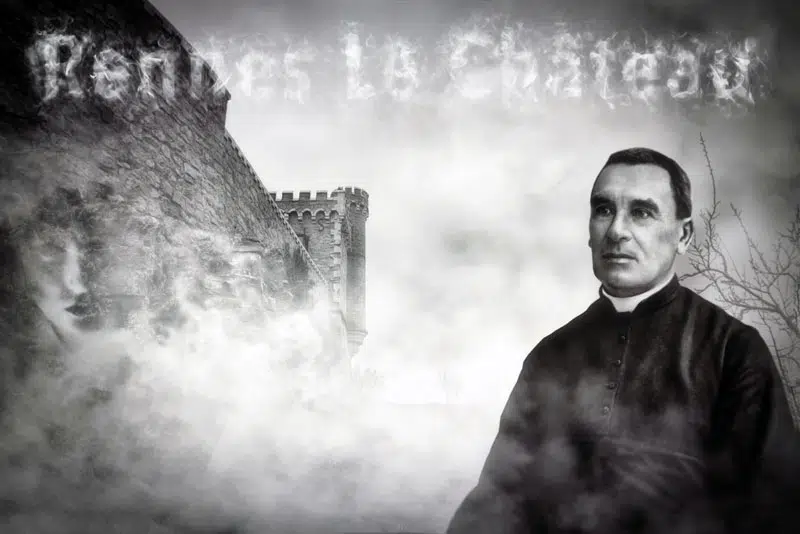
Pour trouver les articles en ligne, il suffit d’utiliser le lien vers Gallica et de lancer une recherche 😉
News màj 5 mai – 3 mai au 17 mai
Pour la rentrée (17 mai 2024), nous avons déjà prévu :
- L’étude sur la stèle – dalle de Marie de Nègre d’Ables (inédit !!!)
- L’actualisation de la 3e édition de la Fête des Ecrivains et des Chercheurs les 9 & 10 aout à Rennes-les-Bains. Le programme et les présentations sont en ligne https://portail-rennes-le-chateau.com/fete-des-ecrivains-et-chercheurs-rennes-les-bains/ A NE PAS MANQUER !
- Les interviews de Mike Aldebaran « ELIPHAS LEVI La Rétrospective de Christiane Buisset racontée par Nicole Pipard » (déjà sur la chaine Youtube), et celle de Philippe Brunel !
- L’interview de Jean-Michel Jauly, auteur de « Le mystère de Rennes-le-Château, une autre histoire »
- Interview de Christian Doumergue sur son dernier livre « Marie-Madeleine ou la quête de l’Âme » https://portail-rennes-le-chateau.com/christian-doumergue/ !
- Présentation du livre de Jean-Pierre Monteils « L’énigme cathare, une spiritualité sans croix »
- La sortie du nouveau livre de Paul Saussez « Rennes-le-Château, le mystère décrypté – Des clés pour déverrouiller la mystification ourdie par Plantard, De Chérisey et De Sède »
- Un livre inédit en français sur Nikola Tesla (l’inventeur) par Philippe Méry !
Pour faciliter le travail du secrétariat, nous signalons à nos aimables lecteurs que le travail de la Gazette de Rennes-le-Château et de l’Aude reprendra le 17 mai 2024 ! Submergés de courriels et de messages vocaux, nous répondrons donc aux sollicitations, demandes, souhaits et questions à partir de cette date.
Evidemment les 160 pages du site et les centaines de news sont accessibles…
L’aventure continue !
News du 17 avril 2024
Nous vous avons informés le 6 avril 2024 que la manufacture Giscard ouvrait exceptionnellement ses portes. « Pour la deuxième fois en 20 ans, la fabrique Giscard ouvre ses portes au public le week-end des 6 et 7 avril à Toulouse à l’occasion des Journées Européennes des Métiers d’Art ! Faut-il vous rappeler que Bérenger Saunière a fait appel à l’entreprise Giscard pour son chemin de croix, le haut bas-relief, le diable… ? »
Notre correspondant, Luxo, y a réalisé un reportage photographique le samedi 6 avril !


Une pièce non accessible au public avec une chaire de Vérité non livrée par la manufacture Giscard. Elle ressemble à celle de l’église sainte Marie-Madeleine de Rennes-le-Château !

6 avril 2024, Luxo – Photos ©
News du 16 avril 2024
L’Arche d’Alliance le 16 avril – Prochaine diffusion le mardi 23 avril à 23h00
News : Ce mardi soir 16 avril à 21:10, Alien Theory nous parle des « Pouvoirs de l’Arche d’Alliance » sur RMC Story, 55′ : « L’arche d’alliance est une relique biblique dotée d’incroyables pouvoirs. Ce coffre qui, dans la Bible, contient les tables de la Loi aurait le pouvoir de blesser, tuer et surtout celui de communiquer avec Dieu. Ce mystérieux coffre doré a-t-il des origines divines ou son pouvoir vient-il d’un autre monde ? »
Rencontre avec Daniel Dugès les 18 & 20 avril
A ne pas manquer cette semaine sur RMJ : « Des Livres et Nous », avec Maïté Dugès. Dans « Rencontre avec un auteur », retrouvez Daniel Dugès qui présente son essai « Rennes-le-Château Un Chapitre maçonnique secret » (Ed. Equinoxis). Diffusion jeudi 18 avril à 19h et rediffusion samedi 20 avril à 18h10 sur le 90.1 FM et le 89.1 ! Voici le lien Internet pour écouter la radio en direct https://www.votreradiosurlenet.com/player/index.php?radio=rmj 🙂
Vidéo et présentation du livre dans la Gazette de Rennes-le-Château !
7e Festival des journées de la Harpe du 19 au 24 avril

Informations et réservation !
Portrait de Marie-Madeleine par Raphaël du 20 avril au 20 mai 2024
« Le portrait de Marie Madeleine, authentifié le 4 octobre 2023 par l’Unesco comme étant de la main de Raphaël, sera exposé pour la première fois en la Basilique Sainte-Marie-Madeleine à Saint-Maximin-la-Sainte-Baume dans le Var du 20 avril au 20 mai de 10h à 12h puis de 15h à 18h !
Les propriétaires, des collectionneurs français, avaient acquis ce tableau en pensant qu’il ne s’agissait que d’une copie… » (Eridan d’Astor)
Lire la présentation détaillée de Etienne Dumont et Virginie Rabisse !
« Cathares » Toulouse dans la croisade du 5 avril 2024 au 5 janvier 2025
« Cathares, croisade, châteaux, inquisition, bûchers… autant de termes et d’images qui sont associés à la croisade contre les Albigeois (1209-1229).
Cette exposition inédite, conçue par le Musée Saint-Raymond, présente les événements et rebondissements qui ont émaillé la croisade contre les Albigeois mais aussi la question de l’hérésie dite « cathare », autour des débats qui animent actuellement la communauté des historiens.
Près de 300 objets sont exposés dans les deux sites qui accueillent l’exposition, le Musée Saint-Raymond et le Couvent des Jacobins. » (Service presse) Lire la suite de la présentation et les renseignements pratiques !
Du 5 avril 2024 au 5 janvier 2025, au Musée Saint-Raymond et au Couvent des Jacobins à Toulouse. Ouverture du mardi au dimanche, de 10h à 18h. Fermée les 1er mai, 25 décembre et 1er janvier.
Conférence de Christian Doumergue « Du Hiéron du Val d’Or au mystère de Rennes-le-Château » le 18 mai
Christian Doumergue sera à Paray-le-Monial le 18 mai à 17h30 pour donner une conférence sur « Du Hiéron du Val d’Or au mystère de Rennes-le-Château » à la salle de l’AGORA. Lire la présentation et réserver !!!
News du 10 avril 2024
Pour les curieux, les férus d’histoire et les chercheurs !
Fichier des ecclésiastiques catholiques (Troisième République)
« Ce fichier des ecclésiastiques catholiques a été constitué par l’administration des Cultes à partir de 1881. Il répertorie les membres du clergé séculier rémunérés par l’Etat sous la IIIe République (prêtres de paroisse, vicaires, aumôniers, professeurs, …).
Les fiches indiquent pour chaque ecclésiastique : le diocèse dont il dépend, ses nom, prénoms et date de naissance et son titre en 1881. Trois colonnes sont en outre prévues pour noter les « mutations » et « renseignements » qui le concernent ainsi que leur « date ».
Les colonnes « mutations et « renseignements » permettent de connaître l’existence de dossiers traités par l’administration des Cultes, qu’on peut espérer retrouver dans la sous-série F/19 (articles relatifs aux nominations, mutations, traitements, pensions, secours, décorations, plaintes, etc.). » (Archives Nationales – Merci pour le rappel de l’info à Jean-Pierre R.)
Ci-dessous les 2 fiches de Bérenger Saunière, celle de Henri Boudet est… vierge ! Vous avez accès à tous les diocèses !
Accès au diocèse de Carcassonne, fiches de A à J à partir de la fiche n° 80 😉 et fiches de L à V !


Données climatologiques de base – décadaires
« Les données décadaires sont proposées ici en téléchargement, par départements et par lots de périodes au format csv compressé.
L’ensemble des paramètres météos est fourni pour l’ensemble des postes météorologiques.
Les heures sont exprimées en UTC pour la métropole et en FU pour l’outre-mer. » (meteo.data.gouv.fr)
Descriptif des colonnes et abréviations (indispensable pour comprendre les données !!!)
Pour celles de l’Aude 1872 – 2024, sélectionnez ce lien, puis choisissez la page 6 ;-). En plus, vous pouvez choisir votre département, puis la localité de la base de données la plus proche de votre domicile !
Conférence sur la cathédrale de la Cité de Carcassonne
Conférence sur « Saint-Nazaire la cathédrale de la Cité » par les sociétaires de la SESA (Société d’Etudes Scientifiques de l’Aude) Jean Blanc et Claude-Marie Robion le 11 avril 2024 à 18 h à Notre Dame de l’abbaye, Carcassonne. Conférence organisée par le diocèse de l’Aude.
News du 7 avril 2024
Terre de Rhedae renait de ses cendres (rectificatifs…)
Le président de l’association Terre de Rhedae, Merlin Delrieu, nous a contacté pour préciser certains points !
L’association castelrennaise créée par Antoine Captier en 1989 et tombée en sommeil en 2020 lors de la présidence de Christian Doumergue renait de ses cendres avec un trio qui devra faire ses preuves : Merlin Delrieu, président, Baptiste Six, trésorier, et Axel Graisely, secrétaire ! De ce trio avec à sa tête un jeune président de 19 ans, nous avons relayé plusieurs fois l’actualité d’Axel Graisely, auteur entre autres de livres de vulgarisation sur Rennes-le-Château comme « Rennes-le-Château sur les chemins de légendes » !
A suivre donc !
News du 6 avril 2024
Giscard à Toulouse
News : Pour la deuxième fois en 20 ans, la fabrique Giscard ouvre ses portes au public le week-end des 6 et 7 avril à Toulouse à l’occasion des Journées Européennes des Métiers d’Art ! Faut-il vous rappeler que Bérenger Saunière a fait appel à l’entreprise Giscard pour son chemin de croix, le haut bas-relief, le diable… ?
Les 6 et 7 avril, à l’occasion des Journées européennes des métiers d’art, ouverture au public de la fabrique Giscard et rencontre avec l’atelier Ficat qui perpétue à Saint-Marcel-Paulel la tradition toulousaine de la statuaire en terre cuite. Entrée libre, au 25 rue de la Colonne, de 10 h à 12 h 30 et de 14 h à 18 h. Lire l’article ! Merci à Luxo Bnvntr pour l’info 🙂
News du 2 avril 2024
Une photo qui fait réagir !
Chers internautes, la news de ce lundi 1er avril a suscité beaucoup de commentaires publics et privés sans compter les très nombreux visiteurs de cette page !
Chacun a réagi selon son vécu, et nous avons été surpris par le nombre de lecteurs qui n’ont pas été étonnés par cette info : « Des éoliennes derrière la tour Magdala » ; cela ne leur paraissait pas loufoque ! A ce stade, nous laisserons la parole à un sociologue pour analyser ce qui est préoccupant dans ce constat…
Bref, comme indiqué et rappelé dans nos réponses : « photo ni retouchée, ni truquée », le lieu de la prise de vue est indiqué dans le reportage du 1er avril : « Ce samedi 30 mars, nous étions en reportage au hameau de Coumesourde. Pour l’illustrer, nous avons pris de l’altitude pour photographier les environs en gagnant la pique de Lavaldieu, puis en redescendant un peu vers Le Carla… » C’est de ce point de vue que la photo a été prise avec les éoliennes en face et sur les hauteurs d’Alet-les-Bains côté Conilhac-de-la-Montagne !
De cet angle et avec le zoom utilisé, vous avons obtenu les photos publiées sans trucage ! Le lieu est superbe et nous vous conseillons la promenade.
Pour vous rassurer quant à la beauté du site de Rennes-le-Château vu de loin, nous l’avons photographié d’un autre angle inédit près du lieu-dit (Le – Al) Poulit sur la commune de Saint-Just-et-le-Bézu.

News du 31 mars et 1er avril 2024
Travaux à Rennes-le-Château
Depuis plusieurs semaines, des travaux ont débuté à Rennes-le-Château, rue des marronniers notamment !


Une partie du parking n° 1 est encombrée de matériel ! Des tonnes de gravats s’accumulent au bout du parking n° 2… Nous avons assisté plusieurs fois aux passages d’engins lourds lors de repas au Bistro des Amis en prévision de l’actualité 2024 (conférences, nouveaux livres) !

De passage au village de RLC ce mardi 26 mars, nous avons constaté que le rythme s’était grandement intensifié puisque le petit camion municipal avait été remplacé par un camion de transport de terres beaucoup plus grand…
Ce samedi 30 mars, nous étions en reportage au hameau de Coumesourde. Pour l’illustrer, nous avons pris de l’altitude pour photographier les environs en gagnant la pique de Lavaldieu, puis en redescendant un peu vers Le Carla…
Quel ne fut pas notre abasourdissement, notre effarement de constater ce qui était apparu au bout du parking n° 2 du village de Rennes-le-Château… depuis le mardi !

D’abord nous avons cru à un bug de notre appareil photographique, puis à une erreur de mise au point ! Cependant les différents réglages nous donnaient toujours le même résultat… : des pales tournoyaient derrière le domaine de l’abbé Saunière tranchant le paysage et le rendant flou !

En fait 3 fois 3 pales… pour les 3 éoliennes sorties de terre pour agrémenter les finances municipales alors que le parking redevient payant en ce début de semaine !

Nous lançons donc une campagne de partage des photos du village et de la tour Magdala en vue de constituer une banque de données avec les images d’avant les éoliennes ! Vous pouvez les envoyer à la rédaction via l’adresse email au-dessus de cette page !

D’une source bien informée, nous vous livrons en primeur l’emplacement du second lieu d’implantation de 5 autres éoliennes fin de l’été : le bois du Lauzet et, plus précisément, la pique de Lavaldieu…
A suivre !
30 mars 2024, Johan Netchacovitch pour la Gazette de Rennes-le-Château – Photos ni retouchées, ni truquées ©
News du 29 mars 2024
L’abbé Saunière à Nice ! ?
Parmi tous les voyages attribués à Bérenger Saunière, Patrick Mensior évoque celui de Nice… avec Marie Dénarnaud !
En avril 1990, dans la revue « Vaincre », Pierre Plantard de Saint Clair indique ce qui suit : « Jean Delaude (Baptiste, Charles, Alexis), né le 19 octobre 1891 à Nice, de Jean Delaude et Thérèse Badella, fut baptisé le 28 octobre 1891 avec pour marraine Marie Dénarnaud et parrain Bérenger Saunière … » (Patrick Mensior)
Entre informations exactes et inventées, technique chère à Pierre Plantard, le chercheur louvoie avec dextérité !
La ferveur est dans la pierre : l’abbaye d’Alet
« La ferveur dans la pierre », une animation proposée par Nicolas de Léon, Animateur Patrimoine & Culture : la visite de l’abbaye Notre-Dame d’Alet (11) le week-end de Pâques 2024, les samedi 30 mars à 14h15. dimanche 31 mars à 14h15 et lundi 1er avril à 14h15. Participation libre et gratuite, la billetterie de l’entrée de l’abbaye reste à charge du public.

Se repérer dans la région de RLC/RLB
Coordonnées GPS des églises de Rennes-le-Château, Granès, Rennes-les-Bains, Saint-Salvayre, les château de Blanchefort, du Bézu, d’Arques, le tombeau des Pontils, la tour Magdala, le pierre dressée des Pontils, et une vingtaine d’autres… A découvrir sur ce site !
News du 21 mars 2024
Rennes-le-Château, du Trésor au Mystère
« Samedi 13 avril prochain, à 15h00, j’aurai l’immense plaisir de donner au Centre Universitaire Méditerranéen, situé sur la promenade des Anglais à Nice, une conférence intitulée « Rennes-le-Château, du trésor au Mystère ». Cette conférence sera suivie d’une séance de dédicaces. L’événement est organisé par la Loge maçonnique Saint Georges du Temple.
L’entrée est libre et gratuite, mais ATTENTION : il est nécessaire de s’inscrire au préalable ! Alors ne tardez pas… Pour les inscriptions, c’est auprès des organisateurs https://saint-georges-du-temple.org/rennes-le-chateau-du-tresor-au-mystere/ !
Ma conférence aura pour titre « Rennes-le-Château, du Trésor au Mystère ». J’analyserai comment ce qui était à l’origine une « simple » histoire de trésor trouvé par un curé est devenu quelque chose de beaucoup plus complexe et fascinant, un véritable Mystère au sens ésotérique et religieux du terme. Avec toutes les questions que cela pose !
J’espère vous retrouver nombreux ! » (Christian Doumergue)

News du 17 mars 2024
Le Sot Pêcheur
Une de nos lectrices, Emilie Samia Dahrouge, nous a envoyé ce texte et un lien : « A chaque fois que je lis le sot pêcheur, je pense à cette histoire qui me rappelle des similitudes avec Rennes-le-Château ! »
Petit rappel : ce document manuscrit a été trouvé dans le tabernacle de la chapelle privée de Bérenger Saunière qui jouxte la villa Béthania. A partir de là, ce sont imprécisions et supputations… 1966 sous Corbu ? 1967 sous Buthion ? Le bout de papier est roulé dans un cylindre et protégé par un extrait du journal « La Croix » de 1907. De plus le document disparait très vite et réapparait en 1967 dans « L’or de Rennes » de Gérard de Sède. Nous rappelons que Pierre Plantard aurait dû recevoir les droits d’auteur de ce livre à hauteur de 65 % ! Bref, tout cela est de notoriété publique. Ah oui ! Il existe aussi plusieurs versions du texte…
Le texte a fait l’objet de plusieurs décodages peu convaincants. Regardons d’abord son texte. Nous reprenons celui publié dans « L’or de Rennes », p. 67. Les deux premiers mots donnent le nom du document : « Sot pêcheur » : « SOT PECHEUR A L’EMBOUCHURE DU RHONE, SON POISSON SUR LE GRIL DEUX FOIS RETOURNA. UN MALIN SURVINT ET XXV FOIS LE GOUTA. CUIT ., IL NE LUI RESTA QUE L’ARETE. UN ANGE VEILLAIT ET EN FIT UN PEIGNE D’OR. B. S. CUR »
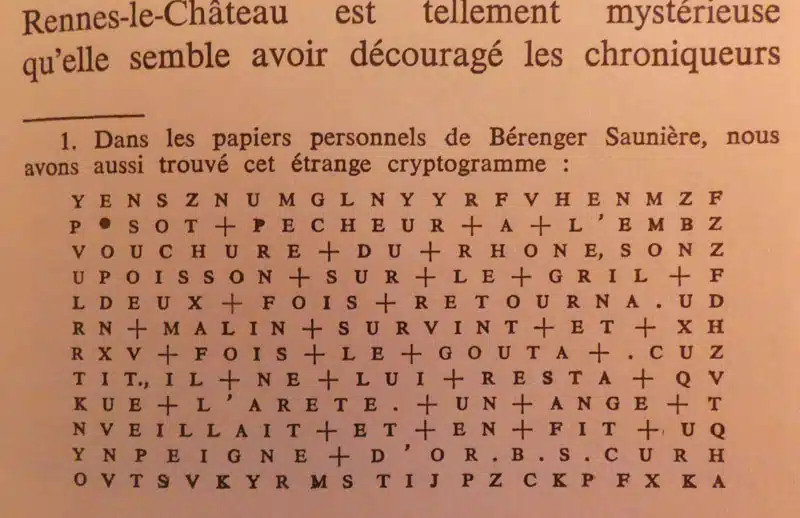
Pour ceux qui découvrent le document, le texte retranscrit ne tient pas compte de l’encadrement constitué par les premières et dernières lignes horizontales et verticales !
Passons au lien envoyé par Emilie qui a retenu les derniers mots : « PEIGNE D’OR » car elle a trouvé une légende… du peigne d’or, conte de la Montagne Noire, décrivant les efforts d’un bourgeois d’Hautpoul pour s’emparer du peigne d’or appartenant à la fée Saurimonde ou Salimonde.
Des références donc au village d’Hautpoul, au peigne d’or, à un certain Rivière, au diable, à une grotte, à une pierre branlante. Dans une autre version, elle parle le langage des oiseaux. Lire les infos !
Lire le conte dont les références sont : Conte traditionnel de la Montagne noire, littérarisé et arrangé par Henri Tournier vers 1899-1900, Revue du Tarn, vol XVII, année 1900.
Le conte était donc accessible à Bérenger Saunière (la volonté de glisser dans le cylindre un extrait du journal La Croix de 1907 pour l’accréditer ?), à Corbu ou Buthion aussi en tant qu’inventeur ou concepteur ? Et à ceux qui l’auraient modifié ?
Document à l’authenticité très incertaine ! Mais laquelle ?
Emilie Samia Dahrouge et Johan Netchacovitch ©
News du 9 mars 2024
Plan du cadastre de Rennes-le-Château
Le site de France Cadastre vous permet de télécharger le plan cadastral et Rennes-le-Château et… de toutes les communes de France ! Vous avez aussi la possibilité de visualiser et de télécharger en cliquant sur une parcelle pour obtenir plus d’informations ou demander un relevé cadastral ! Vous choisissez même l’échelle et… c’est gratuit et immédiat ! On y trouve de vraies pépites et c’est officiel : lien du site !
Pour des recherches et des informations plus approfondies, le site du cadastre différent vous envoie des PDF mais ce service est payant. Dans nos simulations de 5 à 11 € !

Conseil : après quelques téléchargements ou vous devez attendre une heure ou… vous supprimez vos cookies 😉
Jésus de Galilée nest point icy
Patrick Mensior étudie un document issu du registre paroissial des déclarations de naissances, de mariages et de décès de la commune de Rennes-le-Château de 1737 à 1802. La phrase « Jésus de Galilée nest point icy » y revient 6 fois en entier ! Un message ? Une punition ? Un marque-page ?

News du 1er mars 2024
Des chercheurs cherchent et partagent dans la Gazette de RLC ! Nous commençons par un classique !
Le programme de la découverte de la stèle de Marie de Nègre d’Ables
Jauclin a envoyé à la rédaction le document ci-dessous qui donne le programme et l’horaire de la fameuse journée du 25 juin 1905 où des membres de la SESA (Société d’Etudes Scientifiques de l’Aude) se sont transportés à “Rennes-le-Château, le Rocher Tremblant, Rennes-les-Bains” (Le Midi – journal républicain – du 23 juin 1905) : A 8 heures départ à pied de Couiza vers Rennes-le-Château – 9h30 arrivée à Rennes-le-Château : visite du château, visite de l’ossuaire, aux ruines, curiosités locales !

De quel ossuaire s’agit-il ? Quelles ruines ont été visitées ? Quelles “curiosités locales” ? Déjeuner au restaurant de Rennes-le-Château !
Le compte rendu de la visite, paru dans le Bulletin de la SESA, tome XVII, Année 1906, p. 98 – 103, sous la signature de E. Tisseyre, nous fournit des réponses.
Les ruines : “… les anciens murs d’enceinte ou fortifications dont il ne reste plus que quelques pans.” Le restaurant : à l’intérieur du château. L’ossuaire : au pied des anciens remparts de la forteresse. Elie Tisseyre n’évoque pas celui du cimetière. La villa Magdala : “Montés sur une tour de construction récente”. L’abbé Bérenger Saunière a donc bien rencontré les membres de la SESA puisqu’il le note dans son journal à la date de la visite : “Visite des membres de la Société des sciences.” (“Le journal de l’abbé Saunière de 1901 à 1905 commenté par Patrick Mensior”, 2017, Ed. ODS p. 142)
Johan Netchacovitch ©
News du 27 février 2024
La Sainte Lance… dans les souterrains de Rennes-le-Château ou…
News : Un chercheur aguerri, Jean Bertrand, a été interviewé pour une parution dans La Dépêche.fr et L’Indépendant.fr. Après l’étude de la station II du chemin de croix de l’église de Rennes-le-Château où il trouve la Sainte Lance de Longin qu’il situe dans les souterrains du village grâce à des témoignages… Lire l’interview !
… Une explication historique plus étayée
Nous remercions Tony Bontempi de La Rose Rouge de nous avoir autorisé à reproduire cet extrait de son étude sur la station II du même chemin de croix ! Dans un article de 2004, il recense objectivement les raisons de la présence de la lance de Longin sur la station II.
« Article de « La Dépêche » sur la deuxième station du chemin de croix de Rennes-le-Château. Le point de vue de Jean Bertrand rejoint le mien sur une représentation de la sainte Lance sur cette station. Je retrouve dans mes notes ce que j’écrivais à ce propos en 2004. La représentation de la (sainte) lance me paraissant assez courte, je parlais alors d’un fragment de lance. Puis je donnais plus de précisions par rapport aux visions de la mystique Anne-Catherine Emmerich. Un extrait de mon texte expliquant ces détails de la seconde station du chemin de croix de Rennes-le-Château :
Le fragment de lance est sans doute une représentation de la Sainte Lance, le jeune homme ramassant l’objet étant vraisemblablement le soldat Longin qui perça le flanc du Christ. Dans ce contexte, le casque à terre symbolise alors un rejet de l’autorité romaine et une conversion au christianisme, fait qui est en accord avec la légende de Longin (1). Appuyant encore cette hypothèse d’une représentation de Longin, on trouve dans les visions de la mystique allemande Anne-Catherine Emmerich (2) une description de la lance de Longin : « La lance de Cassius (3) se composait de plusieurs morceaux que l’on ajustait les uns aux autres : quand ils n’étaient pas déployés, elle avait l’air d’un fort bâton de longueur moyenne. ». Et plus loin, dans un « Fragment sur Longin » recueilli le 15 mars 1821 (4) : « Sa lance était faite de plusieurs morceaux qui rentraient l’un dans l’autre : en les tirant on pouvait la rendre trois fois plus longue. ». En outre, Anne-Catherine Emmerich donne l’âge de Longin au moment des faits : il aurait vingt-cinq ans (5) ; dans la scène qui nous intéresse, le personnage ne paraît pas être plus âgé. Tout concorde donc à dire que ce jeune homme est Longin. » (Tony Bontempi)
(1) Voir « La Légende dorée » de Jacques de Voragine.
(2) Née en 1774, religieuse augustine au couvent d’Agnetenberg à Dulmen, morte en 1824. Ses visions inspirèrent plusieurs scènes du film de Mel Gibson, « La Passion du Christ ». Anne-Catherine Emmerich a été béatifiée par le Pape Jean-Paul II le 3 octobre 2004.
(3) Anne-Catherine Emmerich parle plus haut de « l’officier inférieur Cassius, appelé plus tard Longin ».
(4) Il est précisé que la fête de Longin tombe ce jour, « ce que la sœur ignorait. ». Toutefois, Jacques de Voragine, dans sa « Légende dorée », donne la date du 1er septembre, en se référant à Adon.
(5) Rappelons qu’il s’agit des visions d’une mystique, qui n’ont donc rien d’objectif historiquement parlant. Toutefois, ces visions datant du premier quart du XIXè siècle en plein développement du thème de la « Via Crucis » (nommée parfois « Via Dolorosa »), il est probable qu’elles aient inspiré de nombreuses représentations de chemins de croix.
Une lance en guise d’exemple : le point de vue de la rédaction !
Les points de vue de Jean Bertrand et de Tony Bontempi donnent un excellent exemple de l’état des recherches sur les affaires de Rennes-le-Château. D’abord une constatation commune sur la présence de la Sainte Lance dans la station II.
Ensuite, une explication étayée de quelques références historiques et de suppositions qui servent de liens basées sur des témoignages de la part du premier chercheur, et une explication soutenue par des sources historiques référencées qui permettent au second chercheur de conclure qu’il n’y pas de mystère dans cet aspect de la station II, nous a-t-il précisé dans un entretien téléphonique de ce jour !
En conclusion, seule la découverte des souterrains dans et aux alentours de Rennes-le-Château permettra de départager les deux chercheurs. Encore faudrait-il que les souterrains contiennent quelque chose ! Cela fera l’objet d’un autre article de la part de la Gazette de Rennes-le-Château.
L’aventure continue… donc !
Johan Netchacovitch ©
News du 24 février 2024
A vos agendas pour entendre Mike Aldebaran, Christian Doumergue, Sophie Herfort, Jean-Michel Raoux, Jean-Jacques Charbonier, etc.
Les Dirigeables Fantômes de 1897
Conférence de Mike Aldebaran au Repas Ufologiques de Montpellier, le samedi 2 mars 2024 à partir de 18h30 : « Les Dirigeables Fantômes de 1897 » !
Mike Aldebaran est programmateur radio, ufologue et journaliste à la Gazette de Rennes Le Château. Passionné depuis son plus jeune âge par l’approche de Jacques Vallée, Eric Zurcher et Jean Sider ainsi que par celle de Carl Gustav Jung, il vous présentera une conférence sur la vague ufologique de l’airship de 1897 et ses dirigeables fantômes aux États-Unis jusqu’aux Ovnis modernes des années 50 en Europe où le phénomène prend une forme différente prouvant que l’ufologie et la mythologie sont en miroir.
Il s’agit d’une première approche mimétique qui semble imiter avec plus ou moins de vraisemblance des engins et humanoïdes déjà connus des archétypes de l’inconscient collectif avec qui il agit en miroir selon la profession du témoin et sa psychologie, son environnement social et sa culture. Il s’agit ici d’une approche inédite souvent incomprise et peu mise en avant en ufologie.
Événement Privé sur Réservation : 07 86 36 23 53 !

Symposium Exovision

Du 16 mars à 9 h au 18 mars à 19 h 2024 au Zénith de Limoges ! Lien vers le programme et beaucoup d’autres informations !
12 CONFÉRENCIERS !
Des conférenciers de renom interviendront dans leur domaine d’expertise. Avec par ordre alphabétique :
Alain Balasse et Philippe Arnould – Technologie du nouveau monde : Harmonisateur universel
Alain Boudet – Tesla, l’éther et les ondes scalaires
Anne Givaudan – Reporter Galactique, les êtres des étoiles : leur rôle, leur présence sur Terre et dans nos vies
Annick AWD – QSF et délégation EXOVISION : La Paix et les relations exobiologiques à venir
Antoine Cuttitta – Alliance Humaine pour un nouveau monde
Caroline Cory – Nouvelles preuves fantastiques de phénomènes OVNI
Christophe Charret – La dimension quantique dans la vie du peuple
Jean-Jacques Charbonier – Rencontres des célestes en état modifié de conscience – vertus et possibilités de l’état de Conscience Intuitive Extraneuronale ou CIE
Jean-Michel Raoux – Les fantastiques rencontres du 5e type : “E.T.” et amitié humano céleste
Nicolas Turban – Rencontres des êtres non humains, les relations des êtres galactiques avec les Hommes
Umberto Molinaro – Crop Circles et éveil d’une conscience planétaire
Le mystère du curé aux milliards

Samedi 16 mars à 18 h à Fleury-sur-Orne (14123) Gymnase Auguste Delaune : « Le mystère du curé aux milliards » par l’historienne Sophie Herfort. Découvrir tout le programme du Bloody Fleury des 15 au 17 mars 2024 via ce lien.
Mise à jour 21 février – News du 16 février 2024
News : Cérémonie très émouvante et digne cet après-midi au cimetière d’Espéraza en l’honneur de Georges Kiess ! Ses filles et petits-enfants mettent à notre disposition le livret « En souvenir de Georges Kiess 1936 – 2024 ». Ainsi ses amis et connaissances partageront également ce moment et sa mémoire !


Nous ajoutons une anecdote racontée par George sur le pilier wisigothique du jardin de la Vierge à Rennes-le-Château.
Johan Netchacovitch
Hommage à GEORGE H. KIESS
C’est avec beaucoup de tristesse que nous avons appris le décès de Monsieur George H. KIESS ce mardi 13 février 2024. Je me permets de joindre cet hommage personnel aux nombreux autres exprimés tant George était estimé et reconnu dans la région. C’est non sans une certaine émotion que j’ai pu faire sa connaissance en 2008. Il fut en effet le premier à relayer la présence de frises recouvertes d’un badigeon et de la croix encastrée sur le mur extérieur nord – à connotation templière – de l’église de Serres.
George aimait par-dessus tout se promener dans la nature et possédait comme personne le nez creux pour mettre à jour des éléments géologiques (fossiles, œufs de dinosaures) et historiques d’un passé enfoui qu’il a patiemment mis en lumière dans ses publications tout en se proclamant haut et fort autodidacte.
Il fit preuve toute sa vie d’un esprit libre et d’un caractère entier qu’il tenait de son enfance. Né en 1937 à Leipzig en Allemagne, il s’était installé après la guerre en 1948 en France précisément à Espéraza d’où est originaire sa famille maternelle. Les circonstances à cette époque ne lui ont pas permis de suivre les études qu’il aurait souhaité et c’est au courant de sa vie professionnelle dans le bâtiment que le hasard, faisant opportunément les choses, le conduit sur des lieux d’une ancienne préceptorie ayant jadis appartenu à l’Ordre du Temple située à Campagne-sur-Aude ; ce qui provoquera son intérêt pour cet ordre hors du commun. George se lance alors en candidat libre dans des études religieuses, archivistes et paléographiques. Il exhumera des archives de la Haute Garonne fond Malte une mine de textes templiers non exploités dont une bonne soixantaine concerne son village. Dans les années 90, il créera le Centre Etudes et Recherches Templières (CERT) et concevra une exposition sur le médiéval et les Templiers sur une période de 4 ans. Membre de la SESA. Il est l’auteur de nombreuses ouvrages et monographies :
1990 – Des Templiers en Haut-Razès
1993/1994 Cahiers du CERT (93/94) Templiers oubliés – Les Templiers des Espagnes/La Croix inversée/le gardien secret du Temple de Campanea
2002 Rennes-le-Château et les Templiers
2014 – Templiers recherches d’authenticité
2015 – Fa, la Tour héroique
2021 – Incursion médiévale, à l’entour du castrum d’Albesuno
George Kiess est une référence pour beaucoup d’entre nous. Grâce à ses travaux, il a fait resurgir une histoire templière dans la haute vallée de l’Aude qui, sans lui, serait restée reléguée dans les oubliettes de l’histoire. Il a infatigablement traduit les parchemins en latin et vieux français et consulté les archives. George n’échafaudait pas des hypothèses pour lui, seuls les documents faisaient foi. Ses recherches contredisent la présence templière au Bézu relayée par l’abbé Mazières et portée sur la carte IGN. Se basant sur les minutes d’un procès retentissant en 1243, il fera le distinguo entre les seigneurs d’Albesuno (dont l’origine de la fortune et puissance reste pour le coup mystérieuse) et les deux frères templiers de Campagne en charge de la préceptorie.
Il va beaucoup nous manquer et laisse un vide. Nous ne pouvons qu’espérer que d’autres reprennent le flambeau de ses recherches. Toutes nos condoléances à sa famille et la famille Jouve ainsi qu’à tous ses petits-enfants auxquels il était très attaché.

Kris Darquis
News du 3 février 2024, mise à jour 4 février 2024
News : Le Cryptogramme du Sot Pêcheur

Après contact avec Fernand Scribar, nous avons reçu son dossier presse. Nous nous en inspirons pour la présentation ci-dessous !
« Le cryptogramme du sot pêcheur » de Fernand Scribar est paru en décembre 2023. Cette étude inédite parle de cryptographie : quoi de plus normal quand il s’agit de la résolution d’un cryptogramme !
Après avoir recensé et regroupé quelques informations sur l’origine du document, l’auteur indique quelques procédés de cryptographie susceptibles d’avoir été utilisés.
Puis il nous fait entrer dans le vif du sujet avec une analyse cryptologique très détaillée basée sur la partie centrale du document, mettant en exergue des points particuliers dont certains n’avaient pas été identifiés jusqu’alors et dont l’existence pose question.
S’appuyant sur ces points particuliers, l’auteur va nous faire la démonstration que le contenu et la construction du texte de la partie centrale ne doit rien au hasard.
Ainsi, nous découvrirons ce qu’est l’arête, où elle se situe précisément avec l’aide du XXV, et pourquoi la présence d’un ange est nécessaire pour la finaliser en peigne d’or. Nous verrons aussi quel est le rôle du (gros) point de la première case de la partie centrale.
Ceci conduira à déterminer que le Sot pêcheur est élaboré sur la base d’un double codage, et que le cryptogramme situé en périphérie en cache un autre.
Bien évidemment, toute tentative de décryptage ne prenant pas cette donnée en compte était vouée à l’échec. Ceci explique peut-être que les solutions proposées jusqu’ici soient difficilement crédibles, d’autant plus que la méthode menant du tenant à l’aboutissant n’est pas détaillée.
La deuxième partie du livre est une aide à l’identification et à la résolution de l’autre codage. Elle explique de manière simple et claire les méthodes de décryptage de certains procédés de cryptographie susceptibles d’avoir été utilisés, en évitant ainsi au lecteur de longues et fastidieuses recherches dans des sites spécialisés.
Le livre est disponible à la librairie de La Rose Rouge en cliquant ici ! Son livre grand format A4 et l’utilisation incontournable de tableaux en couleurs faciliteront la lecture des 96 pages qui le composent.
Fernand Scribar est le pseudonyme d’un dilettante qui aime les jeux de lettres et de logique, pris au jeu de la résolution d’une énigme qui a résisté au temps.
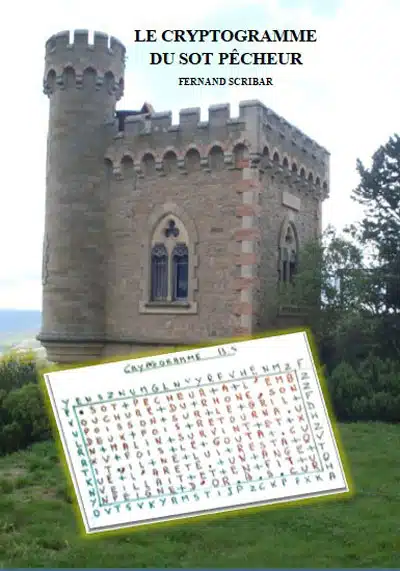
News des 3 février et 8 janvier 2024
Nous vous avions avertis le 8 janvier que deux des bancs achetés par Bérenger Saunière étaient en vente sur Ebay ! Après une première période d’enchères d’une décade sans offre, le vendeur avait représenté le bien pour une deuxième période de 10 jours ! A la fin de celle-ci, deux acheteurs ayant surenchéri, les deux bancs ont été vendus pour… 1510 € ! Nous remercions Tony Bontempi pour ces informations.
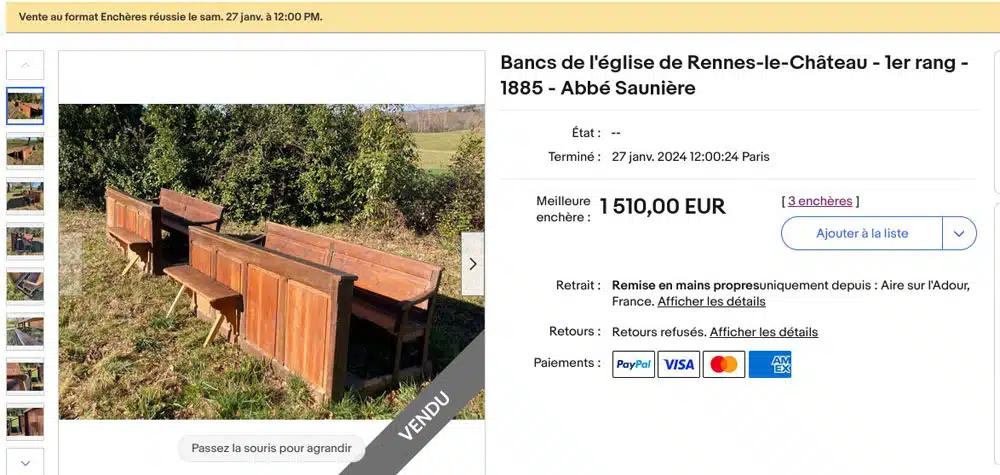
Lire la suite de l’article actualisé le 5 mars 2026 les bancs de Saunière !
News du 26 janvier 2024
La clé « Bérenger Saunière » News supprimée !
News : Le souci d’informer les lecteurs de la Gazette de Rennes-le-Château vient de rencontrer une limite suite aux propos tenus par un internaute (auteur, chercheur) qui a tendance à tout mélanger, ne retenir que le négatif et, principalement, se tromper de cible… Nous avons donc décidé de retirer la news qui avait rencontré du succès sur le site (voir la photo ci-dessous) et certaines pages FB où les « partages », « likes » et « commentaires » avaient de très loin dépassés la moyenne des autres messages ! Bref, nous continuerons à vous informer et mettrons les liens vers des pages d’autres sites comme nous le faisons depuis 20 années.

Manifestation en cours des agriculteurs à Couiza

News du 22 janvier 2024
Il y a 107 ans déjà… décédait l’abbé Bérenger Saunière de Rennes-le-Château ! Nourrissons une pensée affectueuse pour ce prêtre qui a permis à des dizaines de milliers de personnes de découvrir une région magnifique aux multiples facettes, de rêver d’évasion, si ce n’est de trésor(s) !
Voir les vidéos et reportages des conférences du Colloque du centenaire du décès de Bérenger Saunière !
Il y a 7 années, pour commémorer le centenaire de son décès, la Gazette de Rennes-le-Château et de l’Aude et Terre de Rhedae avaient initié et organisé deux journées en l’honneur de Bérenger Saunière. Souvenons-nous de ces moments de partage…

News du 2 janvier 2024
Ascendance Davidique des Rois de France
« […] Seule la Maison Royale de France, dans ses branches successives par ordre de primogéniture mâle est l’héritière du DROIT D’AÎNESSE, par la ligne mâle et cette Maison Royale a seule hérité validement et donc légalement du SCEPTRE, car la Maison Royale d’Angleterre ne descend de la Maison d’Israël et de Juda que par les femmes, alors que la Maison Royale de France en descend par la primogéniture mâle. Ce que montre nettement le grand tableau généalogique du pasteur Milner allant de Juda jusqu’à la Reine Elisabeth Il. Mais il arrête cette ascendance salique mâle à Charlemagne parce que Hildegarde, la fille de l’Empereur, est l’ancêtre de l’actuelle Reine d’Angleterre. » (selon Monsieur le Marquis de la Franquerie) Lire l’étude !
L’intérieur de l’église Saint Saturnin
Michel Rezpecki a mis en ligne l’intérieur de l’église Saint Saturnin de Palairac sur laquelle nous reviendrons bientôt en présentant son livre L’Eglise Saint Saturnin de Palairac : Une Demeure Philosophale ? – Alchimie, Théosophie, Hermétisme et Franc-maçonnerie.SESA
Le site de la Société d’Etudes Scientifiques de l’Aude fait peau neuve à l’occasion de son assemblée générale de janvier, de la sortie de son dernier Bulletin et de son programme d’activités 2024 ! A découvrir !
News des 28 et 20 décembre 2023
Voir l’émission présentée ci-dessous avec Mike Aldebaran sur le phénomène Ovni : Des Bateaux Aériens au Merveilleux technologique mimétique !
Notre reporter, Mike Aldebaran sera l’invité de la Chaîne Les Sentiers du Réel le vendredi 22 Décembre 2023 à 21h sur le phénomène Ovni : Des Bateaux Aériens au Merveilleux technologique mimétique !
Mike Aldebaran évoquera les mystérieux bateaux aériens ou dirigeables fantômes qui ont hanté les cieux de 1897 dans le Midwest américain ainsi que les ovnis de la vague française et italienne des années 50 agissant comme effet vitrine d’un merveilleux technologique. Il y a une dimension d’ordre métaphysique et jungienne dans le phénomène Ovni que Mike Aldebaran développera ainsi que le rapport de ses manifestations au mimétisme. Lien vers l’émission !

News du 24 décembre 2023

News du 16 décembre 2023
Sur France Inter, l’émission Affaires Sensibles évoque le trésor de Rennes-le-Château ! Les 36 premières minutes parlent de la « belle histoire » du lieu et de Bérenger Saunière, son curé emblématique. Vous y entendrez des collectors avec des extraits d’interviews de Noël Corbu, Henri Buthion, Claire Corbu, Georgette Verdier Cordier (rare), Germain Blanc-Delmas, Pierre Plantard sur la BBC, René Descadeillas, Henry Lincoln, Michel Gaillot (rare), le curé du village Robert Berlan (rare), etc.
Le dernier quart de l’émission reçoit un invité différent, Pierre Lagrange, sociologue des sciences et chercheur associé au LIER ( Laboratoire interdisciplinaire d’études sur les réflexivités – Fonds Yan Thomas) au sein de l’EHESS. Il apporte une expertise plus générale sur l’affaire. Ecouter Affaires Sensibles !
News du 6 décembre 2023
Le papier à cigarettes « Le Tsar » : Christian Attard a suivi la piste du papier à cigarettes Tsar retrouvé à côté du cadavre de l’abbé Antoine Gélis de Coustaussa le 1er novembre 1897 ! La suite des cigarettes de Gélis !
News du 30 novembre 2023
Recherche de Mines au Pech Cardou en vidéo
Stevens Harold investigue le pech Cardou, visible depuis le Christ d’Antugnac, avec humour comme d’habitude ! Voir !
« Les chevaliers templiers et le saint-graal » en replay
Nous vous avions présenté les 4 émissions sur les Templiers le 27 novembre. Beaucoup n’ont pu les voir. Voici le lien pour les voir toutes les 4 en replay 😉
Rencontre avec Romain Lescurieux et Antonin Vabre
8 décembre de 19h00 à 20h30 Archives départementales de l’Aude. Les Archives départementales de l’Aude Marcel-Rainaud organisent une rencontre avec Romain Lescurieux et Antonin Vabre, auteurs du livre La montagne inversée : une expédition dans les méandres du fantasme sur le site des Archives (41 avenue Claude Bernard à Carcassonne).
2012 : la fin du monde aura lieu le 21 décembre selon le calendrier maya. Une rumeur dit que le pic de Bugarach, dans l’Aude, sera épargné. Un emballement médiatique, peut-être plus ridicule que la ferveur millénariste, est déclenché. Les deux auteurs, alors jeunes journalistes, se trouvent au sommet de la montagne le jour-J.
2022 : dix ans plus tard, ayant survécu à l’Apocalypse, les auteurs reviennent sur place. Ils prennent le temps de rencontrer les habitants, de remonter le fil de la rumeur… Gratuit !
Acheter « La Montagne inversée » !News du 27 novembre 2023
Lundi 27 novembre « Les chevaliers templiers et le saint-graal » sur RMC Story, 4 épisodes !
21:10 à 22:00 « Jérusalem, la ville sainte » : Mikey Kay et Garth Baldwin enquêtent sur l’ancien ordre médiéval des Templiers, interdit en 1307. Ils débutent leurs recherches à Jérusalem.
22:00 – 22:50 « Derniers indices en Terre sainte » : l’équipe de Mikey Kay et Garth Baldwin se rend dans l’ancienne ville d’Acre, située au nord de la baie de Haïfa, en Israël. Ils explorent un réseau de tunnels.
22:50 – 23:40 « Stratégies de survie » : en 1307, l’ordre des Templiers, qui avait survécu à maintes batailles, est détruit par le roi de France, Philippe le Bel : retour sur un coup de théâtre sanglant.
23:40 – 00:25 « Portugal, terre de secrets » : après la disparition officielle de l’ordre, des survivants de l’ordre des Templiers se retrouvent au Portugal, fondant l’ordre du Christ en 1319.
Le procès des templiers. 1307 Le rouleau d’interrogatoire
Exposition aux Archives nationales de Paris du 13 septembre 2023 au 15 janvier 2024 : Les Archives nationales inaugurent leur nouveau cycle d’expositions « Les Remarquables » avec le rouleau d’interrogatoire des templiers de 1307.
Ce document, placé au cœur de l’exposition, plonge le visiteur dans l’une des plus grandes « affaires » de l’Histoire : l’arrestation des templiers décidée par le roi de France, Philippe IV le Bel. Véritable « machine à remonter le temps », ce rouleau consigne l’interrogatoire de 138 templiers par l’inquisiteur du royaume de France. Plus de sept cents ans après les faits, il permet de ressentir, avec la même intensité, le poids des mots et la violence des actes.
News du 22 novembre 2023
Rappel : Roberto Barbosa soigne à Rennes-le-Château jusqu’au 26 novembre 2023 ! Découvrir le médium Roberto Barbosa Dr Fritz.
News des 7 novembre et 29 octobre 2023
L’Ile d’Or – La Tour et son « rocher gardien »

News : La construction d’une tour néogothique dans un lieu insolite semble avoir enflammé plus d’un esprit original au début du XXe siècle. Preuve en est la Tour de l’Ile d’Or au large de Saint-Raphaël. Nul ne connait l’origine de cette appellation mais, si on associe l’or au rouge des roches du Cap Dramont attenant, l’ile se situe dans un écrin alchimique naturel. Ne manquait qu’une tour qu’un certain Auguste Lutaud n’hésita pas à élever vers 1909.
Selon la légende, la propriété du lieu lui serait tombée dans les mains par une providentielle partie de cartes dont elle était l’enjeu. Médecin à l’évidence fortuné, il entreprit de personnaliser cet ilot désert en petit royaume où il organisait de grandes réceptions pour des visiteurs choisis. Il frappa même monnaie sous le nom d’Augustus 1er.

Féru d’histoire, le choix d’une tour carrée, crénelée, de type sarrasine à cinq étages contrairement aux tours rondes de style génois plus fréquentes dans la région a pu être motivé par le fait que Saint-Raphaël servit de quartier général aux Sarrasins pour préparer leurs incursions dans le sud.
L’île d’Or aurait inspiré le célèbre Hergé pour son 7e album – L’Ile Noire – qui s’articule autour d’une affaire de faux-monnayeurs. La couverture de la première édition de 1938 reflète bien la configuration du lieu (voir photos). Pour répondre aux impératifs de son éditeur britannique, Hergé modifia en 1966 le graphisme. Il rajouta une seconde tour, ronde celle-ci, pour lui donner un aspect « écossais » en adéquation avec le récit.

A partir de 1962, l’ile est vendue à François Bureau et à ce jour appartient toujours à cette famille. Propriété privée, elle est fermée au public mais contournable en bateau. Il se pourrait que ce soit le rocher en forme de « veilleur » à l’ombre de la tour qui abrite les cendres du monarque autoproclamé.
Octobre 2023, Kris Darquis ©
News du 5 novembre 2023
Qui était Barthélémy Rivière ?
Juan Rivière a contacté la rédaction car son arrière-arrière-grand-père, Barthélémy Rivière, est né à Rennes-le-Château en 1850. En 1884, il arrive en Argentine, mais avant cela, il a été impliqué dans une affaire judiciaire survenue à Narbonne qui est développée dans le livre, et a participé à la guerre franco-prusienne en 1871 à la bataille de Sedan.
Dans le cimetière de Rennes-le-Château, on trouve une tombe au nom de Barthélémy Rivière… !
Grâce à des recherches dans les archives et les bibliothèques, Juan Rivière a pu reconstituer la généalogie familiale de Bugarach en 1620 à aujourd’hui. Cette recherche a noué une belle relation avec Enric Sabarich qui l’accompagnera virtuellement lors de la présentation de son livre « Lettres à Luisa » à l’Alliance Française de Buenos Aires le 9 novembre 2023 à 19h30 : Lugar : Sede Fortabat Palermo, Dirección : Billinguhrst 1926, Entrada : Libre y gratuita.
De par son parcours artistique, il sera présent à la 120ème édition du Salon d’Automne parisien.

« LETTRES À LUISA » : Barthélémy Rivière est né au milieu du XIXe siècle à Rennes-le-Château, un village isolé de la région viticole du Languedoc, dans le sud-est de la France. Les durs coups de la vie l’amènent à émigrer définitivement à Buenos Aires, capitale de la République argentine. Trois ans plus tard, il choisit San Miguel de Tucumán comme domicile, sans se douter du sort de sa jeune épouse et de ses deux jeunes enfants, Victor et Tomas.
Son arrière-arrière-petit-fils, Juan Esteban Rivière, scrutateur de nature, en quête d’identité et de sagesse, parcourt des chemins inconnus, reconstituant avec une grande justesse la vie de « Bartolomé » à travers les documents historiques français et argentins, du début du XVIIe siècle à nos jours. Un voyage dans le passé aussi surprenant que tragique.
News du 27 octobre 2023
La piste généalogique « commune » de Saunière, Boudet, Gélis !

Dans la production littéraire concernant les mystères audois, Florence Estragues innove en utilisant la généalogie pour mieux comprendre les liens entre Bérenger Saunière, Henri Boudet et Antoine Gélis !
Notre généalogiste régionale s’intéresse aux différents protagonistes liés à l’énigme de Rennes-le-Château (Bérenger Saunière, Henri Boudet, Antoine Gélis…). Une approche originale pour approcher au plus près les secrets autour du trésor de l’abbé Saunière qui perdurent encore de nos jours.
Florence Estragues également connue sous le nom de « GénéaFlo », est une généalogiste familiale depuis plus de 15 ans et une auteure française spécialisée dans les recherches d’ancêtres et l’histoire familiale.
A la tête de plusieurs ouvrages ou en collaboration avec d’autres auteurs, Florence vient récemment de publier son nouveau livre intitulé « Et si le secret de Rennes-le-Château était dans la généalogie ? », Editions Alexandra de Saint-Prix, 20 juillet 2023, 110 p., 16,90€, consacré entièrement à l’histoire familiale des protagonistes de Rennes-le-Château.
Ce village, dont elle connaît les moindres recoins et dans lequel elle prend plaisir à venir régulièrement se ressourcer, est extrêmement cher à son cœur.
Nous le savons, le village de Rennes-le-Château regorge de mystères. Toutefois notre généalogiste a décidé de sortir des sentiers battus et de redonner à ses acteurs un côté humain que l’on a tendance à mettre de côté. L’aspect généalogique et familial sera donc mis à l’honneur tout au long de cet ouvrage.
Entre filiations inattendues et mystères familiaux, ce livre, accessible à tout âge, en surprendra plus d’un !
Et si tous ces protagonistes, en plus du secret qui les liait, avaient peut-être un lien familial entre eux ? Qui sont-ils ? Elle va vous le faire découvrir sans tarder. Commander le livre « Et si le secret de Rennes-le-Château était dans la généalogie ? » !

Editorial du 16 octobre 2023
NOVINYKRAJE : Des articles de presse consacrés à l’histoire de Rennes-le-Château sont publiés régulièrement dans la presse française et étrangère. Un article, daté de ce jour, 16 octobre 2023, a attiré notre attention car il est révélateur de ce qu’on transmet comme information !
Le média est tchèque, NOVINYKRAJE, qui par la plume de la journaliste, Petra Koudelková, relate d’abord la première histoire, celle colportée par Gérard de Sède dans « L’Or de Rennes » en 1967, reprise dans « Le Trésor maudit de Rennes-le-Château » en 1968 : la restauration de l’église par Bérenger Saunière modeste prêtre d’une modeste paroisse, l’arrivée de fonds d’origines inconnues, la découverte de parchemins, son voyage à Paris et sa fréquentation de cercles ésotériques, la construction de son domaine, la venue de personnes illustres… même après sa mort.
Parmi les exemples de réalisations de l’abbé sont mentionnés le diable, Asmodée, « gardien du trésor de Salomon », les hiéroglyphes dans l’église, le mot graal… Un peu de trésor, d’égyptologie et de Graal donc… La journaliste a pioché parmi les recherches les plus attractives pour les lecteurs contemporains.
Parmi les théories relatées, du connu : le dépôt d’or, les Templiers et la sauce anglo-saxonne avec Jésus, Marie-Madeleine, des documents !
Dès lors, les lecteurs, futurs visiteurs ?, sont plongés dans un melting-pot indigeste qui peut déboucher sur le rêve et l’imaginaire ou sur des recherches. Mais, alors, se pose la question de leur orientation parmi des auteurs qui distillent des informations tous les vingt ans environ : de Sède, Lincoln, Baigent et Leigh, et Dan Brown. En dépit d’un glissement très prononcé d’une histoire franco-française vers une interprétation anglo-saxonne de la descendance de Jésus et de Marie-Madeleine, nous constatons que de nombreux articles ânonnent les mêmes pistes sans se renouveler !
Puisque nous sommes vingt ans après la sortie du film Da Vinci Code, la question est de connaitre l’auteur qui nous livrera la suite… ou la nouvelle voie ! Lire l’article !
16 octobre 2023, Johan Netchacovitch ©
News du 10 octobre 2023
Triste anniversaire : News : La dérive s’est vraiment amplifiée depuis le 10 octobre 2019 avec l’abattage du cèdre du jardin du calvaire jouxtant l’église sainte Marie-Madeleine de Rennes-le-Château. Ce sera suivi par la destruction des murets et leur reconstruction différente des originaux… Pour tout l’historique voici les reportages https://portail-rennes-le-chateau.com/travaux-2019/ et https://portail-rennes-le-chateau.com/promenade-a-rennes-le-chateau/, ne fut-ce que pour comparer avec les lieux aujourd’hui et pour lire les propos des responsables. Le jardin du calvaire n’a jamais aussi bien porté son nom…

News des 9 octobre 2023 & 26 septembre 2023
Conférences d’octobre : « De l’alpha à l’oméga – De Rennes-le-Château à l’Atlantide et d’aujourd’hui à l’Apocalypse » par Philippe Méry
Le mardi 3 octobre 2023 à 20h30 à la salle des fêtes de Capdenac-le-Haut 46100.
Cette conférence qui se tiendra le 3 octobre à Capdenac-le-Haut est exceptionnelle pour deux raisons :
– Par les découvertes que vous ferez sans doute sur l’Histoire de France et celle de notre Humanité.
– Par la présence de Robert Lortal (l’abducté volontaire le plus célèbre de France, qui a passé un an avec les galactiques dans une des bases de l’Himalaya) qui répondra à quelques-unes de vos questions.
Présentation du livre de Philippe Méry « Et si tout n’était que mensonge », vidéos.
News Mise à jour du 5/9/23 et du 2 septembre 2023
Le vrai du faux sur l’évêque d’Alet Charles de La Cropte de Chantérac
Mise au point de Pierre Jarnac/Michel Vallet
A la suite de la mise en ligne des informations ci-dessous, Pierre Jarnac, alias Michel Vallet, fait une mise au point sur le(s) calice(s) évoqué(s) par Christian Attard (lire ci-dessous) et, surtout, retrace l’historique de ses recherches à Saint-Paul-de-Fenouillet ! A suivre donc…
» […] De cette affaire de calice, j’en avais déjà parlé dans mon livre, en 1985, Histoire du trésor de Rennes-le-Château. J’en produisais d’ailleurs une photographie noir et blanc (pp. 336-337). La qualité de photo n’étant pas au rendez-vous, on ne pouvait y voir la croix de Malte en émaux qui se distinguait sur son socle.
L’ami Attard ne parle pas directement de mon intervention, mais cite Paul Saussez qui, dans son récent ouvrage, La crypte oubliée (2022), laisse entendre que ce calice aurait fait partie du trésor de Mgr de Chantérac retrouvé par l’abbé Saunière.
Pour ma part, je n’ai jamais dit cela ! » (Michel Vallet) Lire son article !
Biographie de Charles de La Cropte de Chantérac
Commençons par consulter sa biographie sur le site officiel de la famille de Chantérac : une biographie documentée et sourcée évoque son enfance, sa carrière d’ecclésiastique, son passage à Alet, sa fuite et sa mort à Sabadell !
Plusieurs auteurs connus dans cette affaire comme l’abbé Lasserre ou André Galaup sont cités. Le « fameux » trésor qui aurait atterri à Rennes-le-Château est mentionné… Ce qui est intéressant, c’est l’ouverture d’esprit du créateur de ce site familial qui cite des sources non confirmées mais… ajoute ses conclusions, notamment sur ce trésor ! Lire la biographie de Charles de La Cropte de Chantérac !
Un calice daté cadeau de Bérenger Saunière
Le calice offert par l’abbé Bérenger Saunière à son ami l’abbé Grassaud de Saint-Paul-de-Fenouillet est attesté ! « L’hypothèse la plus en vogue aujourd’hui à propos du supposé trésor que Bérenger Saunière aurait retrouvé est celle des biens que le dernier évêque d’Alet, Charles de La Cropte de Chantérac aurait voulu préserver des hordes révolutionnaires en les cachant dans une crypte », écrit l’auteur de cet article, Christian Attard qui se livre à véritable travail de recherche pour dater le calice !
Alors, celui-ci date-t-il d’avant ou d’après le passage de Charles de La Cropte de Chantérac à Alet ? Lire l’article « Calice au pays des merveilles » !
News Mise à jour du 5/9/23 et du 27 aout 2023
Comparaison des ruines du château de Coustaussa à celles du bas-relief de Rennes-le-Château
Agrandissements des ruines du bas-relief
A la suite de la mise en ligne d’une carte postale du château de Coustaussa, Christian Attard a reçu de nouvelles informations sous la forme d’agrandissements des ruines du bas-relief sur lesquels certains voient un texte, des signes ou une porte ! Cliquez sur ce lien et sélectionnez la date du 28 aout à 10:51 pour voir les photos et lire les commentaires !
Carte postale de 1923
Le chercheur et écrivain, Christian Attard, a mis en ligne une carte postale du château de Coustaussa en 1923 !
« Comme on peut le voir, il était encore en assez bon état et ne peut donc pas avoir été peint en ruines par Bérenger Saunière sur son autel comme le pense Jean-Pierre Garcia sur son site ! » (Chrtian Attard) et beaucoup d’autres, ajoutons-nous !
Ensuite, Christian Attard compare la photo de « L’Or de Rennes » de Gérard de Sède à celle de Jean Brunelin reproduisant le fond de la grotte du bas-relief de l’église de Rennes-le-Château. De nombreux commentaires de chercheurs et/ou écrivains réputés accompagnent les illustrations. Il n’y a pas unanimité, mais de cela, vous vous en doutiez !

Prosper et Delphine Auriol: la banque à Perpignan sous le Second Empire
Banque dont Bérenger Saunière utilisa les services !
« Prosper Auriol est le fils de Bernard Auriol né à Tuchan (Aude) le 31 octobre 1778, et décédé à Perpignan le 17 avril 1863, fondateur avec Jean-Jacques Lloubes de la Banque Lloubes et Auriol pendant l’Empire (1809). Sa mère est Catherine Lloubes, sœur de Jean-Jacques. Les affaires commerciales, bancaires et familiales étaient intimement liées entre elles. Prosper Auriol, entré dès 1843 dans la Banque familiale, a repris avec Auguste Lloubes l’activité des fondateurs en 1863, à la mort de Jean Jacques. Auguste Lloubes avait été auparavant le maire de Perpignan pendant le coup d’Etat de Louis Napoléon et l’avait accepté.
[…] La banque a pris en 1866 la raison sociale de Banque Auriol à la suite du décès d’Auguste Lloubes en 1866, trois ans seulement après son père Jean-Jacques. Cependant, Prosper meurt lui aussi prématurément en 1870, à 49 ans, laissant deux fils trop jeunes pour prendre sa suite dans les affaires : Prosper fils (1861-1944) et Georges Auriol. Son épouse, Delphine née Cazes, sœur de Gustave Cazes décide de poursuivre l’activité pour assurer un avenir à ses enfants. Ceux-ci porteront la Banque Auriol à un haut degré de prospérité jusqu’à l’arrêt de l’activité en 1924. » (Biographie réalisée par Nicolas MARTY, Maître de conférences d’histoire contemporaine, Université de Perpignan Via Domitia
centre de Recherches sur l’Histoire des Sociétés Méditerranéennes. Lire toute la biographie !
News : mise à jour du 24 aout
Les événements du 13 au 27 aout dans la Haute Vallée de l’Aude
Ayant été contacté par plusieurs organisateurs, nous venons d’ajouter :
22 – 23 – 24 aout à Alet
Événementiel proposé par Nicolas de LEON, Animateur Patrimoine et Culture. ENTREE libre et gratuite, Une participation volontaire aux frais sera proposée, l’excédent sera reversé au profit des caisses de grève. Contact : 06 86 88 16 52. Courriel : louezjah-etinarcadiaego@yahoo.com !
- Mardi 22 août : « La Race Fabuleuse: mérovingiens ou extraterrestres » (d’après le livre éponyme de Gérard de Sède)
- Mercredi 23 août : « Jésus et Marie-Madeleine dans la mythologie Rhédézienne »
- Jeudi 24 août : « Artefacts (Bugarach, Char de Phaëton, Arche d(Alliance et Cie.).
Vendredi 25 aout : Soirées musicales chaque vendredi à Rennes-le-Château
« Nouvelle série des « Fun Concerts » que je fais tous les vendredis à 21:00 du 23 juin à fin septembre dans la salle wisigothe du château de Rennes-le-Château.
N’hésitez pas à venir si vous êtes dans le coin… « Le Bistro des Amis » vous propose un souper avant le concert. Réservation anticipée conseillée au 09 54 77 00 19. » (David)
Dimanche 27 aout à Rennes-les-Bains
Deux films-débats sur l’Inde et la spiritualité en présence de la réalisatrice Christiane Ballan et du compositeur Didier Ballan ! Projections à l’Espace Delmas de Rennes-les-Bains à 17h et 20h30. 10€ par séance !
Dimanche 27 aout
- VISITE GUIDEE DU CHÂTEAU DES SEIGNEURS DE RENNES (13e siècle). Tous les dimanches à 16H30, 8€/pers.
- LA FABULEUSE CHASSE AU TRÉSOR DE RENNES-LE-CHÂTEAU « Les secrets de la crypte ». Tous les dimanches à 16H30, 10 €/pers.
Réservation au 06 72 73 81 20 auprès de Légendes d’Oc (Stéphanie Buttegeg, la guide professionnelle qui vous fera découvrir Rennes-le-Château autrement !)
Tous les jours sur réservation au 06 72 73 81 20 (Légendes d’Oc – Stéphanie Buttegeg)
- ESCAPE GAME « Arsène Lupin et le secret des Rois », au presbytère de Coustaussa. A partir de 15 €/pers.
- ESCAPE GAME « Le trésor des Cathares », au château d’Arques. A partir de 15 €/pers.
- ESCAPE GAME « Les murs » dans l’ancienne prison d’Alet datant du 16e siècle. A partir de 15 € / pers.
- COLD CASE AU PRESBYTÈRE. Venez enquêter sur les lieux d’un crime jamais élucidé à Coustaussa ! Concept inédit en France ! A partir de 20 €/ pers.
Dimanche 20 aout à Rennes-le-Château
Evelyne Naudet : « RENCONTRE AVEC MA KORA à Rennes le Château – Tous les dimanches à 11H
LA VIE EST FAITE DE RENCONTRES et de surprises. C’est une de ces rencontres inattendues qui m’a ouvert les portes de RENNES-LE-CHÂTEAU, me proposant d’offrir un rendez-vous musical régulier avec ma kora. Le cadre s’est posé naturellement ! Ce sera donc tous les dimanches à 11h, dans la salle wisigothe du château.
Je suis honorée de prendre ainsi racine sur ce territoire en lien avec le Mystère du DIVIN FÉMININ. Gratitude à toutes les belles rencontres qui m’ont conduites ici. »
Inscription par SMS : 06 82 88 18 93
Dimanche 13 aout à Rennes-le-Château
- News : Château de Hautpoul, 11190 Rennes-le-Château
- 04 68 20 74 81
- Du 13/08/2023 à 17:00 au 13/08/2023 à 18:30
Concert : Hommage à Alain Féral et aux Enfants Terribles
Mardi 15 aout à Rennes-le-Château
Au Château Hautpoul de Rennes-le-Château, le mardi 15 aout de 10h à 19h le Rendez-vous du Livre (dédicaces).
17 aout au château de Rennes-le-Château
SOIRÉE EXCEPTIONNELLE :
• à 18H00 Visite théâtralisée en costumes d’époque, « Le secret de l’abbé Saunière » 12 €/pers.
• à 20H00 « Dégustation médiévale » organisée par les « Amis du château d’Hautpoul » 7 €/pers.
• à 21H00 Concert de Handpan « Voyage intérieur au delà du son » par Thierry Bleton, suivi d’une visite nocturne du château des seigneurs, 20 € /pers.
Réservation au 06 72 73 81 20 ! Vous pouvez réserver une ou plusieurs activités !
News du 18 aout
Editorial
News : Des centaines de MERCIS !!! Malgorzata et Konstanty Debowska se joignent à moi pour vous remercier de votre participation massive et active à la 2e Fête des Ecrivains et des Chercheurs des 11 & 12 aout 2023 à Rennes-les-Bains !
C’est toujours agréable et… motivant de rencontrer de nombreux lecteurs de la Gazette de Rennes-le-Château ! Qu’ils viennent spécialement pour l’occasion de La Rochelle, Versailles, Aurillac, Marseille, Toulouse, Paris, Narbonne, Saint-Girons, Montpellier ou, localement, d’Espéraza, Serres, Missègre, Campagne-sur-Aude, Rennes-le-Château, Bugarach, Rennes-les-Bains, Quillan, Limoux par exemple !
Qu’ils soient curieux, passionnés, férus des mystères du triangle audois (Rennes-le-Château, Rennes-les-Bains, Bugarach), leurs échanges furent fructueux et enthousiastes. De nouvelles rencontres sont prévues ainsi que la venue de nouveaux collaborateurs 🙂 Un article est en préparation sur une sortie d’une journée à Rennes-les-Bains. Lire l’Evenementiel !
Les suggestions d’Isabelle, Fabienne, Francis, Henri, par exemple, ont déjà trouvé un écho dans la mise en ligne d’informations les 12, 14 et 18 aout 😉 avec l’événementiel du Triangle audois de la 2e moitié d’aout.
J’en profite pour remercier tous les membres de la rédaction pour leur implication et leur enthousiasme à partager leurs interviews, vidéos, études, reportages en autres.
Un conseil, si vous me le permettez… : rejoignez les très nombreux membres de la liste de diffusion de la Gazette de Rennes-le-Château et de l’Aude en vous y abonnant à cette adresse ! https://portail-rennes-le-chateau.com/inscription-a-la-newsletter/ Vous serez tenus informés de l’actualité et des recherches du Triangle audois ! C’est gratuit comme 99 % de nos pages 🙂 Quatre dizaines de nouveaux membres nous ont rejoint depuis le 14 aout… ATTENTION, vous devez confirmer votre inscription via un email que vous recevrez après votre inscription… Consultez au besoin vos courriers indésirables ou spams !
En guise de scoop, notamment, vous découvrirez bientôt la recherche des souterrains entre Rennes-le-Château et…, ou les vidéos de certaines conférences qui ont marqué cette saison estivale !
Très amicales pensées castelrennaises,
Johan Netchacovitch pour la rédaction de la Gazette de Rennes-le-Château et de l’Aude – Photo : themagician ©

News du 10 aout 2023
Christian DOUMERGUE : « La France codée » (12 aout à 10h30)
News : Christian DOUMERGUE sera en conférence ce samedi 12 aout 2023 à 10h30 à la salle le Foyer – Espace Delmas à RENNES-LES-BAINS 11190 devant la mairie. Salle climatisée !
Il présente « La France codée » : présentation de plusieurs de ses enquêtes à travers la France. Une occasion de découvrir différents sites énigmatiques : Rennes-le-Château, bien sûr, mais aussi la Chapelle du Graal de Trehorenteuc, le Château des Avenières, etc. Découvrir le conférencier : https://portail-rennes-le-chateau.com/fete-des-ecrivains-et-chercheurs-rennes-les-bains/#doumergue !
Lire l’interview de l’auteur !
News du 29 juillet 2023
Michel VALLET : « Rennes-le-Château. La fin du mystère du trésor de l’abbé Saunière ? » (11 aout 10h30)
Spécialiste incontesté de l’affaire de Rennes-le-Château, Michel Vallet, alias Pierre Jarnac, présente la « fin du mystère de Rennes-le-Château » ! Cet archiviste des deux Rennes et plus encore (il suffit d’avoir fréquenté son antre pour y constater la richesse de ses archives et leur rareté), fait le point sur le fabuleux trésor de l’abbé Saunière ! Attention, pas un énième résumé de l’affaire en ce temps de conférences mais le bilan des deux, trois dernières années, documents à l’appui, témoignages recoupés ! Qualité et inédit seront donc les maitres-mots de sa conférence du 11 aout 2023 à 10h30 à RENNES-LES-BAINS, salle du Foyer (Espace Delmas devant la mairie) !
Présentation du conférencier et de sa conférence via ce lien !
Réservation conseillée : Inscription par paiement Paypal atman.paris@free.fr ou par chèque à l’ordre de DEBOWSKA PRODUCTIONS, 5 GRAND RUE DES THERMES, 1190 RENNES LES BAINS – 04 68 69 87 23. Informations : www.debowska.fr !

News du 21 juillet 2023
Le lever du soleil le 22 juillet
Kaj Lilliendal : « For those who would like to see the sunrise on Mary Magdalene’s feast day:
It has now been 6 months of 30 days each since January 17th. Now we are missing the 5 epacts / 5 days – Osiris, Isis, Seth, Nephthy and Horus. July 22 starts the feminine half year and this date is also Mary Magdalene’s feast day. The sun rises in azimuth 61 degrees at 06:30 over the small mountain peak Caziopie – direction after CassaignesAt the same time you can see the 3 constellations Cephus, Cassiopeia and Andromeda just above you / in Zenith
You can see this from the descent to the car park at Rennes-le-Chateau.
Arrive in good time before 6:30″
Traduction : « Pour ceux qui voudraient voir le lever du soleil le jour de la fête de Marie-Madeleine :
Cela fait maintenant 6 mois de 30 jours chacun depuis le 17 janvier. Il nous manque maintenant les 5 épactes / 5 jours – Osiris, Isis, Seth, Nephthy et Horus. Le 22 juillet commence le semestre féminin et cette date est aussi la fête de Marie-Madeleine. Le soleil se lève en azimut 61 degrés à 06h30 au-dessus du petit pic montagneux Caziopie – direction après CassaignesEn même temps vous pouvez voir les 3 constellations Céphus, Cassiopée et Andromède juste au-dessus de vous / au Zénith
Vous pouvez le voir depuis la descente vers le parking de Rennes-le-Château.
Arrivez à l’heure avant 06h30″
News du 18 juillet 2023
Nicolas de Leon en conférence
Alet les bains. 18, 19, 20 Juillet 2023 & 22, 23, 24 Août 2023 21h00 – 23h00. Parc des Thermes (*) Salle des Fêtes en cas d’intempéries)
Cycle de conférences :« Chroniques Rhédéziennes »
- Mardi 18 juillet : « La Race Fabuleuse: mérovingiens ou extraterrestres » (d’après le livre éponyme de Gérard de Sède) .
- Mercredi 19 juillet : « Jésus et Marie-Madeleine dans la mythologie Rhédézienne ».
- Jeudi 20 juillet : « Artefacts (Bugarach, Char de Phaëton, Arche d(Alliance et Cie.).
News du 14 juillet 2023
Le Graal templier de Rennes-le-Château de Bruno Couturier
News : « Il semble bien que l’énigme de Rennes-le-Château sur laquelle les chercheurs butent depuis plus de soixante-dix ans, le secret templier installé dès les origines par le deuxième grand maître, Robert de Craon, et un étrange monument contemporain de l’ordre, que l’abbé Boudet a surnommé dans son livre codé, le Cromleck de Rennes-les-bains, soient une seule et même réalité.
Pour le prouver, l’auteur s’appuie sur des faits précis qui relient ces affaires. Laissant de côté le trésor découvert par le curé Bérenger Saunière, il privilégie la thèse illustrée dans l’église de Rennes-le- Château, révélée par Alain Féral : une différenciation du Christ gnostique des origines avec le Nazaréen vénéré par l’Église romaine au cours des siècles.
Une problématique appuyée par le registre mortuaire de cette église : « Jésus le galiléen n’est point icy », répétée encore par une fresque subversive du plafond de l’église templière de Serres, et peut-être même à l’origine du secret de Pierre d’Hautpoul, le baron local d’une famille héritière des Templiers, dont le testament, disparu entre 1644 et 1780, a fait craindre à un notaire de la région la révélation d’un contenu « de si grande conséquence » ?
On en trouve d’ailleurs la trace avec l’ultime secret des dignitaires templiers, dont le crachat sur le crucifié nazaréen a entraîné l’éradication de l’ordre. Qu’avaient-ils découvert en 1127, après neuf ans de fouilles sous le temple de Jérusalem ? » (4e de couverture)

L’auteur
« Auteur d’un roman et co-auteur de trois autres aux éditions Lanore, Bruno Couturier est un passionné d’énigmes de longue date. Réunionnais depuis 17 ans, il s’est intéressé aux mystères de Rennes-le-Château et ses environs où il se rend presque chaque été pour affiner ses recherches. Il souhaite partager ses récentes découvertes. »
Concert
Karine Michel fait partie des choristes de ce concert qui aura lieu à Rennes-le-Château ce samedi 15 juillet à 21h.

News du 5 juillet 2023
Décès de Monsieur André Authier, maire de Rennes-les-Bains
News : Monsieur André Authier est décédé ce 1er juillet 2023. Il était un maire très apprécié ayant à coeur de rénover son village et de mettre en place un développement touristique respectant l’environnement et l’humain. Le projet qu’il avait en tête n’était pas d’en faire un Rennes-le-Château bis, bien au contraire ! Il voulait s’appuyer sur les atouts spécifiques du village notamment ses sentiers de découverte et son patrimoine thermal.
Pour rappel, médecin rhumatologue, Monsieur Authier se passionnait pour l’histoire du thermalisme de la région et avait publié en 1997 avec Pierre Duvernois un ouvrage remarquable sur le sujet.
Tout en gardant une certaine distance avec le monde des « chercheurs », il fit preuve d’écoute lors de la demande d’apposer une plaque commémorative clôturant un colloque consacré au centenaire de la mort de l’abbé Boudet (2015). Le discours qu’il prononça lors de la cérémonie dénota une certaine émotion et le sens symbolique du moment présent. Peu avant, en aparté, il m’avait fait part de ses attaches familiales à Axat. A ses yeux, l’abbé Boudet n’était pas simplement un « curé » de Rennes-les-Bains, il faisait partie d’une histoire plus large.

Une page de Rennes-les-Bains se tourne avec sa disparition. Nous exprimons notre tristesse et nos sincères condoléances à sa famille.
4 juillet 2023, Kris Darquis ©
News du 28 juin 2023
Repas des Passionnés de Rhedae : Le samedi 24 juin 2023, Bruno conviait les « Passionnés de Rhedae » à un repas champêtre à La Sunset Guinguette de Sougaigne. Pour la 13e édition, Camille nous accueillait dans sa crêperie/snack. Rapidement, l’évènement a affiché complet !

Les photos d’ambiance témoignent de la bonne humeur et de la convivialité à se retrouver sous un soleil radieux et dans un cadre bucolique !


Pour avoir assisté à de nombreux repas de « chercheurs », celui-ci est à marquer d’une pierre blanche vu le respect dans les discussions… relatives aux mystères de Rennes-le-Château, Rennes-les-Bains, Bugarach… Même si les avis étaient parfois divergents, écoute et argumentation ont été privilégiées en symbiose avec le lieu ! A quand le prochain repas ou une autre activité ? Lien cliquable : D’autres repas de chercheurs sympathiques à (re)découvrir…
Crédits photos Eugène Berbolingot, reportage Johan Netchacovitch, 28 juin 2023
News du 23 juin 2023
Sur la nouvelle version de « Un rêve Occitan »
« Vidéo de présentation pour expliquer où j’en suis et ce qui est en train de se passer pour ma série « Un rêve Occitan ». J’ai présenté le premier et le second épisode, et je me suis attaqué au 3e, mais des éléments nouveaux viennent d’arriver… » (Vincent Mardelet)
Actes anciens de 1873 à 1922
La Ville de Carcassonne met à disposition des généalogistes amateurs ou professionnels les actes d’état-civil anciens (naissance, mariage et décès) de 1873 à 1922 et leurs tables décennales associées sous forme numérisée. Découvrir et chercher !
News du 20 juin 2023
Le pont romain de Serres, la méridienne de Paris et le Cardou
News : « […] Une autre croix – aujourd’hui disparue – se trouvait près du pont de la Mourette au pied du Cardou près de Pachevan. Cette « croix del Couilié » figurait encore sur le cadastre de 1832. Cette croix avait la particularité d’avoir une flèche de gravée sur sa partie supérieure qui indiquait les rochers appelés roc Fourcados qui sont sur le flanc nord du Cardou face à Santas. » (Templarii) Lire l’étude !
Depuis le printemps 2023, Rosazza est jumelée avec Rennes-le-Château
« À Rosazza, l’histoire intrigante de Rennes-le-Château se déroule parmi les symboles et les messages laissés par Federico Rosazza Pistolet depuis 1870. Après la mort de sa femme Amalia et de sa fille Ida à l’adolescence, sa solitude et la recherche irrépressible du sens de l’existence et de la vérité l’ont conduit à une découverte qui a entrelacé son monde avec celui des Templiers, de la franc-maçonnerie et même de l’Égypte ancienne. » (G.C.) Lire l’article !

News du 14 juin 2023
Six semaines après le décès, l’enquête de gendarmerie continue
A la suite d’une demande de Myriam B. sur les résultats de l’enquête de gendarmerie diligentée après le décès du chercheur castelrennais (lire ci-dessous), Patrick Merle, voici les infos : à ce jour, 14 juin 2023, l’enquête de gendarmerie continue avec les devoirs d’enquête diligentés par le juge d’instruction et les diverses analysées demandées au laboratoire judiciaire début juin ! Cette précision capitale a été communiquée par la famille à la suite des informations livrées hier et modifiées ce jour !
Autre précision : la date officielle du décès est le dimanche 30 avril 2023.
Triste nouvelle : le décès de Patrick Merle

Ce dimanche en début d’après-midi, nous avons appris avec tristesse le décès inopiné de Patrick Merle à l’âge de 68 ans ! Il est décédé ce mardi 25 avril 2023 dans des circonstances assez nébuleuses pour qu’une enquête de gendarmerie soit diligentée et une autopsie pratiquée…
Ce chercheur discret a collaboré et partagé ses recherches sur Rennes-le-Château avec Jean-Pierre Garcia. Parmi ses sujets de prédilection, des recherches connues des férus de Rennes-le-Château. Citons la méridienne du Cardou, les grottes du Bézis ou le plan du domaine de l’abbé Saunière à Rennes-le-Château en lien avec le triangle de Pythagore !
Voici ce que disait de lui Jean-Pierre Garcia dans une interview à la Gazette de Rennes-le-Château : « Mon choix a toujours été de travailler dans une parfaite transparence, et en m’associant avec Patrick Merle, je savais que je lui devrais beaucoup. […] Ma rencontre avec Patrick Merle fut sans aucun doute un virage décisif dans ma perception de l’affaire (de Rennes-le-Château NDLR) […] C’est en 2008 que Patrick Merle me recontacta. Nous avions l’habitude jusque-là d’échanger sur le forum RLC Archive, mais cette fois-ci, une idée nouvelle germa dans nos esprits et elle concernait le Domaine de Saunière. Et si les jardins respectaient une logique ? Une géométrie précise ? Une mathématique dorée ? La mise en évidence de proportions basées sur le Nombre d’Or avait définitivement aiguisé notre curiosité. […] Car il faut rendre à César ce qui lui appartient, en commençant par Patrick Merle qui fut certainement le premier à s’orienter sur les grottes du Bézis, le tout avec de sérieux raisonnements à l’appui. » Lire l’interview et voir des documents de recherche !
Patrick Merle, ce grand chercheur peut donc être qualifié de trouveur, ce qui est rare dans la production castelrennaise.
Après l’école des Beaux-Arts, il se destina à la restauration de tableaux et, comme me le rappelait un de ses amis proches, Patrick Merle excellait dans l’étude et la compréhension des tableaux de l’affaire de Rennes-le-Château, notamment « Le Christ au lièvre » de l’église de Rennes-les-Bains ou Les Bergers d’Arcadie Nicolas Poussin. Il aurait pu s’intéresser aussi aux tableaux des Christ lazaristes.
Ayant fréquenté les forums il y a quelques années, il y restait pondéré et évoquait uniquement ce qu’il maitrisait, laissant à d’autres polémiques et invectives.
Pour preuve de sa discrétion, lors du Colloque sur « Le Secret du Triangle audois », sollicité par l’organisateur pour prendre la parole, il préféra rester dans l’ombre et laisser la parole à moins érudit que lui…
Son départ laisse donc un vide immense dans la communauté castelrennaise ! A son épouse, Eliane, et à sa famille, nous adressons nos plus sincères condoléances.
14 juin 2023 & 30 avril 2023, Johan Netchacovitch pour la Gazette de Rennes-le-Château ©
News du 8 juin 2023
SCOOP : Merci à Mickaël de cette info en exclusivité : horodateurs à Rennes-le-Château pour les parkings 1 et 2, payant de 7h à 19h, 7 jours sur 7 toute année !!! Toute la journée 4 €, 5h 2,50 €.
Rennes-le-Château est magnifique la nuit et le parking depuis hier est uniquement gratuit la nuit… Profitez-en tant que ça dure !

News du 30 mai 2023
Fausse suppression du péage de Rennes-le-Château : Plusieurs sources nous ont confirmé la suppression du péage avant l’entrée du village de Rennes-le-Château… MAIS ne vous réjouissez pas trop vite, dès l’obtention de l’autorisation préfectorale, il y aura autre chose pour vous faire payer… des parcmètres !!!

News du 21 mai 2023
160 fois merci !
Hier soir 20 mai, la conférence de Philippe Méry a connu un énorme succès : salle comble, projection captivante et débat passionnant. Organisation assurée de main de maitre par Debowska Productions !
Nous vous donnons d’ores et déjà rendez-vous les vendredi et samedi 11 et 12 aout au Foyer Communal – Espace Marcelle Delmas, rue des deux Rennes à Rennes-les-Bains (11190) pour 8 conférences avec Michel Vallet, Christian Doumergue, Michel Deseille, Philippe Méry, Jean-Michel Raoux, Ode Pactat Didier, Dominique Aucher et Danièle Azout Malinalli !
Le programme complet sera bientôt en ligne dans la Gazette de Rennes-le-Château et de l’Aude https://portail-rennes-le-chateau.com/ ! Au plaisir de vous y rencontrer 🙂

News du 18 mai 2023
Les dessous inattendus de l’énigme de Rennes-le-Château
A ne pas manquer, la projection-débat de Philippe Méry ce samedi 20 mai à 20h30 au Foyer de Rennes-les-Bains organisé par Debowska Productions !
Ce second DVD présente de façon complète les trois parties du livre de 2022 et l’illustre parfaitement. L’accent est mis ici sur le trésor mis en exergue depuis quelques années. Depuis Alet où l’auteur situe le trésor des évêques jusqu’à Rennes-le-Château via la piste de l’évêque Charles de La Cropte de Chantérac et de l’abbé Bigou, Philippe Méry balise l’histoire de 813, date de la fondation de l’abbaye d’Alet, à la révolution française. Plans à l’appui, il localise le souterrain emprunté par Bérenger Saunière ! Un autre prêtre, moins connu, le père Cerceau, menant la danse depuis Castelnègre. Découvrir un extrait !
« Château de Quéribus – Entre Fenouillèdes et Corbières – Ses sites magiques » – Guy Bès
PROJECTION d’un film avec Guy Bès chez Debowska Productions à Rennes-les-Bains le vendredi 19 mai 2023 à 20h30
« Dans ce film, nous allons découvrir les Gorges de Galamus, l’incomparable site qui doit aussi son prestige au sanctuaire niché dans le flanc des rochers : L’ermitage de Saint Antoine, lieu où j’ai vécu pendant 12 ans. Mon village d’adoption : Rouffiac des Corbières, son église et son lavoir remarquables. Légende et histoire de Quéribus et d’autres sites magiques que je connais depuis mon enfance. » (Guy Bès)
Réalisation : Malgorzata Debowska – Image : Konstanty Udala – Musique : Hans-André Stamm. Découvrir un extrait !
News des 6 & 7 mai 2023
Début du reportage exclusif de la Gazette de RLC : Des mesures, des angles, des espaces : Mais que diable se passait-il fin avril 2023 à Rennes-le-Château ?
En exclusivité, nous vous dévoilons les premiers relevés opérés dans le jardin du calvaire jouxtant l’église sainte Marie-Madeleine du village audois.
Relevés devant la porte du cimetière, la porte de l’ancienne citerne dont Bérenger Saunière avait interdit l’accès lors d’un incendie dans le village…

Relevés devant le bureau de l’abbé Saunière dans le jardin du calvaire.

Nous avons constaté d’autres relevés à une quinzaine d’endroits dans la campagne environnante ! Par exemple, celui ci-dessous…
Nous reviendrons vers vous avec d’autres photos et… vidéos si le sujet vous intéresse !
J’écrivais la phrase au-dessus il y a un peu plus de deux heures… Vu les commentaires publics et privés, vous aurez très vite la suite de notre reportage ! A suivre donc…
News du 25 avril 2023
De la désinformation au mensonge, le cas Cayron : Vous avez très certainement remarqué que certaines infos sur nos affaires sont répétées, réécrites jusqu’à malheureusement devenir des vérités… Pas de volonté de recouper l’info, pas d’esprit critique pour vérifier les sources !
En voici un exemple (preuves à l’appui), celui de l’abbé Emile Cayron et non « de Cayron ». Pour les parraineurs, je vais ajouter les auteurs à la « bonne réputation » et des webmasters connus qui ont gobé l’info sans vérifier… La liste est longue et les copier-coller sont leur norme !!! Cela dure au moins depuis les années 1980 et j’ai trouvé des livres qui répètent encore ce mensonge 40 ans plus tard… Bon, pour tous, un document (partiel) est visible ci-dessous !

Pour ceux que ça intéresse, l’article « Cayron » est lisible via ce lien ! Les modalités sont expliquées dans le titre du lien. J’ai décidé de renvoyer l’ascenseur à ceux qui nous soutiennent !
News du 19 avril 2023
Reportage de la RTBF sur Rennes-le-Château
News : « Un document perdu depuis 17 ans ! Remarquable reportage de la RTBF (télévision belge) sur Rennes-le-Château réalisé en 2006 par le journaliste d’investigation Gérard Rogge (diffusé le 5 octobre 2006). On y retrouve, entre autres, Jean-Luc Robin, Jean-Jacques Bedu, Jean-Luc Chaumeil, Jean-François Lhuilier (maire à l’époque), Claire Corbu, Antoine Captier et Henry Lincoln. J’y apparais brièvement. » (Paul Saussez) Lien vers le reportage !
6e festival des Journées de la Harpe à Espéraza et environs

Découvrir le programme : site et Facebook !
News du 12 avril 2023
Comme promis aux parraineurs de la Gazette de Rennes-le-Château, nous avons commencé à rédiger des reportages sur les prêtres du Razès en lien avec celui de Rennes-le-Château, Bérenger Saunière…
Des nouvelles de prêtres du Razès, contemporains de Bérenger Saunière
Dès 2007, nous avons partagé des informations sur l’abbé Arnaud et ses restaurations de l’église de Cubières-sur Cinoble dont il a été desservant. En 2017, nous avons mis en ligne ses états de services ecclésiastiques, ses correspondances avec l’abbé Saunière, son passage chez les missionnaires du Sacré-Coeur d’Issoudun, notamment « le R. P. Paul Serge Doutre, missionnaire, qui est venu à Rennes-le-Château en mai 1900, à la demande de Bérenger Saunière mais visiblement recommandé par le curé Arnaud », etc.
Les reportages sont accessibles en cliquant sur ce lien ! Nous avons ajouté des documents photographiques inédits récoltés depuis, en particulier d’autres signatures de l’abbé Arnaud dans un bâtiment religieux, et des informations sur ses revenus et placements… A voir ici !
Ces articles sont accessibles pour les anciens, actuels et futurs parraineurs de la Gazette de Rennes-le-Château ! Pour parrainer, cliquez ICI !

News du 19 mars 2023
Un fauteuil du… diable !

News : Dans la longue histoire des chercheurs, écrivains, apparaissent ici ou là divers fauteuils en pierre plus ou moins bien réussis : chevauchement de roches, plissement de terrain, et, hop !, voilà un nouveau fauteuil 🙂
La question est de savoir s’il a été sculpté ! Dans la série de ceux avérés et en guise de comparaison, nous trouvons par exemple celui dit du diable à la source du Cercle de Rennes-les-Bains, un autre beaucoup moins connu du côté de la Cabanasse (propriété privée) ! En toute bonne foi, certains en trouvent du côté du Bézis, de la fontaine des Amours, au Pla de la Coste, près de la ruine de la Pourteille, etc. Le but est de faire le lien avec la piéta de l’église de Rennes-le-Bains, appelée dans le microcosme « Le Christ au lièvre » !
L’objet de cette news est de vous en présenter un autre attesté par les érudits locaux mais, comme nous ne sommes pas dans la région des 2 Rennes, on l’appelle une « banquette » (voir photo)…

News mises à jour des 7 mars, 2 mars, 1er mars 2023
Vu l’abondance des informations, les news des fouilles de Camps-sur-l’Agly font l’objet d’un article illustré à cette adresse https://portail-rennes-le-chateau.com/fouilles-de-camps-sur-agly-clap-de-fin-reportage-illustre/ !
Fouilles au château de Cabrières
News : Mais que cherchait donc le groupe qui a perpétré les fouilles à Camps-sur-Agly au château de Cabrières ?
Mise en ligne en soirée ainsi que quatre nouveaux témoignages concernant les fouilles à Camps !
Vu l’abondance de matière, la news s’est transformée en article avec la mise à jour de ce mardi 7 mars 2023 à lire sur cette page !
La vérité sur les très longues fouilles de Camps-sur-Agly !
Mise à jour 2/3/23 à 14h07 : un rédacteur de la Gazette de RLC m’a envoyé un autre reportage sur le sort d’Irène, les fouilles de 18 années à Camps-sur-Agly, les puits creusés et les motivations du groupe (voir et lire ci-dessous).

Lien vers la nouvelle vidéo (merci E.D.) https://www.youtube.com/watch?v=Gaiv4REFwT8 de « Documentaire Société », les 6 premières minutes !
Ce lundi 27 février 2023, France 2 a proposé en seconde partie de soirée « Dans les yeux d’Olivier : Sous influence ». Parmi les 4 témoins, celle qui a attiré l’attention d’une fidèle lectrice (merci N P) de la Gazette de Rennes-le-Château fut Irène. Elle fut victime pendant 30 ans d’un gourou, Robert, qui a entrainé une douzaine de personnes à des fouilles pendant de très longues années sur le pech de Bugarach, nous dit-on !
Ecoutez l’émission à partir de 29’20 » et 1h15’47 » : https://www.france.tv/france-2/dans-les-yeux-d-olivier/4621777-sous-influence.html !

Très vite, nous avons eu des doutes quant au lieu décrit. Cela nous rappelait un contexte, des fouilles et une organisation qui ne se situaient pas loin de là mais absolument pas sur les pentes du Bugarach : la fabrication des explosifs, les armes utilisées, les différents puits creusés et leur profondeur, la durée des fouilles (une vingtaine d’années), tout nous indiquait les fouilles qui font beaucoup parler les chercheurs de Rennes-le-Château, celles en face du village de Camps-sur-Agly !
Deux articles de presse de 2012 ont levé nos dernières interrogations. On y retrouve Irène qui explique le lieu (Camps-sur-Agly), le contexte (trouver le trésor des Wisigoths dans un article, celui des cathares et des templiers dans l’autre… avec l’arche d’alliance), la durée (18 ans), l’occupation du lieu (de 4 à une douzaine de personnes selon les périodes), le financement (les adeptes achetaient nourriture et matériel), le départ précipité en 1998 (sur décision du gourou), etc.

Article de la Dépêche du Midi du 14/10/2012 : https://www.ladepeche.fr/article/2012/10/14/1464481-la-grande-peur-de-bugarach.html !
Article du Midi Libre du 05/11/2012 : https://www.midilibre.fr/2012/11/05/irene-esclave-de-l-apocalypse,589150.php
Bref, cela pourrait servir d’exemple à ceux qui ne font que répéter les mêmes idioties d’année en année… sans chercher à vérifier… Mais ce sont ceux qui sciemment créent cette désinformation qu’il faut dénoncer !

Johan Netchacovitch, rédacteur en chef ©
News du 19 février 2023
Le tombeau de Roland, de Villeneuve-Minervois à Rennes-le-Château
« Que peut-on dire de la légende du Tombeau de Roland à Lavaldieu, commune de Rennes-le-Château ? Sinon que cette légende n’est pas bien ancrée, que l’on en parle très peu et même quasiment nulle part, et que lorsqu’elle est évoquée, c’est principalement dans le milieu des chercheurs de Rennes-le-Château, passionnés par l’histoire du « curé au trésor »… et que de plus elle apparaît de manière relativement récente dans l’histoire. » (Tony Bontempi) Lire l’étude !
Où est donc le vrai Roncevaux ?
Nous remercions Jean Noël Rolland, Docteur en Histoire à l’université de Montréal, de partager avec nos lecteurs son Travail final en Histoire Médiéval Niveau II, Année Académique 2011-2012, “Roncevaux – Le samedi 15 août 778” !
« La question dite de Roncevaux, celle du guet-apens qui se déroula le samedi 15 août 778 (1), les événements qui y sont liés ont largement été débattus, commentés, expliqués, ont fait l’objet de polémiques et restent toujours d’actualité.
Des historiens, des hommes de lettres, des érudits et même des « amateur-passionnés » se penchent fréquemment sur le sujet. Roncevaux et les événements qui en résultèrent interpellent encore. Probablement parce que l’une des légendes épiques les plus célèbres; la Chanson de Roland, découle de ce que nous pourrions appeler un « simple fait-divers militaire », une embuscade d’arrière garde, à laquelle se greffa un long processus de transmissions et de traditions, tant orales que écrites (2). Il s’agit très certainement de la plus ancienne chanson de geste (3) qui nous eut été transmise. » (Jean Noël Rolland) Lire l’étude universitaire Roland Roncevaux qui confirme les conclusions de Tony Bontempi !
News du 30 janvier 2023
Le Monument des droits de l’Homme à Paris
Christophe Remondière partage avec nos lecteurs une vidéo sur le monument peu connu des Droits de l’Homme de Paris, près des Champs de Mars ! Bientôt, nous mettrons en ligne une étude détaillée sur ce monument !
News du 16 janvier 2023
La France codée : Nous avons le plaisir d’accueillir un nouveau collaborateur à la Gazette de Rennes-le-Château et de l’Aude, Yannick Thomassine ! Pour sa première chronique, il nous plonge dans la France codée !
Dans son dernier ouvrage paru aux éditions de l’Opportun, l’auteur et universitaire Christian Doumergue nous plonge au cœur des mystères restés très souvent inexpliqués aux quatre coins de l’hexagone. De la porte des alchimistes à Lyon, en passant par le monument des droits de l’Homme à Paris ou la fameuse église du Graal dans la forêt de Brocéliande, sans oublier l’église de notre chère village de Rennes-le-Château, il tente d’apporter son éclairage sur une vingtaine de dossiers différents à travers un peu plus de 400 pages.
Trois dossiers nous interpelleront particulièrement puisqu’il s’agit bien évidemment dans un premier temps du mystère de Rennes-le-Château avec la fresque de l’église et la dalle de Marie de Nègre d’Ables passées sous les yeux experts et avisés de l’auteur ! Nous irons également à Rennes-les-Bains pour essayer de comprendre et de percer le secret de l’abbé Boudet à travers sa mystérieuse tombe et, bien évidement, le présumé codage de son ouvrage « La vraie langue celtique et le cromleck de Rennes-les-Bains ». Pour terminer, nous irons dans le centre de la France à Paray-le-Monial découvrir le fameux temple du Hiéron du Val d’Or connu dans l’affaire des 2 Rennes en la personne de Pierre Plantard…
Un superbe ouvrage détaillé et illustré accessible à tous qui ravira tous les amateurs de mystère que nous sommes… Christian Doumergue « La France codée », Editions de l’Opportun, 20.90 €.
Certains se sont posé la question du lien de ce livre avec un précédent livre de l’auteur « Voyage dans la France magique » ! En fait, dans « La France codée », il présente 17 dossiers de façon assez générale, alors que dans la France magique, il rentre un peu plus dans les explications sur certains sujets mais, personnellement, je ne trouve pas que les deux livres fassent doublon, bien au contraire. La différence importante entre les deux, c’est que dans « La France codée », il s’attarde vraiment sur tous les décodages des lieux que ça soit des manuscrits ou des décorations.
Commander le livre « La France codée » de Christian Doumergue !Pour vous forger votre opinion, rien de tel que de lire le chapitre sur Rennes-le-Château ! Cliquez sur « Feuilleter » !
16 janvier 2023, Yannick Thomassine ©

Soutenez la Gazette de Rennes-le-Château et de l’Aude
Vous avez apprécié ces dizaines de news. Vous pouvez soutenir la Gazette de Rennes-le-Château et de l’Aude en la parrainant en cliquant sur ce lien https://fr.tipeee.com/gazetterenneslechateau !
Abonnez-vous à la liste de diffusion pour être tenu au courant des prochains articles !