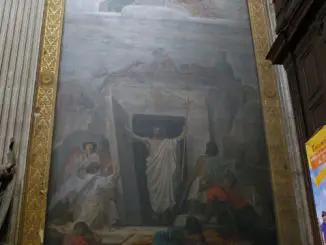
Le Prieuré de Sion est omniprésent dans l’affaire de Rennes le Château ! Est-ce une création de Pierre Plantard de Saint-Clair ou une société secrète issue des Templiers ? Le Prieuré de Sion a-t-il dirigé le monde en secret ou est-ce un canular ? Ne serait-il point un leurre à la place de sociétés dites secrètes mieux établies qui l’auraient influencé ?
L’enquête continue : pour en finir avec le Prieuré de Sion ? ou avec Pierre Plantard ? ou les deux ?
Ludibrium
Marcel Lefebvre, le fondateur du traditionalisme catholique, a été lié au Prieuré de Sion, et son allié, Mgr. François Ducaud-Bourget (1897-1984), qui fut aumônier des Chevaliers de Malte en 1946 et prélat honoraire à l’époque du pape Pie XII, fut son dernier prétendu Grand Maître. Le Prieuré mythique de Sion a été créé par Pierre Plantard comme cadre synarchiste pour sa revendication d’être le Grand Monarque prophétisé par Notradamus, qui devait diriger une Europe unie, comme un Empire Uni de la Fin des Temps. Comme le prétendu Grand Maître Prieuré de Sion, Jean Cocteau, Plantard était associé à l’ Action Française, l’influent mouvement et journal nationaliste de droite antisémite et catholique dont l’objectif était de restaurer un État aristocratique en France avec les ducs d’Orléans à sa tête.
Comme Gérard de Sède, confrère de Plantard, auteur français associé au mouvement surréaliste autour d’André Breton, l’a souligné dans Le Trésor maudit , citant Breton, « L’imaginaire est quelque chose qui tend à devenir vrai. Après être devenu une cause célèbre de la fin des années 1960 aux années 1980, le prieuré mythique de Sion a été exposé comme un ludibrium. Ludibrium, un mot dérivé du latin ludus signifiant un jouet ou un jeu trivial. Frances Yates a noté que le terme « ludibrium » était fréquemment utilisé par Johann Valentin Andreae, notamment dans son Mariage chymique de Christian Rosenkreutz, pour suggérer que l’Ordre rosicrucien était fictif, une comédie ou une « blague ». Selon Yates, « bien que les rédacteurs des manifestes n’aient pas voulu que l’histoire de Christian Rosencreutz soit prise comme littéralement vraie, elle aurait pu être vraie dans un autre sens, aurait pu être une comédie divine, ou une présentation allégorique d’un mouvement religieux et philosophique complexe ayant une incidence directe sur l’époque. »
« Le Prieuré de Sion me fascine, car il a toutes les apparences d’être une véritable conspiration, et pourtant si vous regardez les éléments d’une autre manière, cela ressemble à une blague pratique très compliquée par un groupe d’aristocrates intellectuels français. Et la moitié du temps, je pense que c’est vraiment une plaisanterie de la part d’un groupe d’aristocrates intellectuels français. Et puis une partie du temps, je pense que c’est une véritable conspiration. » Robert Anton Wilson
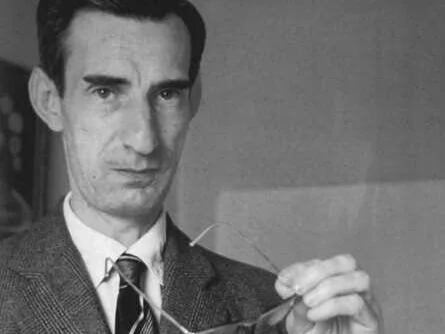
En 1937, Paul Le Cour devait être une source d’inspiration pour le canular du Prieuré de Sion de Plantard par son implication dans le Hiéron du Val d’Or, le mouvement catholique synarchiste qui a fait campagne pour le retour d’un prêtre-roi à la tête de la France. Impliqué aussi dans l’association Atlantis de Le Cour, l’alchimiste Eugène Canseliet était aussi un membre de la Fraternité Polaires. Selon Le Cour, Canseliet n’était autre que Fulcanelli, dont le livre le plus connu est Le Mystère des Cathédrales qui vise à déchiffrer la symbolique alchimique de plusieurs constructions templières, comme Notre-Dame la cathédrale de Paris, la cathédrale d’Amiens, l’hôtel Lallemant à Bourges, l’obélisque de Villeneuve-le-Comte.
Grâce au soutien du Ducaud-Bourget, Pierre Plantard qui était un leader étudiant raisonnablement efficace, a réussi à devenir le chef de la paroisse du groupe de jeunes catholiques Groupement Catholique de la Jeunesse. À peu près à la même époque, Plantard se lie d’amitié avec deux acteurs de la radio bien connus, Jacques Thereau et Suzanne Libre, ainsi qu’avec Jules-Joseph-Alfred Tillier (1896-1980), un employé respecté de la Compagnie des Forges et Aciéries de la Marine. d’Homécourt et un ami de Paul Le Cour (1861 – 1954). Avec Plantard, Le Cour participe également aux messes organisées par le père Ducaud-Bourget pour un cercle d’intellectuels de droite, dont le philosophe Louis Le Fur (1870 – 1943) et l’orientaliste comte Maurice de Moncharville (1860 – 1943). » (David Livingstone)
Cet article paru en anglais est signé David Livingstone, chercheur indépendant, auteur de divers livres. Je vous en ai proposé le début traduit en français ci-dessus ! L’auteur resitue le contexte de l’époque et livre des pistes moins développées en France. C’est son principal intérêt ! On voit s’y dessiner un étrange organigramme… Il n’y manque que le mentor de Pierre Plantard, Geneviève Zaepffel, rencontrée au manoir du Tertre à Paimpont et, près de là, l’église ésotérique de l’abbé Gillard dédiée au Graal.
- On y retrouve Marcel Lefebvre, le fondateur du traditionalisme catholique, et Mgr. François Ducaud-Bourget qui fut aumônier des Chevaliers de Malte
- Paul Le Cour, le Hiéron du Val d’Or, Eugène Canseliet
- Jacques Thereau et Suzanne Libre (figures radiophoniques connues à l’époque),
- Jules-Joseph-Alfred Tillier, le philosophe Louis Le Fur, l’orientaliste comte Maurice de Moncharville, Raymond Bernard qui deviendra la figure de proue de l’AMORC en France dans les années 1970, Georges Monti, Raymond Abellio, membre de X-Crise, pseudonyme de l’écrivain français Georges Soulès, Schueller et Deloncle fondateurs du MSR
- Otto Rahn
- Pierre Plantard et Philippe de Chérisey dans leur tâche d’inventer des faux et de les disséminer, l’Ordre de la Rose-Croix du Temple et du Graal, fondé par Joséphin Péladan à l’origine des informations incomplètes reçues par le Prieuré de Sion sur Rennes-le-Château
- Eugène Deloncle, fondateur de la Cagoule, qui connaissait étroitement François Plantard, frère de Pierre Plantard, sa nièce ayant épousé le président français, François Mitterand, grand initié et grand architecte du Paris moderne !
Lire la suite ainsi que les sources bibliographiques !
18 mars 2021, Johan Netchacovitch, rédacteur en chef de la Gazette de Rennes-le-Château
Ce que Gino Sandri dit du Prieuré de Sion
La rédaction vous livre, dans un premier temps, les propos de celui qui se proclame son représentant, Gino Sandri. Ensuite, nous étudierons l’origine officielle de cette Association et son émergence dans l’affaire de Rennes-le-Château. Enfin, nous en tirerons les conclusions.
Le représentant au grand jour d’un Ordre réputé secret :
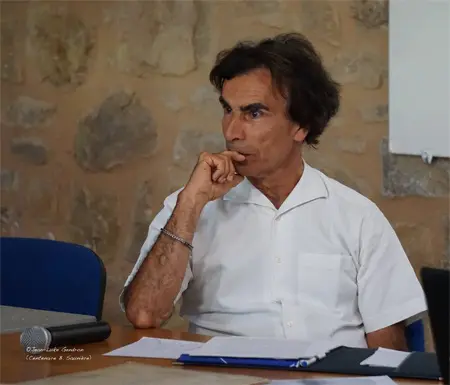
Un DVD réédité, « De Saunière à Da Vinci » de Georges Combe, a attiré l’attention de la rédaction. Un bonus de plus de 30 minutes propose l’interview de Gino Sandri, l’actuel Secrétaire Général du Prieuré de Sion. Passée quasiment sous silence, elle étonne car Gino Sandri se livre rarement aux médias. Indépendamment de cet aspect anecdotique, le contenu en est particulièrement décoiffant ! Commander le DVD !
Le PS, le vrai du faux
Il découvre Rennes-le-Château en 1970 suite à sa rencontre avec Pierre Plantard de Saint-Clair. Il collabore rapidement et pendant 30 ans avec lui. Les confidences abondent et Gino Sandri nous surprend par son prosélytisme !
En préambule, il spécifie les raisons d’être du Prieuré de Sion :
– Il ne s’agit pas d’une structure politique ou financière
– Pas d’implications religieuses
– Il ne souhaite point restaurer une quelconque monarchie mérovingienne ou autre
– Il n’est pas lié à l’Occident européen
– Sa tradition remonte bien avant Godefroid de Bouillon
– Son but est tout différent, oeuvrer à créer une oasis de paix dans ce monde.
– Pour ce faire, cette Communauté et non cet Ordre a utilisé le vecteur artistique, principalement pictural et musical.
– le Sâr Péladan a appartenu à un cercle extérieur du Prieuré de Sion et en recevait ses instructions, notamment l’organisation des salons Rose+Croix.
– Ce ne sont que quelques révélations distillées par le Secrétaire Général !
Le but de la création publique du Prieuré de Sion en juin 1956, continue Gino Sandri, était de créer un leurre. Il fallait focaliser l’attention de tous sur Rennes-le-Château et, dès lors, avoir les mains libres ailleurs… Pierre Plantard, maître-d’oeuvre du plan d’intoxication, se serait littéralement sacrifié à cette tâche.

Sont évoqués ensuite l’arrivée de Gérard de Sède et ses dissensions avec Pierre Plantard, des documents déposés à la BNF, un certain Léo Schidlof et ses accointances avec le « milieu » audois, les curés Saunière qui trouve peu grâce à ses yeux, Gélis (assassiné dans son presbytère de Coustaussa) et Boudet, les auteurs de « L’Enigme sacrée », etc.
Gino Sandri constate que la supercherie a réussi au-delà de leurs espérances. Il donne cependant quelques indices :
– Il reconnaît explicitement que le Prieuré a eu les coudées franches ailleurs, dans un lieu qui n’a jamais été cité !
– Le mythe de la descendance mérovingienne a été créé pour… parler d’autre chose
– Rennes-le-Château a sa place dans la nébuleuse du Prieuré de Sion mais pas plus que beaucoup d’autres lieux de la géographie sacrée française
– Il déplace donc « l’affaire RLC » dans une zone qu’il évalue à plus de deux cents kilomètres, la toponymie de RLC étant le reflet d’une autre réalité…
– Il avoue malgré tout que Rennes-le-Château fut le siège d’une structure extérieure du PS au 17ème siècle; Nicolas Pavillon y joua un rôle.
La rédaction recommande l’interview de Gino Sandri !
Histoire officielle et celle officieuse !

En juin 1956, les statuts du Prieuré de Sion sont déposés à la préfecture d’Annemasse-sous-Cassan en Haute-Savoie. La dite association est régie par la loi de 1901 ! Quatre membres fondateurs la composent :
- Pierre Bonhomme, le président, habite Château-Gaillard
- Jean Delaval, le vice-président, réside en Suisse
- Pierre Plantard, secrétaire général, exerce la profession de dessinateur
- Pierre Defagot, trésorier, est ouvrier horloger.
Quelques articles
Parmi les 21 articles des statuts, retenons :
- L’article II : « L’association prend pour dénomination « Prieuré de Sion » sous-titre C.I.R.C.U.I.T. (Chevalerie d’Institutions et Règles Catholiques, d’Union Indépendante et Traditionaliste). Son insigne se compose d’un lys blanc, enlacé par un circuit dénommé « Croix du Sud ». Son emblème est un coq blanc. »
- L’article III : « L’association a pour objet la constitution d’un ordre catholique, destiné à restituer sous une forme moderne, en lui conservant son caractère traditionaliste, l’antique chevalerie, qui fut par son action, la promotrice d’un idéal hautement moralisateur et l’élément d’une amélioration constante des règles de vie de la personnalité humaine.
A cet effet, l’association, par une coopération active de ses membres, portera aide et protection, tant morale que matérielle, à tous ceux qui se trouvent dans un état de nécessité, particulièrement les vieillards, les infirmes, etc.
[…]
Dans un objet de propagande, l’association éditera un bulletin périodique sous le nom de « Circuit », traitant des sujets énoncés au paragraphe précédent. »
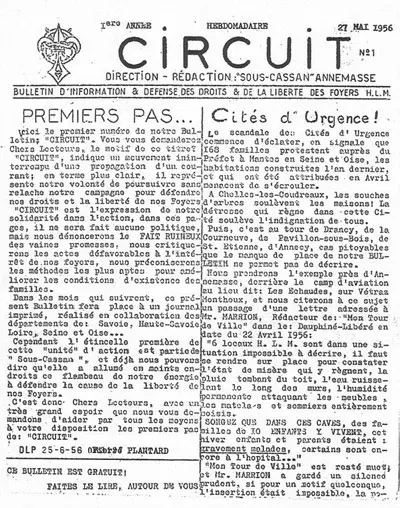
- L’article VI : « L’association est ouverte à tous les catholiques, âgés de vingt et un ans, qui reconnaissent les buts et acceptent les obligations prévues aux présents statuts. […] »
- L’article XII : « La hiérarchie des neuf grades comprend :
- Dans les 729 provinces :
- Novices : 6561 membres
- Croisés : 2187 membres
- Dans les 27 commanderies :
- Preux : 729 membres
- Ecuyers : 243 membres
- Chevaliers : 81 membres
- Commandeurs : 27 membres
- Dans l’Arche « Kyria » :
- Connétables : 9 membres
- Sénéchaux : 3 membres
- Nautonnier : 1 membre. »
- Dans les 729 provinces :
- Les statuts sont signés en date du 7 mai 1956 à Annemasse par Pierre Bonhomme, dit Stanis Bellas, et Pierre Plantard, dit Chyren.
La presse s’en mêle
Les premiers articles de presse (1956) ne mentionnent pas l’existence du Prieuré de Sion. Le premier livre qui parle du trésor de Rennes-le-Château, « Trésors du monde enterrés, emmurés, engloutis » (1962) de Robert Charroux non plus ! Il y consacre 10 pages dans un chapitre intitulé « Soixante-quinze trésors dans une abbaye… Huit milliards dans une tombe ! » En fait, ils reprennent tous l’hitoire imaginée par Noël Corbu, le propriétaire du domaine de l’abbé Saunière et de l’hôtel-restaurant « La Tour ». Il l’avait même enregistrée sur bande magnétique pour agrémenter les soirées de ses hôtes.
Gérard de Sède et le Prieuré de Sion
Et nous en arrivons à la rencontre avec l’écrivain Gérard de Sède. Voici ce que nous en disait son fils, Arnaud.
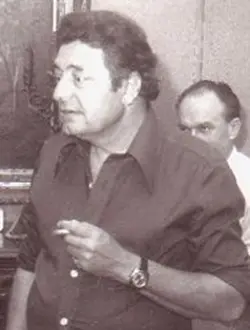
Fin des années 50, « après la naissance d’un quatrième enfant, Arnaud, il (Gérard de Sède) part s’installer dans une ferme en Normandie où il emploie un ouvrier agricole du nom de Lhomoy qui le mettra sur une première piste. Il renoue peu de temps après avec le journalisme, habite Paris et travaille pour l’Agence France Presse.
Gérard de Sède publie un petit ouvrage assez caustique sur la vie et les moeurs de la noblesse, vraie ou fausse, des années soixante, « Petite Encyclopédie des Grandes Familles », qui trouvera plus tard un écho dans son livre « Aujourd’hui les Nobles. » mais les récits du Normand l’intriguent et il commence à s’intéresser de près à Gisors où ce dernier prétend avoir découvert quelques secrets.
L’écrivain rédige un article sur le sujet : le caractère extraordinaire de l’aventure lui plait, en outre il ne peut que produire un « bon papier ». Les effets ne se font pas attendre : Une lettre énigmatique lui parvient quelques jours après sa publication : elle est signée d’un certain Pierre Plantard. Dans des circonstances passablement rocambolesques, il entre en contact avec ce dernier, un personnage assez obscur, qui lui fournit, non sans arrière-pensées, un certain nombre de documents. Il se met à écrire ce qui au départ devait être le résultat d’investigations journalistiques et qui s’avérera être l’origine d’un tournant fondamental dans sa carrière. « Les Templiers sont parmi nous » paraissent et connaissent un certain succès. »

« Les Templiers sont parmi nous »
Dans « Les Templiers sont parmi nous », Gérard de Sède ne mentionne pas plus l’existence du Prieuré de Sion. En annexe, il interroge un hermétiste… Pierre Plantard et lui pose diverses questions sur Gisors (20 pages). Va-t-on enfin y trouver une allusion au Prieuré ?
Voici la réponse de Pierre Plantard à la question : « Ainsi, la forteresse de Gisors aurait été édifiée sur des bases secrètes ? Par qui ?
Lire à ce propos la critique du livre de Geneviève Beduneau « Qui êtes-vous Monsieur Plantard » qui parle des « Templiers sont parmi nous
Pierre Plantard : » […] A son retour de la croisade, Louis VII avait ramené avec lui plusieurs religieux, initiés en Orient, membres de l’abbaye de Notre-Dame de Sion; si certains se fixèrent au prieuré Saint-Samson d’Orléans, d’autres s’intégrèrent à l’Ordre du Temple; vers 1161, des désaccords se manifestèrent dans l’Ordre; la souveraineté du grand maître n’était plus unanimement reconnue, une scission se préparait, les Templiers anglais sentaient venir l’éclatement de l’Ordre.
Il existe encore de nos jours des archives secrètes, propriété de certaines sociétés, qui affirment qu’en 1188 « l’orme fut coupé » et qu’un de ses rameaux, l’ « Ormus » ayant pour emblème une croix rouge et une rose blanche, serait à l’origine de la Rose Croix. En 1188, les membres de l’ « Ormus » s’installèrent à Saint-Jean Le Blanc, dans le prieuré du Mont Sion, sous la protection du prieuré de Saint-Samson d’Orléans. Ils rendaient un culte particulier à Notre-Dame. La vie monastique n’y exista jamais; l’acivité était celle d’une organisation initiatique et religieuse redoutable échappant au contrôle des abbés de Saint-Samson… »
Commander « Les templiers sont parmi nous » en poche.
« L’Or de Rennes »
En 1967, « L’Or de Rennes » paraît, toujours sous la signature de Gérard de Sède. Pas de trace du Prieuré de Sion… « Avant même la parution de ce livre, des photocopies de brochures inconnues, mais prétendûment répertoriées à la Bibliothèque Nationale, circulaient. C’étaient les « Pierres gravées du Languedoc », la notice de Madeleine Blancasall, l’opuscule de Pierre l’Ermite… » (Pierre Jarnac, « Les Archives de Rennes-le-Château », 1987, p. 148)
Pour les internautes moins au courant de l’affaire, il s’agit de brochures communément attribuées au duo Pierre Plantard-Philippe de Cherisey et déposées à la Bibliothèque Nationale de Paris entre 1965 et 1977. On y découvre toutes sortes de documents.
A titre d’exemple, « Les descendants mérovingiens ou l’énigme du Razès wisigoth » de Madeleine Blancasall. En préambule, l’auteur spécifie que « tous les faits énoncés dans les pages qui suivent sont totalement véridiques et parfaitement contrôlables, … » (« Mélanges Sulfureux, tome 2, p. 3)
Sans empiéter sur les conclusions de la rédaction et en évoquant uniquement les sources de ces opuscules, nous vous prévenons déjà que leurs sources sont… invérifiables (noms, adresses, numéro de téléphone, rien n’existe). Et pourquoi ne pas envisager les mérovingiens descendants de jésus ?
Commander le livre qui lance l’affaire de Rennes-le-Château en édition de poche : « Le trésor maudit de Rennes-le-Château« .
L’année 1973 marque un tournant dans l’apparition du Prieuré de Sion dans le grand public et, comme souvent, les publications y jouent un rôle. En 1973 également, Gérard de Sède a publié La Race Fabuleuse, Extra-Terrestres et Mythologie Mérovingienne où l’action se situe à Stenay ville du Diable.
Mathieu Paoli
Le 1er février paraît un livre peu connu de Mathieu Paoli « Les dessous d’une ambition politique – Nouvelles révélations sur les trésors du Razès et de Gisors ». L’auteur utilise les documents apocryphes de la BNF comme trame de son livre : la descendance mérovingienne et le Prieuré de Sion y sont omniprésents. Les dalle et stèle de Marie de Nègre d’Ables dont nous conseillons le décryptage par JB, l’étude de Johannus sur la grotte templière et les secrets dévoilés par Ulpian), la pierre de Coumesourde, les parchemins trouvés par Saunière, les tableaux généalogiques, etc. sont passés au peigne fin…
Pégase et le Prieuré de Sion
- La revue « Pégase » édite 6 numéros qui paraissent de mai à novembre 1973. Certains articles traitent de RLC.
- Jean-Luc Chaumeil y signe deux articles dans les numéros 2 et 3. Il en ressort que l’énigme a été montée de toute pièce, que les contradictions et les trucages sont nombreux.
- Le n° 4 se veut plus polémique : « La Chienlit de Rennes-le-Château » par Michel Vallet. L’auteur y souligne les dérives de François Attard (Midi Libre du 13 février 1973) où Alain Poher, Président du Sénat, est affublé du titre de « Prétendant au trône de France ». Quant à l’écrivain Mathieu Paoli, cité ci-dessus, il colporte les visées hégémonistes de Pierre Plantard en les engluant dans l’arrière-cour de la politique française du moment. Michel Vallet conclut : « … l’ouvrage de Mathieu Paoli applique à penser qu’il s’est contenté d’examiner quelques documents apocryphes (et incomplets) sur l’histoire … »
Dans le même numéro, Lionel Paussuit, cite des extraits des mêmes documents. Son introduction est sans nuance : « Bien que nous ayons déjà exprimé notre pensée sur la qualité des informations fournies par de semblables documents, nous pensons qu’il n’est pas inutile de démontrer aux Lecteurs que le rêve n’est pas l’exclusivité de M. Gérard de Sède. » - Dans le numéro 5, J-C Chaumeil rencontre Philippe de Cherisey qui insiste sur le lien entre Gisors et Rennes-le-Château par l’intermédiaire du Prieuré de Sion, la dalle de Marie de Nègre d’Ables est décryptée et son texte aurait été rédigé entre 1860 et 1910 !
- Dans le n° 6, J-C Chaumeil interviewe Pierre Plantard qui fait d’étranges révélations sur Gisors : la chapelle soi-disant découverte par Roger Lhomoy ne se trouve pas sous la motte du donjon, la revue « Circuit » du marquis de Cherisey est construite sur les 22 couplets de la chanson du « Roi Dagobert », en comprenant « L’Enigme du Razès » de Madeleine Blancasall et « La généalogie des rois mérovingiens » d’Henri Lobineau, on trouve l’origine des Blanchefort et des Hautpoul, il insiste sur un rapprochement du Temple et des familles de souche mérovingienne et, enfin, il s’attache à démontrer l’importance du méridien 0 explicité dans « La Comtesse de Cagliostro » de Maurice Leblanc.
En préambule, J-L Chaumeil mettait en garde le lecteur : « Comme pour Rennes-le-Château, toutes les réponses étaient sans appel, curieusement absolues, avec une référence à un « Nous » mystérieux. On sentait une opération de propagande et on pouvait se demander les raisons qui amenaient M. Plantard à nous conter l’envers de l’histoire. » (La rédaction remercie Monsieur Pierre Jarnac pour l’envoi de l’article.)
- Le 4ème trimestre de cette même année paraît le numéro 18 du « Charivari » entièrement consacré aux « Archives du Prieuré de Sion » par J-L Chaumeil. Commander ce collector ou une réédition ! En 2006, Jean-Pierre Deloux à la tête d’un collectif publie les « Archives secrètes du Prieuré de Sion ».
Le chaînon français : Vintras, Boullan, Doinel et l’Ordre Martiniste
Dans une étude remarquable, Isaac Ben Jacob trouve l’origine du Prieuré de Sion : « Ce qui n’a jamais été suffisamment mis en lumière, c’est le réseau occulte parisien qui servit de creuset à cette transplantation doctrinale entre la Russie et le mythe de Rennes-le-Château. Ce réseau constitue le chaînon manquant entre la matrice khlysty du XVIIe siècle et le Prieuré de Sion de Plantard en 1956. » Lire l’étude complète sur les origines de Sion !
Mises à jour 25 novembre 2019 et 1 mars 2020, Johan Netchacovitch ©
La piste italienne de Dialoghi d’Arcadia renvoie au Prieuré de Sion…
Autres articles sur le Prieuré de Sion
Qu’en est-il du Prieuré de Sion contemporain ?
Ulpian s’interroge sur une autre interprétation de S.I.O.N. : « ce terme recouvre le siège (qui a varié selon les époques) où les prêtres catholiques adoraient en secret un autre Dieu que le Christ, à savoir Jean le Baptiste, véritable crucifié de Pilate ! »
Florence Cazebon-Taveau, écrivaine et scénariste, nous présente son scénario : Quand le mystérieux prieuré de Sion s’invite à Rennes le Château ! Elle a réalisé une présentation.
« Pierre et Papier » de Philippe de Cherisey est analysé par la rédaction.
L’énigmatique mémoire de Sion recense et analyse les étapes importantes du Prieuré de Sion.
En 2022, Jean-Michel Jauly en parle dans son interview à La Gazette de Rennes-le-Château à la suite de la sortie de son livre « Le Mystère de Rennes-le-Château – Une Autre Histoire”.
Articles sur d’autres sociétés secrètes
Un relevé des attributs maçonniques de l’église maçonnique de Rennes-le-Château par Daniel Dugès.
Le secret de Boudet – La piste d’une société secrète teintée de Rose-Croix par Johannus.
Article sur les chercheurs
Soutenez la Gazette de Rennes-le-Château
Soutenez Gazette et Webtv de Rennes-le-Château sur TipeeeAbonnez-vous à la liste de diffusion pour être tenu au courant des prochains articles en cliquant ICI !